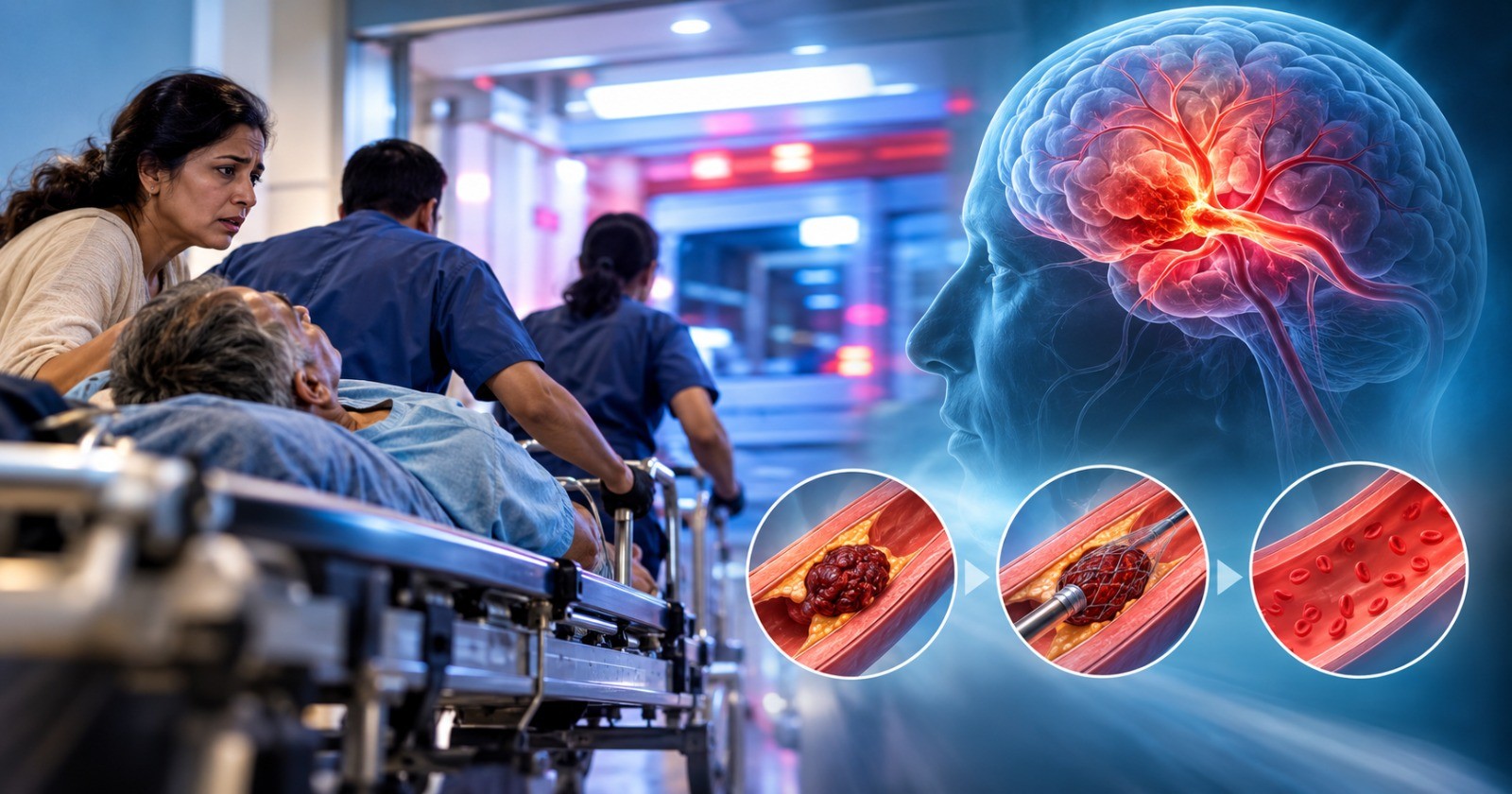
The Emergency Medicine Department at KIMS-Arete Hospital sets a new benchmark of excellence in the field of Emergency and Trauma Care. Committed to providing a high level of medical attention, KIMS-Arete Hospital deals patients suffering from a variety of emergency scenarios such as cardiac arrest, heart blocks, arrhythmias, stroke, epilepsy, sudden unresponsiveness, loss of consciousness, altered behaviour, severe headache, breathing difficulty, coughing blood, choking sensations, allergic reactions like skin rashes, etc, trauma, severe head and spinal injuries, bone related emergencies, burns, drowning cases, cuts, animal bites, poisoning, high grade fevers, severe abdominal pain, etc.
KIMS-Arete Hospital is the best hospital for Emergency medicine in Hyderabad since it employs cherrypicked expert emergency medicine doctors who demonstrate not just the academic skill in their medical school but also integrate the skill of adapting and integrating the ever-changing medical technology through their years of practice. Among the various types of skills, our emergency medicine doctors are trained in the art of quickly triaging the cases according to severity through the state-of-the-art diagnostic facilities. Such sorting allows breathing space for the doctors, enabling them to provide an appropriate level of care with minimal wait time.
Our senior doctors are available 24/7, optimising patient care, and our efficient Door-to-ER-Physician assistance ensures medical assistance within five minutes, prioritising the health of patients and minimising waiting times.
These initiatives aim to ensure a speedy recovery and an enhanced patient experience. With a hospitality ethos, our hospital offers patient-friendly services, infrastructure, and a commitment to holistic wellness, creating a conducive healing environment.
KIMS-Arete Hospital provide individualised and compassionate care, supporting your recovery through specialised units and unparalleled medical care. We prioritise your health, offering ongoing support throughout your journey with the goal of achieving overall well-being.
Common Emergency Medicine Conditions
- Sudden Unresponsiveness or loss of consciousness: To maintain normal consciousness, the brain requires a constant flow of sensory input, the ability to process this information along with the energy to process the same. Disrup¬tion in this flow (especially energy disruption) may lead to loss of consciousness. The common causes include hypo/hyperglycaemia, adrenal crisis, stroke, sepsis, Wernicke encephalopathy, hyponatremia etc.[BM1.1]
- Altered Behaviour: Altered mental status (AMS) is a common presentation of patients to the emergency department, posing a significant challenge for the physician to accurately diagnose and begin appropriate emergency medicine management. The emergency doctors need to triage the patients according to their causes for further treatment. The causes could be neurological, metabolic or endocrine, infectious, system/organ dysfunction, toxicological, oncological, and psychiatric. A retrospective analysis of cases of altered mental status in the emergency department (published in 2020) demonstrated that while mild and moderate altered mental status cases are 17.9% and 47.4% respectively, the patients with severe altered mental status were about 34.6%. [BM2.1]
- Severe Headache: Headache is consistently among the top reasons for visits to the emergency department. Most patients who have a primary complaint of headache do not have a serious medical cause for the problem. Most common primary headaches are benign, such as tension headaches or migraines. A minority of headaches are caused by underlying medical or surgical conditions that warrant prompt diagnosis and treatment.[BM3.1]
- Fits (also called seizures): These ailments represent distressful and physically traumatic events that have the potential for lifelong social consequences and challenges to quality of life. The risk for an unprovoked or acute symptomatic seizure is approximately 8-10%. Up to one in four seizures evaluated in the emergency department represent first-time seizures[BM4.1].
- Breathing Difficulty: Dyspnoea (difficulty breathing) can span a wide range of diseases such as cardiac, metabolic, infectious, neuromuscular, traumatic, hematologic, and psychiatric conditions. Common cardiac and pulmonary conditions include airway obstruction, pulmonary embolus, noncardiogenic pulmonary oedema, anaphylaxis, ventilatory failure, pulmonary oedema, myocardial infarction, and cardiac tamponade.[BM5.1]
- Coughing Blood (also called hemoptysis): Respiratory infections, asthma, bronchitis, pneumonia, or chronic obstructive pulmonary disease (COPD) are a few of the common causes of hemoptysis. It requires emergency care, and the severity is based on the frequency and quantity of blood coughed. [BM6.1]
- Choking: The condition of preventing oxygen from getting to the lungs and the brain due to various causes such as any foreign object being stuck in the airway, etc. This is a serious issue as lack of oxygen to the brain for more than 4 minutes may cause brain damage or death.[BM7.1]
- Chest Pain & Other Cardiac Related Emergencies: Because of the indistinct nature of visceral pain, the differential diag¬nosis of chest pain is broad and includes diseases such as acute myocardial infarction, acute coronary ischemia, aortic dissection, cardiac tamponade, pulmonary embolus, tension pneumothorax, oesophageal rupture (Boerhaave syndrome), etc[BM8.1].
- Allergic Reaction, Rashes: Allergic reactions are hypersensitivity reactions in which the body overreacts to certain triggers. People can be triggered by foods, medicines, pets, insect stings, pollen, etc. While most allergic reactions are not serious, severe reactions can be life-threatening and require emergency medical care. Along with rashes, the patients may show itchy and slightly swollen skin, changes in skin tone or colour, runny nose etc.[BM9.1]
- Trauma: Unintentional injury remains the leading cause of death in persons up to 45 years of age. Each day, approximately 9 people are killed and more than 1000 injured by distracted drivers. Stabilization, evaluation, and treatment of trauma patients are cen¬tral to the practice of emergency medicine. Effective management of critically ill trauma patients requires tactical decisiveness, technical skill, and effective leadership. Our approach at KIMS-Arete Hospital is methodical, and team-based, capitalizing on a strong clinical partnership between emergency medicine and surgery.[BM10.1]
- Severe Head Injury - Accidents / Falls: Head injury (head trauma) demonstrated an increase of more than 50% from approximately 1.6 million over the previous 6 years. The most common principal mechanisms of injury for all age groups include falls, being struck by or against an object, and motor-vehicle crashes. The ultimate survival and neurologic outcome depend on the injury and the subsequent effects, such as hypotension and hypoxia (low oxygen in blood). Thus, clinical care of patients with head injury emphasizes early management to minimize the occurrence of secondary brain injury.[BM11.1]
- Spinal Injuries: The most common cause of spinal cord injury (SCI) is vehicle collisions and falls. Spinal injuries involve fractures in 85% of cases. The devastating emotional and psychological impact is incalculable.[BM12.1]
- Bone Related Emergencies: Orthopaedic emergencies, musculoskeletal complaints and con¬ditions comprise approximately 20% of all emergency department visits. Although rarely life-threatening, orthopaedic injuries may threaten a limb or its function, and accurate early diagnosis and treatment can avert long-term complications.[BM13.1]
- Burns: Severe burns can cause considerable injury not only at the burn site, but also throughout the body. Various inflammatory and vasoactive mediators are released, resulting in intravascular fluid loss, and significant fluid changes. These occur within the first 24 hours, highest within the first 6-8 hours. Fluid changes can result in severe hypovolemia and hypoperfusion, known as burn shock.
Emergency Medicine Diagnosis List
- Initial assessment: The department of emergency medicine at KIMS-Arete Hospital follows the approach of ABCDE in clinical emergencies for initial assessment, and treatment. The aim of the ABCDE assessment is to identify the most life-threatening problems first. It stands for the examination of airway, breathing, circulation, disability and exposure.
- Trauma check: Following the protocol, the team of emergency doctors focus on the examination of head, chest, abdomen, pelvis and legs during trauma check. The scope of the examination is adapted to the situation.
- Blood gas analysis: An integral part in assessing the critically ill blood gas analysis provides information on the cause and severity of various disease processes. It can analyse respiratory, circulatory and metabolic disorders.
- Rapid diagnostic testing and point-of-care tests: Through appropriate use of point-of-care tests, at least provisional diagnosis can be established, necessary to stabilise the patient. There are various point-of-care tests such as:
- Urine samples testing: For rapid pregnancy testing and screening for urinary tract infection, drugs and toxins, Streptococcus pneumoniae and Legionella pneumophila infection within 15 minutes.
- Blood tests for troponins and D‑dimer: Timely diagnosis of chest pain through blood tests reveal relevant inflammatory processes.
- Rapid diagnostic tests for malaria: Rapid tests reliably detect Plasmodium antigens in the blood of patients suffering from on and off fever thus finding early diagnosis of malaria. Similarly, several point-of-care diagnostic assays are available for the detection of dengue virus and other infections.
- Secretion samples and smears: These samples can provide essential information. Nasopharyngeal specimens can be examined for the presence of Influenza A and B virus nucleoprotein antigens.
- eDipstick tests for urine: These rapid and accurate urine detection tests provide the information of thrombin and factor Xa inhibitors, necessary for the treatment of critical conditions such as trauma and bleeding or the need for urgent surgery (as in thoracic aortic dissection).
- Electrocardiogram (ECG): The electrocardiogram in emergency medicine is necessary not just for the initial assessment of patients, but also in the context of further diagnostic clarification. The applications could range from simple monitoring to the detection of acute coronary syndromes to differential diagnosis of arrhythmias.
- Focused Assessment with Sonography for Trauma (FAST): A widely used test, FAST was originally developed for thoraco-abdominal emergency diagnosis in polytrauma. The emergency doctors can detect any free fluid, further clarification of shock signs, etc.
- Transesophageal echocardiography (TEE): Considered both safe and clinically indispensable in emergency medicine, the transesophageal echocardiography is necessary for detection of thrombus in patients with atrial fibrillation, insufficient transthoracic imaging conditions etc.
- Vascular ultrasound imaging: Ultrasound-based examinations such as B‑mode and colour Doppler provides highly reliable information in deep vein thrombosis (DVT), non-invasive assessment of occlusive diseases of the arteries, etc.
- Thromboelastometry: A diagnostic procedure to assess the viscosity and elastic properties of blood. Its use is seen in cardiac and transplant surgery, acute care of medical patients with bleeding or thrombotic disorders.
- Emergency medicine radiology (X‑ray imaging): These exams carried out in emergency departments demonstrate detailed findings such as fractures, infiltrates or atelectasis that are necessary for therapy.
- Computed tomography: This test plays an important role in emergency diagnostics for early detection of potentially fatal conditions such as pulmonary embolism, stroke, trauma, aortic dissection, etc.
- Acute magnetic resonance imaging (MRI): This test is usually done if the CT scan has an inconclusive result. It can detect ischemia (in particular brainstem ischemia) and encephalitis, etc.
Benefits of Emergency Medicine at KIMS-Arete Hospital
- Resuscitation and Management of Cardiac Arrest and Impending Cardiac Arrest: Our Emergency Medicine Department provides immediate medical attention through rapid response protocols, ultra-sophisticated life support technologies, and a highly trained medical team. In cases of cardiac arrest, our experts at KIMS-Arete Hospital start Cardiopulmonary Resuscitation (CPR), followed by therapies such as targeted temperature management, oxygen therapy or Extracorporeal Membrane Oxygenation (ECMO) treatment to reduce organ damage and enhance the patient’s survival chances.
- Airway Management including Difficult Airway, Non-invasive (NIV) Support and Mechanical Ventilator Support: Early identification of patients requiring ventilatory support is a crucial objective, with non-invasive ventilation (NIV) recognised as a first-line therapy for specific conditions such as chronic obstructive pulmonary disease (COPD), pulmonary oedema, and mild-to-moderate hypoxemic respiratory failure. We prioritise tech-enabling emergency medicine procedures and timely interventions to consistently deliver superior clinical outcomes in critical care scenarios.
- Early Management of Heart Attacks, Heart Blocks and Arrhythmias: At KIMS-Arete Hospital, we focus on cardiovascular emergencies and the early management of heart attacks, heart blocks, and arrhythmias. To address critical health conditions, our healthcare practitioners use pacemakers to regulate irregular heart rhythms and implantable cardioverter-defibrillators (ICDs) to monitor heart rhythms and deliver life-saving shocks in emergencies.
- Management of Polytrauma Patients: Our specialised care for polytrauma patients involves a meticulous approach to assessing and managing multiple injuries. Rapid evaluation of airway, breathing, circulation, disability, and exposure enables quick identification of life-threatening injuries, ensuring immediate and appropriate interventions to increase the chance of patient survival.
- Early Diagnosis and Management of Stroke and Epilepsy: KIMS-Arete Hospital approach to early diagnosis and management of stroke and epilepsy includes essential diagnostic tools such as electrocardiogram (EKG), blood tests, and advanced imaging (CT or MRI) for Stroke, while EEG records Brain activity to aid in the diagnosis of epilepsy and seizure-related conditions.
- Management of Drowning, Hyper/Hypothermia, Electric Shocks and Burns, Heat Stroke, and Animal Bites: Our Emergency Medicine Department addresses a range of critical situations, from drowning and hyper/hypothermia to electric shocks, burns, heat strokes, and animal bites. From swift resuscitation measures for drowning incidents to meticulous wound care for animal bites, our healthcare professionals employ advanced protocols tailored to each situation, ensuring comprehensive and effective management for the facilitated recovery of our patients.
- Management of Acute Abdomen and Bleeding Manifestations: For managing acute abdomen and bleeding manifestations, the approach at KIMS-Arete Hospital involves stabilisation and diagnostic interventions such as blood tests and imaging to promptly identify and address the underlying causes. This enables our expert team to implement targeted and effective treatments for these critical conditions, ensuring a premium and comfortable experience for our patients.
Emergency Medicine Procedures and Technologies
- USG guided Pleural Tap: Pleural fluid accumulation in an individual can adversely affect respiratory function, leading to symptoms such as cough, chest pain, and breathing difficulties. Employing ultrasound guidance, our doctors perform a pleural tap by inserting a small needle or tube into the pleural space between the lung and chest wall. This procedure enables the safe and precise removal of accumulated fluid to enhance respiratory function.
- Ascitic Tap: Ascites or accumulation of fluid may manifest through symptoms such as abdominal pain, difficulty sitting, shortness of breath, and other associated issues. In this medical procedure, our doctors use needles to drain fluid accumulated in the abdominal cavity. Ascitic tapping can prevent the lung and kidney damage that can occur as a result of fluid buildup in the stomach.
- Catheter Line Placement: Inserted by our medical professionals, a central venous catheter, commonly known as a central line, plays a crucial role in critical care. This vital method facilitates treatment administration and blood sampling.
- Arterial Line Placement: In intensive care and operating rooms at KIMS-Arete Hospital, doctors often use arterial line placement or catheterisation. They insert a tube into a peripheral artery to check blood flow and take blood samples, helping them monitor the patient's condition.
- ICD Insertion and Temporary Pacing: In the emergency room, the insertion of an implantable cardioverter-defibrillator (ICD) and the implementation of temporary Pacemakers are critical emergency medicine procedures. These interventions play a significant role in managing cardiac conditions, providing immediate support and lifesaving measures when needed.
- e-FAST: Extended Focused Assessment with Sonography in Trauma (e-FAST) stands as a point-of-care ultrasonographic protocol designed to quickly detect peritoneal fluid, pericardial fluid, pneumothorax, or haemothorax in patients. This thoughtfully designed approach aids in identifying critical conditions, allowing for timely and targeted interventions.
- Pericardiocentesis: Fluid accumulation around the heart within the pericardium may arise from factors like infections, immune disorders, or rheumatoid arthritis. to manage this condition, physicians at KIMS-Arete Hospital conduct emergency medicine treatment known as pericardiocentesis, which entails the procedure of extracting surplus fluid. This intervention relieves the pressure on the heart, contributing to improved cardiac function.
- Tracheostomy: In the Emergency Medicine Department, tracheostomy plays a vital role in patients who are facing respiratory challenges. It involves creating an opening in the neck to access the windpipe (trachea) directly to improve airflow and oxygen delivery to the lungs.
Additional Services
- 24/7 Availability of Senior Doctors: In the Emergency Medicine Department, experienced senior doctors are available around the clock to provide any procedure including lifesaving interventions.
- Fully Equipped ACLS Ambulance and effective Communication Systems: Equipped with cutting-edge technology, ambulances of KIMS-Arete Hospital are operated by skilled professionals trained in Advanced Cardiovascular Life Support (ACLS). We utilise effective communication systems to connect paramedics with the hospital, minimising the risk of medical errors.
- Door-to-ER-Physician Assistance in Under 5 Minutes and quick specialist consultation: Ensuring efficient medical attention, we guarantee that patients receive medical assistance from an emergency room physician within five minutes of arrival. Additionally, our ER Physicians can consult with specialists in under 30 minutes at any time.
- Negative Pressure Isolation Room: We have dedicated rooms featuring negative pressure for patients with respiratory or infectious diseases, ensuring a comfortable and secure treatment environment.
- Efficient Admit Decision to ER Departure: We have streamlined our administrative and nursing processes to assure that the time from admission to ER departure is under 180 minutes.
- Triage Units for Quick Access and Organised Care: In our dedicated triage units, we quickly evaluate and categorise patients, ensuring an improved patient experience.
- Dedicated Patient Elevators and specialised pathways for various medical conditions: Dedicated elevators have been implemented for the rapid transportation of emergency room patients to operating theatres or critical care areas, specifically designed for cases such as stroke, sepsis, acute abdominal issues, acute coronary syndrome (ACS), trauma, and obstetric emergencies.