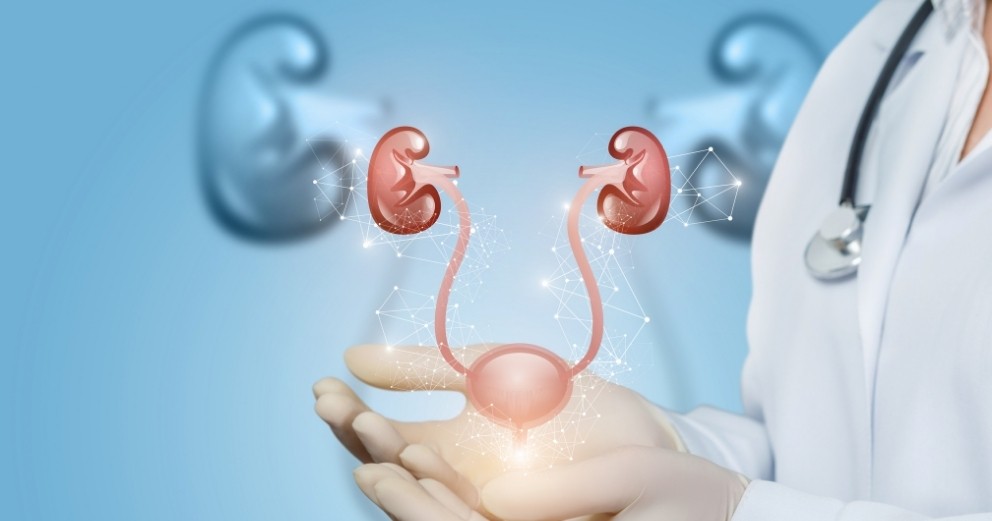
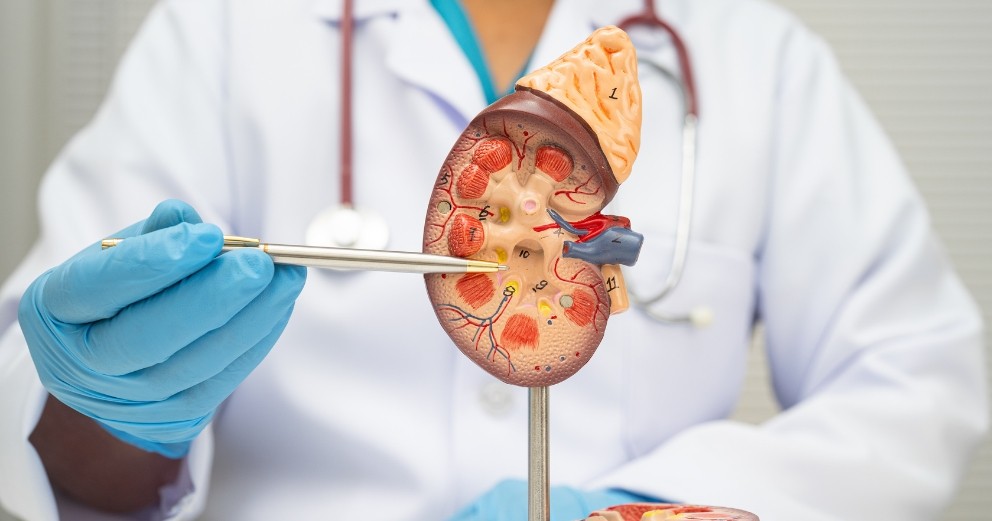
The Urology Department, at KIMS-Arete Hospital – the Best Urology Hospital in Hyderabad stands tall as a beacon of excellence in incorporating cutting-edge and comprehensive healthcare solutions to provide the best urology treatment care. Incorporating innovative technologies such as the Holmium150-Watt Laser, and state-of-the-art treatments like minimally invasive surgeries (Robotic Surgery & Retrograde Intrarenal Surgery), KIMS-Arete Hospital, redefine the touch of urological care by treating ailments, such as urinary tract infections and benign prostatic hyperplasia, prostate cancer, kidney calculi, congenital anomalies, traumatic injuries, etc.
Although preference is given to geriatric patients, the multidisciplinary team, at KIMS-Arete Hospital comprising urologists, nurses, and support staff, is skilled enough to treat patients of any age and gender from all walks of life who suffer from a urological disease. The treatment approach of KIMS-Arete Hospital lies in understanding the patient, by which we can pledge to deliver the best care through collaboration and compassion, thus reducing not just the disease but also its complications. The Urology Department prioritizes patient well-being, ensuring a seamless healthcare journey.
The facilities at KIMS-Arete Hospital are not just spacious but thoughtfully designed, creating a serene and uplifting environment that fosters holistic well-being. We prioritise patient privacy, dignity, and comfort, offering a peaceful atmosphere. Every touchpoint reflects warmth and excellence, contributing to a premium healthcare experience. With state-of-the-art medical equipment, inviting spaces, and a commitment to future readiness, KIMS-Arete Hospital consistently deliver superior clinical outcomes for the patients.
Common Urology Symptoms
- Difficulty in Passing Urine: Painful and difficulty in urination is one of the most common urologic symptoms, which could be due to a myriad of underlying disorders, ranging from bladder stones, urinary tract infections to sexually transmitted diseases or kidney problems. A urinalysis (urine test) is necessary, at least for the initial understanding of the underlying disease.
- Bloody urine: Also known as hematuria, blood in the urine could be a sign of various urologic problems especially from the kidneys and urinary tract. Hematuria forms due to the underlying urologic diseases (such as urinary tract infections, kidney infections, bladder or kidney stones, enlarged prostate, etc), which cause the leakage of blood into the urine.
- Incontinence (Uncontrolled Urinary Leakage): This symptom is one of the most commonly expressed complaints in the urology department and doesn’t show any disparity between either genders. Physical exam and a urine test may be done to confirm the underlying issue. There are various types of urinary incontinence, which shows the extent of underlaying diseases behind this symptom.
- Flank pain: The pain which is seen on either side of the lower back, just above hips. Oftentimes flank pain is overlooked by the patients or attributed to other causes such as muscle strains. Flank pain should not be overlooked, since it could be due to issues in the bladder, prostate, or kidneys.
- Frequent Urination: Any increase in the feeling of frequency to urinate could be due to infection or bladder sensitivity, which negatively impacts the patient’s quality of life.
Urology Test List
- Urinalysis: This is a widely used diagnostic tool to assist urologists in determining the exact cause of various acute or chronic pathologies. Various novel technological advances in urinalysis have promoted significant progress in urinalysis, such as reflectometry, complementary metal oxide semiconductor (CMOS) technology, etc.[BM1.1]
- BUN and Creatinine: Urea and creatinine are a couple of metabolism end products. Urea is the primary metabolite derived from dietary protein and tissue protein turnover. The nitrogen component of urea (the blood urea nitrogen, BUN) is measured. The normal serum creatinine (sCr) varies with the patient’s body muscle mass but the normal range for the adult is 0.6 to 1.2 mg/dl. The BUN and sCr are screening tests of renal function[BM2.1]. They are used to assess the renal impairment during bladder outlet obstruction.
- Cystography: This imaging test can help in the diagnosis of various bladder problems through X-rays and contrast dye that is injected into the bladder.[BM3.1]
- Renal angiogram: This imaging test visualises the blood vessels in the kidneys. It is necessary for understanding the presence of aneurysms (ballooning of a blood vessel), stenosis (narrowing of a blood vessel), or blockages in a blood vessel. In this test too, a contrast dye may be used.[BM4.1]
- Prostate ultrasound: Also called the rectal ultrasound, this imaging test utilises the principles of sound waves to examine the prostate gland or rectum. A small probe called a transducer creates the images of the prostate or rectum. It is placed into the rectum, where it sends and receives the bounced sound waves.[BM5.1]
- Antegrade pyelogram: In this imaging test, a contrast dye is injected in the flank area, and its movement from the kidneys into the bladder is visualised through X-rays to find any blockage in the upper urinary tract.[
Subspecialties
- Kidney Stone Unit: At KIMS-Arete Hospital, our Kidney Stone Unit offers advanced evaluation, diagnosis, and treatments, including cutting-edge procedures like ureteroscopy with laser lithotripsy and percutaneous nephrolithotomy (PCNL). Our multidisciplinary team, comprising Urologists, Nephrologists, Radiologists, and Metabolic Specialists, collaborates for personalised care, aiming to enhance patient quality of life, prevent recurrences of Stones, minimise the impact on daily activities, and reduce surgical involvement.
- Prostate Care: Prostate management is crucial for disorders like benign prostatic hyperplasia (BPH), prostate cancer, and prostatitis. At KIMS-Arete Hospital, we employ advanced treatment techniques such as Holmium Laser Enucleation of the Prostate (HoLEP), and Holmium Laser Ablation of the Prostate (HoLAP), ensuring a seamless healthcare journey for our patients with ultra-sophisticated facilities and a benchmark of excellence.
- Uro-Oncology: Dedicated to the comprehensive management of kidney, bladder, and prostate cancers, our uro-oncology unit integrates cutting-edge diagnostics with innovative therapeutic strategies. Committed to the highest standards in cancer care, our team of experts goes beyond providing advanced medical treatments. We prioritise compassion and empathy, offering unwavering support to patients and their families throughout the entirety of their treatment journey.
- Andrology: The Andrology Centre at KIMS-Arete Hospital is a state-of-the-art facility dedicated to addressing male sexual health concerns. our team of specialised professionals, including andrologists, urologists, nurses, and counsellors, is committed to providing personalised treatment for premature ejaculation, stress-related sexual dysfunction, and erectile dysfunction. Our evaluations are thorough, and pre-treatment support is designed to be user-friendly, ensuring that the patients feel comfortable and informed throughout their journey.
- Kidney Infections Care: KIMS-Arete Hospital specialised healthcare team prioritises timely identification and expert management of renal Infections, handling conditions from UTIs to complex issues like pyelonephritis or complicated urosepsis. with a focus on early detection and effective treatment strategies, we ensure comprehensive care for kidney infections at various stages, promoting overall kidney health and well-being.
- Reconstructive Urology: Reconstructive Urology involves the surgical repair of the urinary tract, addressing issues arising from trauma or birth defects. Our adept team of skilled doctors employs cutting-edge technologies for various procedures, including urethral stricture repair, management of injuries from pelvic fractures, and addressing urinary fistulas. with state-of-the-art facilities, we establish a benchmark of excellence, ensuring a seamless healthcare journey for our patients.
- Pediatric Urology: Our Paediatric Urology is a specialised medical facility that offers comprehensive care for children's urinary and genital problems. We provide thorough evaluation, diagnosis, and treatment for a wide range of developmental problems such as foreskin problems, undescended testicles, inguinal hernias, bed wetting, urinary tract infections (UTI), haematuria, and hydroureter. Staffed by a team of highly skilled paediatric urologists, and clinical paediatric nurses, we are dedicated to delivering holistic care tailored to the specific needs.
- Kidney Transplantation Unit: The Kidney Transplant Unit at KIMS-Arete Hospital is a cutting-edge technology centre for patients in need of a kidney transplant. We redefine healthcare with personalised, compassionate care, ensuring a seamless healthcare journey. Our expert team, comprising transplant nephrologists, surgeons, nurses, donor advocates, nutritionists, and financial counsellors, ensures comprehensive care. From evaluations and user-friendly pre-transplant support to swift inpatient care and intensive units, we strive for excellence in every aspect of the Kidney Transplant journey.
- Geriatric Urology: At KIMS-Arete Hospital, our geriatric urologists specialise in addressing age-related concerns such as urinary incontinence, benign prostatic hyperplasia (BPH), and urological cancers. Beyond physical support, we prioritise mental well-being for elderly patients throughout their treatment journey. Our specialists deliver tailored, comprehensive care to meet the unique needs of our elderly patients.
Urology Surgery Types
- Mini and Macro Percutaneous Nephrolithotomy (PCNL): PCNL is a minimally invasive procedure through which large kidney stones can be removed. While Mini PCNL treats stones larger than 2 cm, macro-PCNL is for larger/complicated stones. [BM14.1]
- Transurethral Resection of the Prostate (TURP): The most common of the urology surgery procedures which involves the removal of part of the prostate gland to relieve the symptoms of an enlarged prostate or other benign (non-cancerous) prostate diseases.
- Holmium Laser Enucleation of the Prostate (HoLEP): These minimally invasive urology procedures are done to remove tissue from the inside of the prostate (prostate lining) by exposing to pulses of laser beams. These are very effective when compared to simple prostatectomies (surgical removal of the prostate).
- Buccal Mucosal Graft Urethroplasty (BMG): This is a surgical grafting procedure that utilises buccal tissue (obtained from the mouth, inside of the cheek) to reconstruct the urethra. It's seen in treatment for urethral strictures, trauma, hypospadias etc.[BM15.1]
- Urinary Tract Infections (UTI): The urology treatment of UTI requires the exact pharmacotherapy of antibiotic regimen. The urologist at KIMS-Arete Hospital select the exact antibiotics that works best against the bacteria responsible for the infection. The common antibiotic classes include hydantoins, sulfonamides, penicillins, cephalosporins, tetracyclines, quinolones, phosphonic antibiotics, etc.
- Pelvic Urethral Junction Obstruction Surgery (Pyeloplasty): Most cases of pelvic urethral junction obstruction actually do not require surgery and resolve on their own. However, in extreme cases, pyeloplasty is performed to prevent kidney injury and correct the blockage. It can be either open or laparoscopic surgery; sometimes involving robotic surgery. It has 97% success rate.[BM16.1]
- Cystoscopic ablation: Commonly performed to treat the posterior urethral valve obstruction, a rare congenital disorder affecting the male urinary tract, cystoscopic ablation is the preferred initial definitive treatment. The other treatment strategies for this ailment include surgical ablation of the obstructing valves, urinary diversion procedures, and ongoing monitoring to address potential complications and ensure optimal bladder and renal function.[
Key Procedures
- Minimal Access Surgeries: Minimally access surgery or minimally invasive surgery (MIS) is used in various fields, to treat a wide range of conditions and procedures include robotic partial nephrectomy, endourology, robotic pelvic floor reconstruction, robotic cystectomy, robotic prostatectomy, vasectomy, and cryotherapy. Our multidisciplinary team at KIMS-Arete Hospital utilises MIS, contributing to reduced pain, shorter hospital stays, and fewer complications compared to traditional open surgery.
- Prostate Laser Surgery: KIMS-Arete Hospital effectively alleviates moderate to severe urinary symptoms caused by an enlarged prostate gland. Our experienced doctors employ prostate laser surgery to remove prostate tissue and widen the urinary channel, ensuring optimal results through our patient-centric approach. This procedure offers a minimised need for a catheter and a lower risk of complications.
- Pelvic Floor Surgery: our collaborative team of urologists and gynaecologists at KIMS-Arete Hospital employs pelvic floor surgery, an innovative solution for repairing pelvic organ prolapse. This surgery, preferred over traditional methods, ensures a faster resolution, reduces prolonged post-surgery discomfort, and expedites the recovery journey. We prioritise the patients’ well-being and comfort on the path to healing.
Advanced Technologies
- Holmium 150-Watt Laser: At KIMS-Arete Hospital, we use the advanced Holmium 150-Watt Laser system in various surgeries, such as open laparoscopic, and endoscopic procedures. This high-power solid-state laser, skilfully employed by our expert doctors, is particularly effective for ensuring comfort during surgeries like benign prostatic hyperplasia procedures, urological stone management, and holmium laser enucleation of the prostate.
- Retrograde Intrarenal Surgery (RIRS): Advances in Urology include RIRS which embodies cutting-edge technology, employing a minimally invasive approach to eliminate kidney stones without incisions. At KIMS-Arete Hospital, our team of urologists, anaesthesiologists, and surgeons utilises laser technology and a fibreoptic endoscope to address complex cases, including failed treatments, large kidney stones, kidney strictures, and tumours. We redefine urological care by prioritising comfort and well-being.
- Laparoscopic Surgery: Laparoscopy, recognised as keyhole surgery, involves executing surgical interventions within the abdominal and pelvic regions through minimal incisions. Our team of adept surgeons specialises in laparoscopic procedures, addressing diverse conditions such as including those affecting the kidneys, adrenal glands, bladder, testicles, and prostate. This minimally invasive approach not only amplifies the precision and accuracy of interventions but also mitigates pain and faster the recovery process.
- Robotic Surgery: The urologists at KIMS-Arete Hospital deploy robot-assisted surgery, a minimally invasive approach that allows for precision and flexibility in performing intricate procedures. We offer robotic surgery with small incisions, magnified views, and fewer complications such as reduced pain, minimal blood loss, and a lower risk of infection compared to traditional open surgery. This leads to shortened recovery times, ultimately leading to improved patient outcomes.