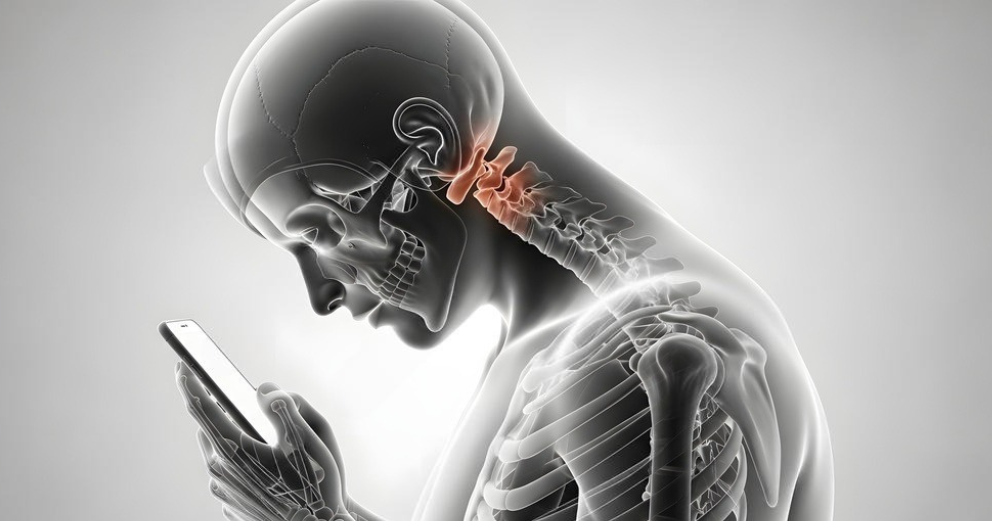
The surgical landscape for treating spine-related disorders is exceedingly challenging to navigate. Understanding the same, KIMS-Arete Hospital, being the best spine surgery hospital in Hyderabad, strives to be ahead of the curve by cherry-picking the best spine surgeons into its spine surgery department. They demonstrate not just the academic skill from their medical school but also integrate the skill of adapting the ever-changing medical technology through their years of practice.
To redefine healthcare by designing a patient-centric approach, KIMS-Arete Hospital acquired various state-of-the-art surgical facilities and advanced technology such as Neuromonitoring (electrophysiologic monitoring), Neuroendoscopy, High-end Microscope such as the Kinevo 900, Navigation O-ARM, Ultrasonic Bone Scalpel among other instruments to broaden the scope of spine surgery, thus executing its role in reducing neurological diseases.
As an excellence commitment, the team of spine surgeons at KIMS-Arete Hospital - top spine surgery hospital in Hyderabad has developed various error-proofing techniques such as intraoperative safety checklists, briefing and debriefing, error reporting, procedure-specific training protocols, conventional work procedures, etc to prevent any errors in surgery.
Common Symptoms Requiring Spine Surgery:
- Back and Neck Pain: Back pain can be mild, dull, or persistent, severe, disabling pain limiting the ability to move, interfering with normal functioning and quality of life. Similarly, the neck pain can be unexpected to last weeks, months, or even years. They could be due to joint problems, such as arthritis or slipped disk or pinched nerves. Spinal surgery can alleviate radicular pain and disability resulting from neural compression, etc.[BM1.1]
- Sharp pain in one part of the leg, hip, or buttocks: It could be due to disc herniation., also called disc prolapse, which may also extend as numbness in other parts, such as on the back of the calf or sole of the foot.[BM2.1]
- Difficulty walking: While it could be due to movement disorders such as parkinsonism, difficulty walking when associated with other symptoms such as pain in the neck, arm, leg or lower back, tingling, numbness or weakness etc, it could be myelopathy. Myelopathy is the injury to the spinal cord due to severe compression resulting from either trauma, congenital stenosis, degenerative disease or disc herniation etc.[BM3.1]
- Localized low back pain: If the pain is localized (i.e., non radiating from the source), and is exaggerated with pressing, it could be lumbar spondylolisthesis. Spondylolisthesis is the slippage of one vertebral bone in the spine out of alignment due to either congenital or acquired, or idiopathic causes.[BM4.1]
- Burning back pain or aching that radiates into buttocks: A classic case of spinal stenosis, it can be further associated with pain in the lower back, extension of burning sensation from buttocks and into legs, especially when standing or walking and weakness in lower limbs.
Spine Surgery Tests & Diagnostic Modalities:
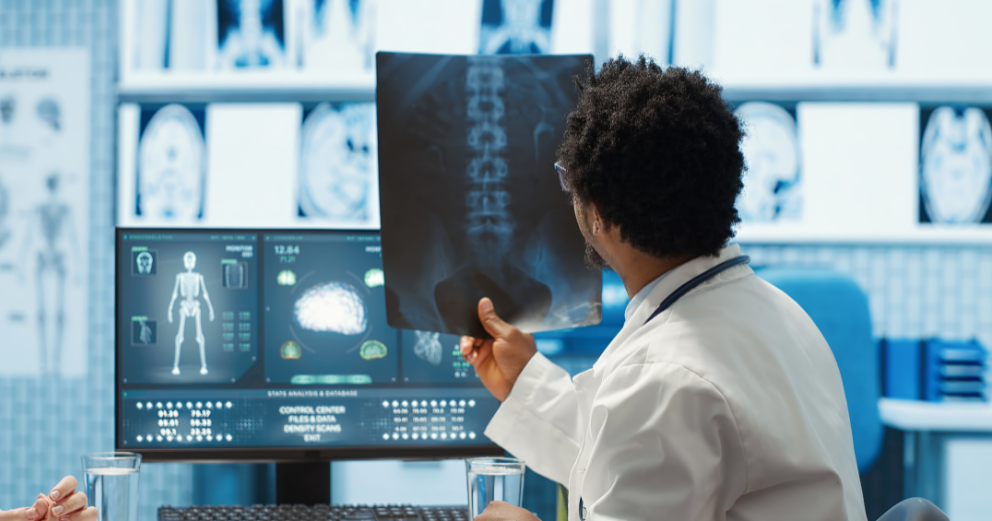
- Plain radiography (X-ray): With technological advances, X-ray also improved in providing important information for most spinal diseases, from trauma assessment, spinal deformity and degeneration, identification of spinal instability, and suggestive of malignancy (cancer).
- Computed tomography (CT scan): This diagnostic modality shows spinal diseases, including compression of neural structures, foraminal stenosis, etc.
- Magnetic resonance imaging (MRI scan): MRI produces images from different angles, producing excellent anatomical resolution. It can show the entire spine and differentiate between individual structures, such as the vertebral body, intervertebral discs, spinal canals, posterior elements, ligaments, etc. It is most commonly used for diagnosing degenerative spine diseases, including diseases of the intervertebral disc, facet joints, ligamentum flavum, posterior longitudinal ligament, neural foramen, etc.
- The EOS imaging system: Also called a slot-scanning device, this biplane radiographic imaging system uses slot-scanning technology to produce a 3D reconstruction of skeletal structures, through statistical modelling and bone shape recognition. The images are usually taken with the patient in a standing position, allowing the examination of the spine and lower extremities under normal weight-bearing conditions.
- Radionuclide bone scintigraphy: Also called the bone scan, this is one of the most widely used non-invasive cost-efficient diagnostic modality for spine diseases. It uses radioactive materials to scan active lesions. A radionuclide bone scintigraphy scan can show bone tumour and metastasis, infection, subtle or undetectable fracture, unexplained spine pain, etc.
- Electrodiagnostic study: This study facilitates the detection of spinal disorders, especially the neuropathies as it can measure nerve conduction.
- Nerve conduction velocity study: Also called electromyography, the nerve conduction velocity studies can not only differentiate peripheral nerve diseases from muscular disorders but also assess the extent of peripheral nerve damage and identify the lesion site accurately. It is commonly used for determining the presence or absence of cervical or lumbar radiculopathy.
- Central motor conduction time study: A test based on motor evoked potentials (MEPs), this study determines the presence or absence of spine pathology (disease).
Common Diseases & Conditions Which may Require Spine Surgery:
- Spinal Deformities: Spinal deformities such as camptocormia, antecollis, Pisa syndrome, and scoliosis are the common complications of movement disorders such as Parkinson disease, multiple system atrophy etc. Spinal surgery can reduce the risk and could be an efficacious and appealing treatment for complex spinal deformities, which could disable the patients. Advancements in spine surgery have revolutionized the management of spinal deformities in elderly patients.[BM8.1]
- Sciatica: Sciatica is a radiating pain generated in an area of the leg, typically from a nerve root in the herniated disk of the lumbar or sacral spine, which may sometimes be associated with sensory and motor problems. A 2007 study revealed that the relief of symptoms was twice as fast among sciatica patients who were treated with early surgery when compared to those who were treated conservatively.[BM9.1]
- Spondylosis: A chronic condition of the spine, spondylosis arises when the cartilage, especially when the cervical vertebrae (bones of the neck), are abnormally worn out. In patients who are not responsive to conversative treatment, spinal surgeries often demonstrate a better relief.[BM10.1]
- Spondylolisthesis: A spinal condition of one vertebral body slipping with respect to the adjacent vertebral body, thus causing pain and other symptoms according to the degree of slippage. Surgical treatment includes combinations of decompression, fusion with or without instrumentation, or interbody fusion. Patients with instability are more likely to require operative intervention.[BM11.1]
- Spine Fractures: While the vertebral (spine) fractures could be due to trauma and metastasis (cancer spreading), it usually is due to osteoporosis. For persistent pain and the failure of other treatments, surgical intervention is necessary. Vertebroplasty and balloon kyphoplasty are the common interventional procedures. Vertebroplasty is usually an outpatient procedure that takes one to two hours where, under guided imaging, a needle gets inserted into the vertebral body, and cement is injected. This cement hardens quickly and stabilizes the fracture. Kyphoplasty is a very similar procedure, but in this case, a balloon is used to expand the vertebral body before injecting the cement.[BM12.1]
- Disc Prolapse: The soft center of the disc present in the vertebral column is pushed out of its normal space due to being either worn out or injured. At times it could pressure the nerves in the spine, causing sciatic pain, etc. Based on the diagnosis the patients may be provided with an epidural injection for pain relief, laminectomy, microdiscectomy, or spinal decompression to treat the condition.
- Spinal Infections & Tumors: There are various spine infections such as vertebral osteomyelitis, discitis, spinal epidural abscesses, spinal subdural empyema, meningitis, spinal cord abscess etc which may require spine surgery.
- Craniovertebral Junction (CVJ) Anomalies: These anomalies can result in cranial nerve compressions, vertebral artery compressions, obstructive hydrocephalus etc. They can be congenital, developmental or due to malformation from a disease. [