The New 2026 Stroke Guidelines: What an ER Doctor Wants You to Know
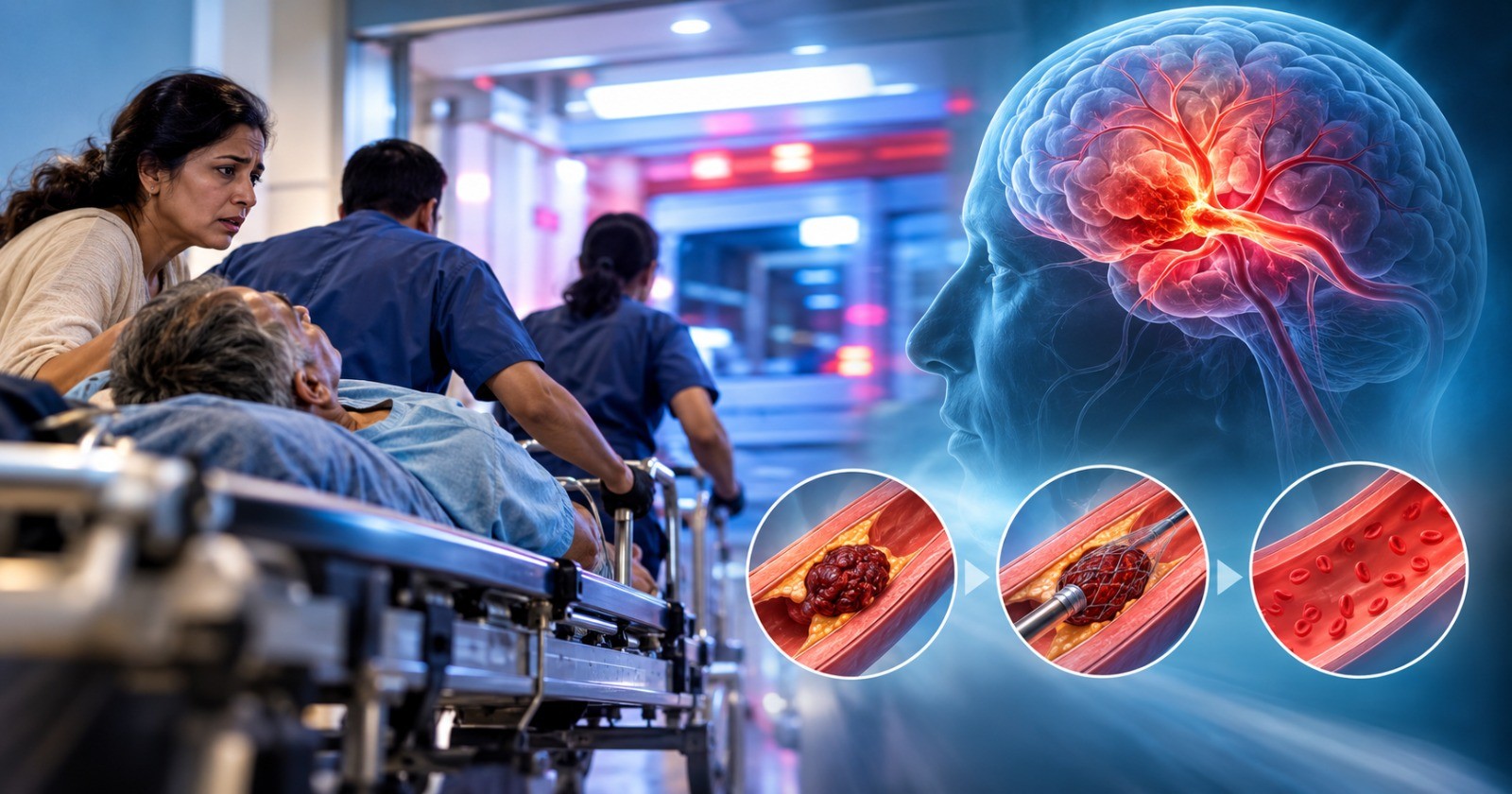
It's 3 a.m. A man is wheeled into the ER. His wife says he was fine at dinner. Now his right arm won't lift and his words come out jumbled.
From that moment, a clock starts ticking in my head. In a major stroke, roughly 1.9 million brain cells are lost every minute the artery stays blocked. In emergency medicine we say time is brain, and we mean it literally.
In August 2026, the American Heart Association and American Stroke Association published the 2026 Guideline for the Early Management of Patients With Acute Ischemic Stroke, replacing the 2018 guideline and its 2019 update. Here's what changed, what I think of it, and what it means for you.
In short: Stroke treatment is getting faster and simpler, and more patients can now be helped, including some who were once turned away. But it only works if patients reach hospital in time. Learn BE FAST and call an ambulance the moment you see the signs.
A quick refresher
More than 8 in 10 strokes are ischemic: a clot blocks an artery feeding the brain. We open it in one of two ways: thrombolysis, a clot-dissolving drug given through a vein (ideally within 4.5 hours), or thrombectomy, where a specialist pulls the clot out through a catheter.
My 10 biggest changes
A note before the list: some of this is written for my colleagues in emergency medicine. If you're here as a patient or family member, feel free to skip ahead to “What every reader should remember.”
My 10 biggest changes
- Speed comes first. Aim for brain imaging within 25 minutes of arrival. If a patient qualifies for a clot-buster within 4.5 hours, give it without waiting for CT angiography or perfusion scans; those are done alongside or right after, to find who needs thrombectomy. Don't hold treatment for clotting tests unless a problem is suspected, and don't delay a CT angiogram waiting for a kidney report.
- Tenecteplase joins alteplase as a first choice. One injection in seconds instead of a one-hour drip, with equal results. A real win in a busy ER or when a patient must be shifted for thrombectomy.
- “Is it disabling?” matters more than the score. A patient who can't walk steadily may score low on the NIHSS, yet their stroke is anything but mild. If it's disabling, we treat. For truly non-disabling symptoms, such as numbness on one side only, aspirin plus clopidogrel is now preferred over clot-busters.
- Fewer automatic “no”s. The old checklist is replaced by a risk-based approach. Situations like recent use of newer blood thinners (DOACs) are now weighed case by case with the patient, family and specialists, rather than ruled out by default.
- More hope for wake-up strokes. When nobody knows when a stroke began, MRI or perfusion scans showing salvageable brain can still open the door to thrombolysis, for wake-up strokes and for selected patients up to 9 hours from last seen well.
- Thrombectomy for more patients. Many people with large strokes on imaging, once turned away, still benefit. It's not recommended for clots in small, distant branches. And if a patient qualifies for both treatments, give the clot-buster and go straight to thrombectomy. Never skip it, never wait.
- A strong “yes” for basilar strokes. Thrombectomy within 24 hours is now strongly recommended for moderate-to-severe basilar artery strokes in previously independent patients. These often start with dizziness, vomiting or double vision and are easily mistaken for vertigo or a stomach upset.
- Where the ambulance goes matters. Mobile stroke units are recommended where available. Where transfers are slow, going directly to a thrombectomy-capable hospital may be better; where local hospitals treat and transfer quickly, an extra 45–60 minute drive to a distant centre doesn't help. In India, the bigger win is a pre-planned transfer pathway, and hospitals should track door-in-door-out time.
- After treatment, less is more. Don't push systolic BP below 140: it doesn't help after clot-busters and harms after successful thrombectomy. Treat high sugar to 140–180 mg/dL, but avoid tight IV-insulin control. Skip routine oxygen when levels are normal.
- Children, for the first time. Suspect stroke in a child with sudden, ongoing focal symptoms, such as one-sided weakness, even if it begins with a first seizure. Thrombectomy can help children aged 6+ with large-artery clots in experienced hands.
What no longer helps
Argatroban or eptifibatide with clot-busters, tirofiban before thrombectomy, high-dose tenecteplase (0.4 mg/kg), tight IV-insulin sugar control, BP below 140 after treatment, IV glibenclamide for brain swelling, and routine oxygen when levels are normal.
My honest take
- What I love: It respects ER reality: fewer delays, a simpler drug, and more trust in clinical judgment than rigid checklists.
- What worries me: “Disabling” is subjective and needs shared protocols and quick specialist access. The blood-thinner grey zone depends on details (last dose, kidney function, reversal agents) that aren't always available at 3 a.m. And extended-window treatment and round-the-clock thrombectomy assume systems many hospitals, especially outside big cities, don't have yet. The guideline shows what's possible; our job is to make it real for every patient.
What EDs should do now:
- Remove every optional step that delays treatment; target imaging within 25 minutes
- Stock tenecteplase and train the team
- Teach staff to judge “disabling,” not just calculate a score
- Formalise transfer agreements and track door-in-door-out time
- Update targets: BP not below 140, glucose 140–180, oxygen only when low
- Build a pediatric stroke pathway
What every reader should remember:
Most delays happen before the patient reaches us. Learn BE FAST: Balance, Eyes, Face, Arms, Speech, Time to call an ambulance.
- Don't wait to see if it passes. Even symptoms that settle need urgent care.
- Note the time the person was last seen normal. It decides which treatments are possible.
- Go to a hospital that treats stroke round the clock, not just the nearest clinic, as long as it doesn't mean a long detour.
The science has never been better. Our job is to make sure patients reach it in time. Save the details of a 24/7 emergency hospital in Thane (or near you) somewhere easy to find. For readers in Thane, KIMS Hospital's emergency department is one option. You'll hope never to need it, but on the day you do, you won't have time to search.
Reference: Prabhakaran S, Gonzalez NR, Zachrison KS, et al. 2026 Guideline for the Early Management of Patients With Acute Ischemic Stroke: A Guideline From the American Heart Association/American Stroke Association. Stroke. 2026;57:e316–e436. doi:10.1161/STR.0000000000000513
Disclaimer: This article is for educational purposes only and is not a substitute for medical advice. If you suspect a stroke, call emergency services immediately.
— Dr. Alok A. Gangurde, Emergency Physician
Footer Loading...