The Ophthalmology Department at KIMS-Arete Hospital has the best ophthalmologists who demonstrate not just the academic skill in their medical school but also integrate the skill of adapting and integrating the ever-changing medical technology through their years of practice.
Annually, we attend thousands of patients suffering from various signs in ophthalmology diseases (eye problems) such as glaucoma, cataracts, corneal disease, cancer of the eye, inflammation of the eye, paediatric eye problems, optic nerve disorders, retinal diseases, strabismus, refractive errors, xeropthalmia (dry eyes), etc.
Living up to the motto of "mindful beyond medicine," the Ophthalmology Department at KIMS-Arete Hospital – the best ophthalmology hospital in Hyderabad, we provide competent and holistic professional treatment care to the patients with the intention of retaining not just their vision but also their dignity in mind.
Since many eye problems are the result of various other underlying medical health problems such as diabetes, hyperthyroidism, systemic infections etc the ophthalmology department works with other departments such as neurology, endocrinology, etc to provide patient centric care tailor-cut to their needs.
At KIMS-Arete Hospital, best hospital for ophthalmology we understand the critical importance of eye health in the overall well-being. We provide top-notch eye care services focusing on comprehensive, personalised, and compassionate care. Our multidisciplinary team of experts, including experienced Ophthalmologists, Optometrists, Corneal Specialists, Retina Specialists, and Oculoplastic Surgeons, Paediatric Ophthalmologists collaborates closely to deliver the best possible outcomes for our patients.
We leverage the latest advancements in Ophthalmology, utilising cutting-edge technologies and state-of-the-art facilities to diagnose and treat a wide range of eye conditions.
Ophthalmology Symptoms:
- Change in Vision: Changes in vision could demonstrate frequent changes in the clarity of vision. Most commonly fluctuating vision is the prime complaint, which meant that the patient may have been suffering from blurred vision that comes and goes frequently. Fluctuating vision may be a sign of diabetes or hypertension (high blood pressure), retina damage, diabetic retinopathy, etc. [BM1.1]
- Sudden Blurriness: Not being able to see clearly is called blurred vision. Sudden blurriness could be due to various factors such as stroke, increased blood pressure at once, hyphema (bleeding inside the eye), retinal detachment, concussion to the head, eye infections, migraine headache, eye injury, etc.[BM2.1]
- Itching and Burning of the Eyes: Itching and burning are the common symptoms of dry eye disease. This ailment is characterised by either the scarcity of tears or its quicker evaporation.[BM3.1]
- Bulging of One or Both Eyes: Bulging eyes (exophthalmos) is most prominently seen in Graves’ disease or hyperthyroidism.
- Eye Discharge or Tearing: Discharge from eyes could be caused by various types of diseases such as allergic conjunctivitis, bacterial conjunctivitis, chemical conjunctivitis, viral conjunctivitis, etc. discharge could be clear, yellowish, or pus, etc.
Ophthalmology Tests:
- Applanation Tonometry: This advanced ophthalmology test is necessary to measure the amount of pressure to suppress a portion of the cornea, thus helping the ophthalmologist to diagnose and monitor glaucoma. A tonometer is necessary for this test.
- Corneal Topography: A computerized test which helps in mapping the corneal curve, thus revealing the issues present on the surface of the eye. It is usually done before the patient is undergoing surgery such as a cornea transplant, a contact lens fitting, etc.
- Dilated Pupillary Exam: Drops of medication are administered in the patients’ eyes to expand the pupil, thus helping in the retinal exam for any signs of disease.
- Refraction test: This is one of the most popular ophthalmology tests. It is necessary for the doctor to prescribe eyeglasses for the patients. The patient looks at a chart, some 20 feet away, which contains letters and numbers of varying sizes. The answers given by the patients result in the prescription for glasses.
- Slit-Lamp Exam: Another popular ophthalmology test, the slit-lamp exam uses a microscope to shine a beam of light on the eye to diagnose cataracts, glaucoma, etc.
- Ultrasound of the Eye: This test uses sound waves to visualise the inside of the eye to help the doctor diagnose and treat tumours, cataracts, or bleeding in the eye, retinal detachment, eye trauma, etc.[BM4.1]
- Optical coherence tomography (OCT): This non-invasive imaging is necessary to produce cross-sectional images of the eye which works by measuring the reflected infrared light from retina. This helps in the diagnosis of various retinal diseases such as bull’s eye maculopathy, central serous retinopathy, cystoid macular oedema, diabetes-related macular oedema, diabetes-related retinopathy, eye cancer, glaucoma, macular degeneration, optic atrophy, etc. [BM5.1]
- 3-D OCT retinal imaging through optical coherence tomography (OCT): This test increased the speed of processing and analysing retinal layers, blood vessels, and the presence of tumours in 3D space quantitatively, thus easing up the diagnosis of various retinal diseases. In this test the layers of the retina are separately analysed, understanding more about regional thickness, brightness, etc.[
Key Subspecialties in Ophthalmology:
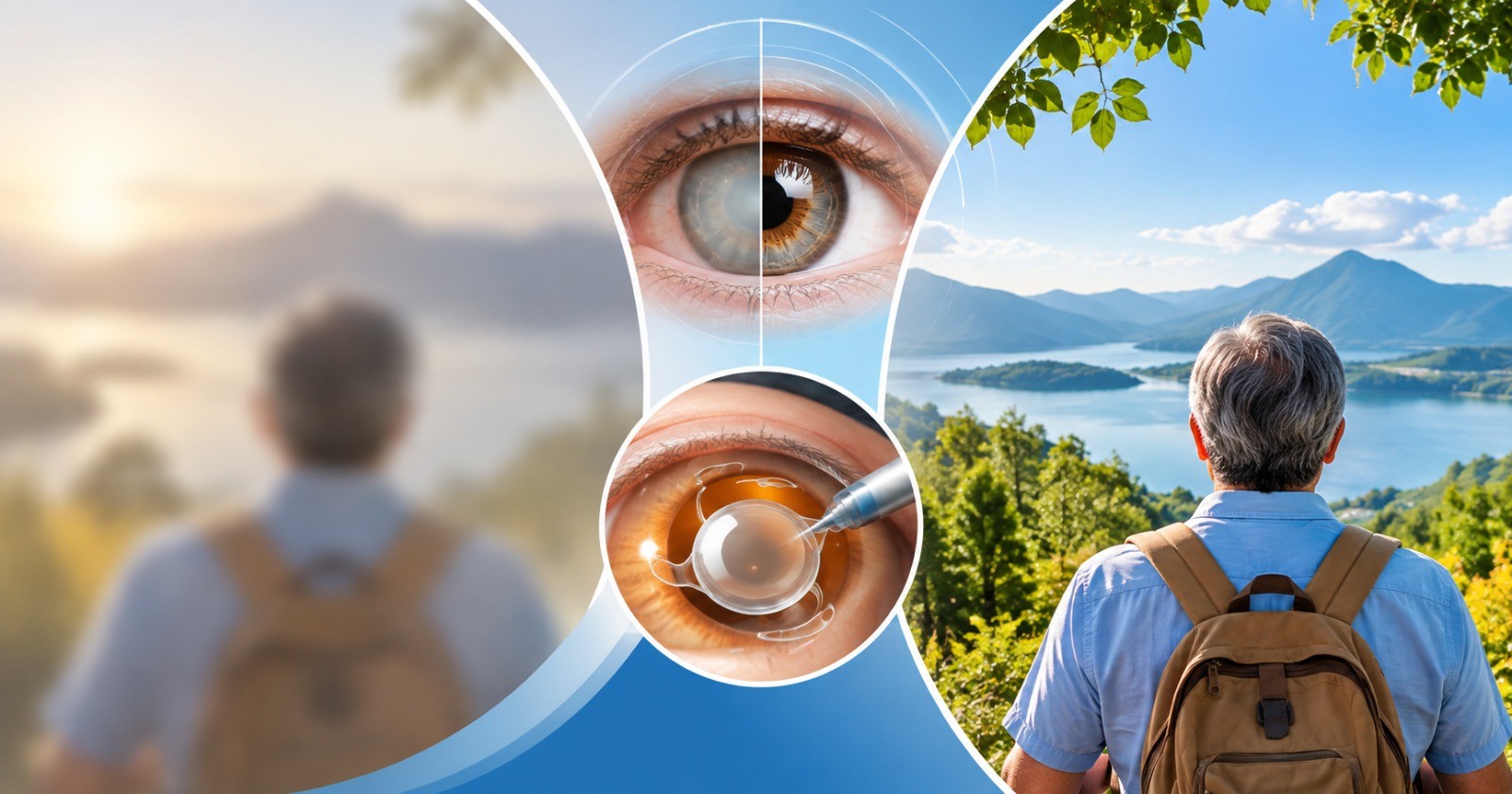
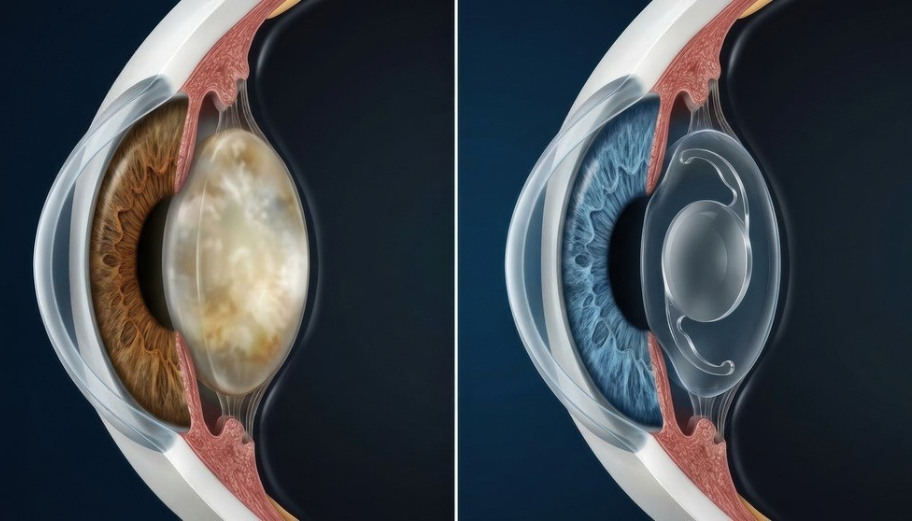
- Cataract: It is a condition where the naturally transparent crystalline lens turns opaque, often seen in the elderly, and goes unnoticed until it significantly impairs vision. The symptoms include diminished vision, constant changes in spectacle power, halos and glare, and transient blurring of vision. Using the latest diagnostic tools and surgical techniques, we provide treatment plans to restore your vision through advanced cataract surgery options.
- Lasik: Our certified corneal specialists use advanced laser technology to reshape the cornea with precision, providing you with clear vision. Our preoperative assessment ensures that you are a suitable candidate for LASIK, and our postoperative care guarantees a smooth recovery.
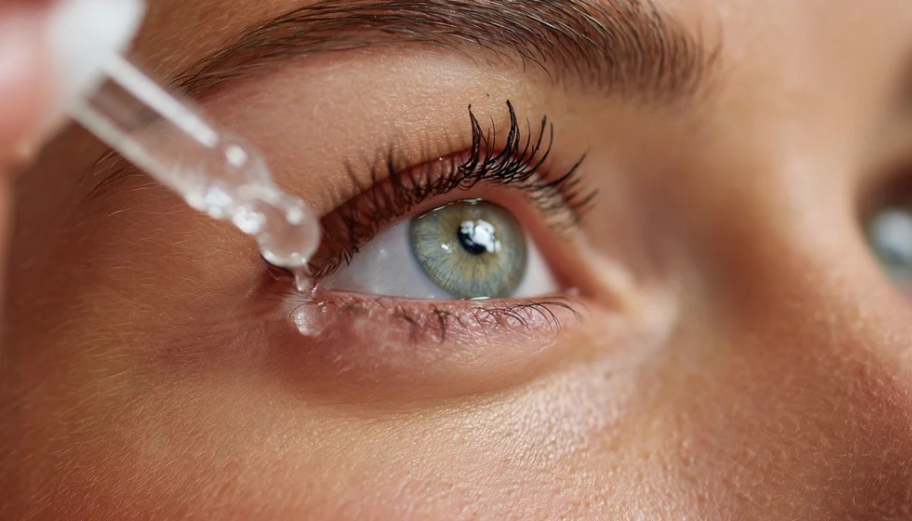
- Dry Eyes: In today's digital age, excessive screen time across all age groups leads to dry Eyes. Symptoms like photophobia, redness, irritation, and blurring of vision are common. we provide solutions to reduce discomfort and protect your vision. Our treatment options range from artificial tears and prescription medications to advanced therapies such as punctal plugs and intense pulsed light (IPL) therapy. We focus on the root causes of dry eye to provide relief and improve your eye health.
- Paediatric Ophthalmology: At KIMS-Arete Hospital, special care and attention is exercised when it deals with the examination and treatment of vision problem in children as unlike adults, they cannot subjectively expression their problems or issues. The Paediatric Ophthalmology at KIMS-Arete Hospital provides the best possible care for children’s eye problems with compassion. We take up all the types of paediatric eye pathologies whether simple or complex. Often the vision abnormalities in children could be traced to various underlying diseases. At KIMS-Arete Hospital not just the vision issues but various other associated diseases can be diagnosed and treated, under a single roof by well-experienced healthcare professionals, with the latest state of the art diagnostics and therapeutical care.