Emergency surgeries
The Emergency Department (Casualty) at KIMS-Arete Hospital provides 24-hour patient care and emergency services throughout the year, which is well connected even to the remotest parts of the city with a network of ambulances. The multimodal care from various disciplines provides the best critical care to the entire spectrum of neuroemergencies.
Head injury treatment
- Decompressive Craniectomy: Traumatic brain injury (severe head injury) is a serious condition, and if not treated within time, it causes increased pressure within the brain (intracranial hypertension; IPC). Decompressive craniectomy is a life-saving surgical procedure for treating increased ICP.[BM35.1]
- Cranioplasty: Surgical intervention intended to repair any cranial defects caused by previous injuries or neurosurgery complications, such as decompressive craniectomy, etc.
Stroke (surgical management)
- Decompressive Craniectomy: Increased pressure within the brain is often caused by cerebral artery occlusion leading to infarction (which is called as stroke). Decompressive Craniectomy is used to treat high intracranial pressure that does not respond to other treatment options.[BM36.1]
- Cranioplasty: Early cranioplasty is helpful in the restoration of functional and cognitive impairments, especially orientation, language ability, self-care ability, and mobility in patients suffering from spontaneous cerebral haemorrhage (stroke).[BM37.1]
- Craniotomy: A common neurosurgery of removing a part of the skull bone for direct access to the brain, thus treating a variety of neurological concerns, including brain strokes.
- Mechanical Thrombectomy: It is an endovascular procedure with minimally invasive technique where the blood vessels are reached endovacularly and the mechanical blockage is cleared.
Elective surgeries:
Elective surgeries are scheduled in
advance because they do not involve a medical emergency. The scheduling of the
surgery will not impact on the treatment and recovery process.
Vascular Neurosurgeries
Cerebrovascular surgery: Surgical management of various pathologies in the brain.
- Brain Aneurysm Treatment: Excellence in treating aneurysms with both endovascular and open surgeries.
- Aneurysm Clippings: A type of microsurgery, the brain aneurysm clipping utilises metal surgical clip necessary to block an aneurysm in the brain through an operating microscope.[BM38.1]
- Endovascular Aneurysm Repair: A brain aneurysm is an abnormal bulging outward of one of the arteries in the brain. Endovascular therapy is a minimally invasive procedure that accesses the treatment area from within the blood vessel.[BM39.1]
- Arteriovenous malformations Surgeries: The definitive treatment for arteriovenous malformations is either surgery, endovascular embolization or focused radiation therapy.
- Microsurgical Resection for Arteriovenous Malformations: The neurosurgeons may perform a microsurgical resection to treat the busting of an arteriovenous malformation which starts to bleed into the brain. They may a lso operate on an arteriovenous malformation that's at serious risk of bursting.[BM40.1]
- Stereotactic Radiosurgery for Arteriovenous Malformations: Patients with hereditary haemorrhagic telangiectasia (HHT) suffering from multiple brain arteriovenous malformations (AVMs) are generally well served by stereotactic radiosurgery. It also has a low complication rate.[BM41.1]
- Endovascular embolization: The treatment goal for cerebral arteriovenous malformations is to prevent bleeding. For this purpose, complete obliteration is done which often requires multidisciplinary approaches, including endovascular embolization. It is generally the first step of treatment in multimodal treatments.[BM42.1]
- Cavernoma (also called cavernous malformations (CM): These are benign intracranial vascular malformations that form during development of the baby in the womb. Surgical resection of symptomatic cavernomas is done. Several studies report excellent surgical outcomes (70-97%) for cerebral and cerebellar cavernomas.
Neuro oncology
- Brain Tumour Surgery: To treat brain tumours, surgery is the first and most common treatment modality. Management of brain tumour may require interventions such as craniotomy/excision or biopsy.[BM44.1]
- Keyhole surgery: Also called neuroendoscopy and endoscopic neurosurgery, this brain surgery is done to remove the tumour (cancer) or fluid from the brain (hydrocephalus). It requires a smaller opening and less brain retraction when compared with conventional surgery.[BM45.1]
- Skull Base Surgery: Termed as one of the most demanding surgeries, this advanced neurosurgery is done both as an open and as an endoscopic surgery.
- Awake Procedures: This critical surgery requires the medical acumen of neurophysiologists, neurosurgeons, and anaesthesiologists to target the preservation of vital brain areas which control speech, movement, or sensation, while enabling extensive tumour removal and maintaining neurological function.
- Stereotactic Procedures: Stereotaxis is the process of utilizing imaging studies (MRI or CT tests) assisted with a computer to precisely locate and target a tumor or other lesions inside the brain.
Functional Neurosurgery
- Microvascular Decompression for Trigeminal Neuralgia: Also known as the Jannetta procedure, microvascular decompression is the most common surgical procedure for the treatment of trigeminal neuralgia and works on the principle of removing the pressure on the trigeminal nerve, which is caused by an overlapping blood vessel that compresses the nerve.[BM47.1]
- Microvascular Decompression (MVD) for Hemifacial Spasms: Over the last decade, microvascular decompression has been established as the curative treatment of the primary Hemifacial Spasm (HFS), arising due to a neurovascular compression of the facial nerve.[BM48.1]
- Deep Brain Stimulation (DBS): A therapeutic neurosurgical advancement treating various brain disorders such as Parkinson's Disease, essential tremors, dystonia, etc.
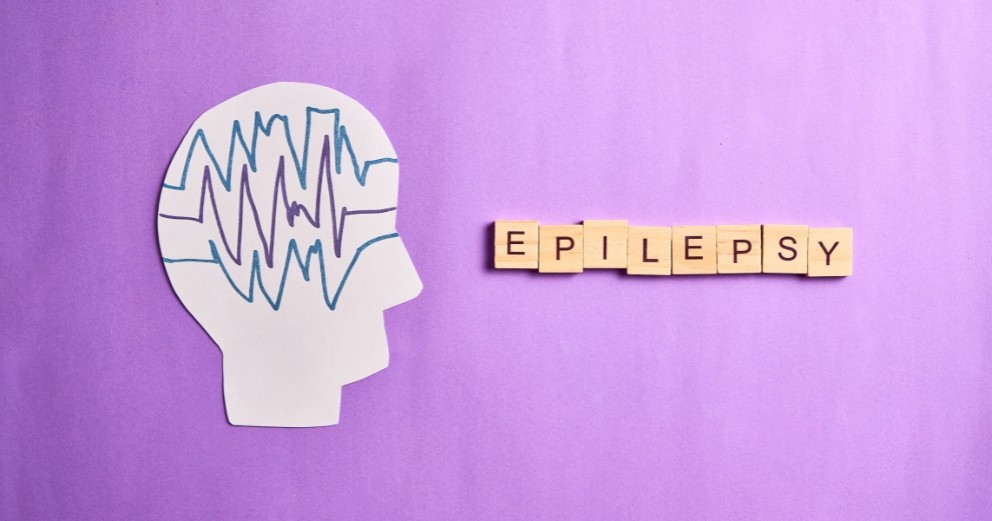
- Epilepsy surgery: The epilepsy surgery is performed in certain cases which are nonresponsive to medication. The surgery can help in reduction of either the number, or the severity of the seizures or both.
Paediatric Neurosurgery
- Endoscopic third ventriculostomy: This is a surgical procedure to drain excess cerebrospinal fluid in the head by creating a bypass that eliminates the need for a shunt. Endoscopic third ventriculostomy is necessary for patients suffering from hydrocephalus which is caused by a blockage of the flow of cerebrospinal fluid.
- Ventriculoperitoneal Shunt Surgery: A ventriculoperitoneal (VP) shunt is a cerebral procedure to drain excess cerebrospinal fluid (CSF) that develops when a blockage is formed, obstructing the normal outflow. The apparatus consists of a ventricular catheter connected to a valve and then connected to a distal catheter. These advanced components are expected to reduce shunt malfunctions and optimize neurosurgical patient care.[BM49.1]
- Meningomyelocele repair: This surgical procedure is performed on an infant who was born with spinal birth abnormality. It is usually done within 12-24 hours in severe open cases or at age of one year in case of a closed one. This surgery can also be used if a tiny, swelling sac or cyst protrudes from the newborn's spinal column.[BM50.1]
- Spina bifida repair: Spina bifida repair is done in patients who have a congenital defect of the spinal column or cord.
- Surgery for tethered cord syndrome: The surgery (untethering) involves releasing of a stretched tissue of the spinal cord.
Advanced Equipment & Technologies of Neurosurgery
- Neuronavigation: Functioning like a GPS system, the technology of Neuronavigation enables neurosurgeons to accurately locate the pathology in deeper parts of the nervous system, thus helping them in the meticulous planning and execution of complex brain and spinal surgeries, while safeguarding the vital anatomical structures.
- Operating Microscope: Committed to deliver the best through innovation, KIMS-Arete Hospital acquired the world's most advanced microscope (Kinevo-900) for complex and delicate neurosurgical procedures, ensuring high-quality magnification, illumination, and accuracy for various neurosurgery procedures.
- Intraoperative Neuromonitoring System: The state-of-the-art Intraoperative Neuromonitoring (IONM) system at KIMS-Arete Hospital used during neurosurgical procedures provides the ability to accurately monitor the functional integrity of the brain and the nerves, thus assuring a reduction in the incidence of postoperative neurological complications apart from delivering optimal surgical outcomes.
- Drill System: This precision drill system perpetuates into the bones, enabling the neurosurgeons a clean bone cuts with utmost control and minimal invasiveness, thus exemplifying our surgical finesse, thereby optimising patient outcomes, postoperative recovery, and patient oriented care.
- O-ARM: KIMS-Arete Hospital technological prowess is also integrated with a mobile, intraoperative 2D and 3D imaging system which initiates real-time, high-quality imaging of the surgical area, similar to a CT scanner. Coupled with the medical and surgical acumen of the dedicated and skilled team these technological advancements, establish KIMS-Arete Hospital as not just the best neurosurgery hospital in Hyderabad but also as a benchmark of excellence in Neurosurgery.[