Dealing with a Slipped Disc in Thane: Symptoms, Causes, and Finding the Right Care
Dr Jayesh Bhanushali, Consultant - Spine Surgery
If you’ve ever felt a sudden, sharp catch in your lower back, or a tingling pain shooting down your leg, you know how quickly it can stop your day in its tracks. Maybe it happened after a packed commute on the local train, a long drive down Ghodbunder Road, or just while bending to pick up a dropped pen. Either way, a slipped disc is painful and deeply frustrating.
The good news is that most slipped discs (medically called herniated discs) heal without surgery. Still, knowing what you’re dealing with, and who to see in Thane, can save you weeks of unnecessary pain. Here’s a straightforward guide to understanding your back pain and your treatment options.
Why Does a Slipped Disc Happen?
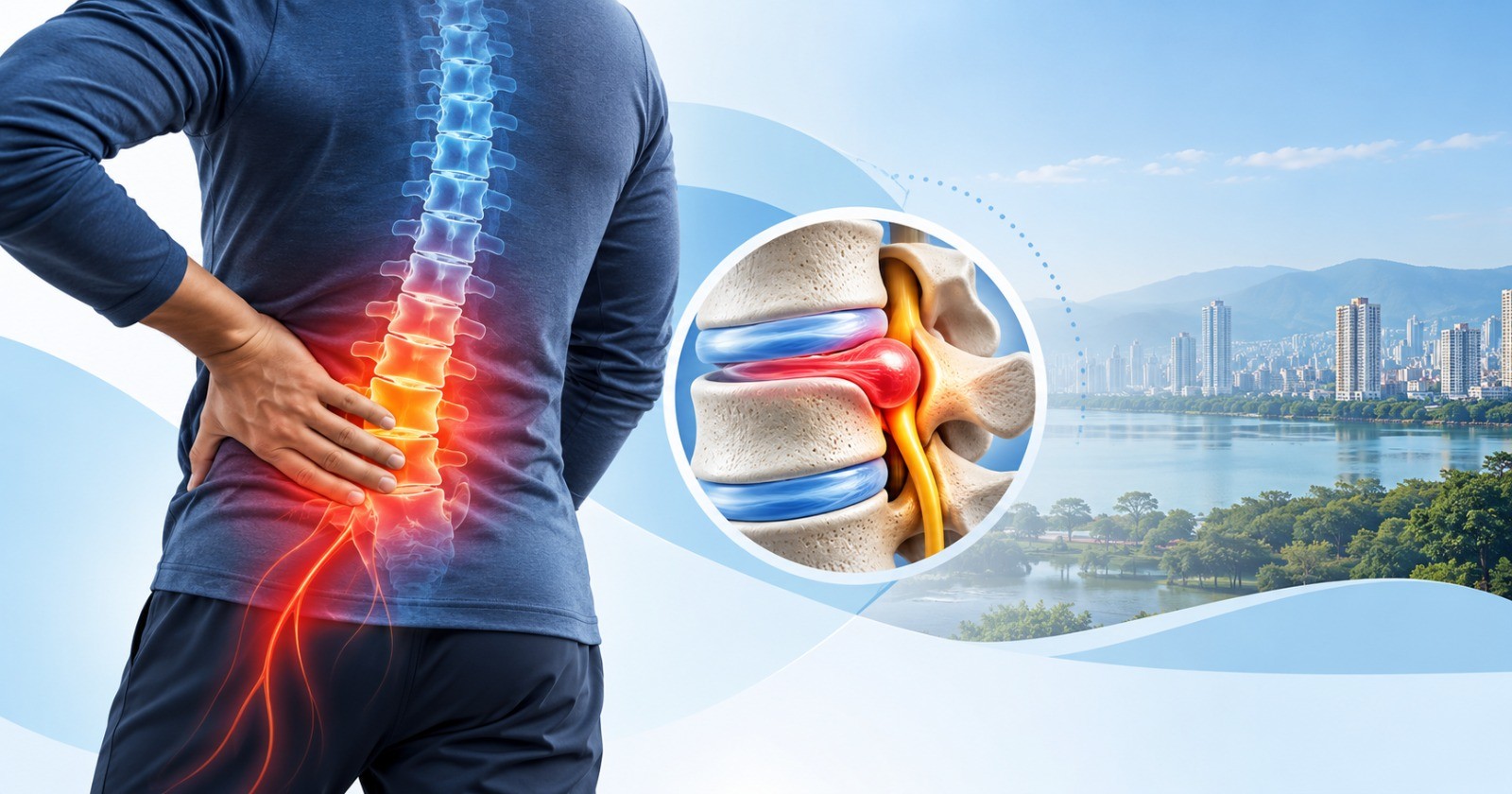
Your spine is a stack of bones (vertebrae) cushioned by soft, jelly-filled discs that work as shock absorbers. A slipped disc happens when the jelly-like centre pushes out through a tear in the tougher outer ring. When that bulge presses on a nearby spinal nerve, the result is intense pain.
The most common causes include:
- Wear and tear (degeneration): With age, discs lose water content, becoming less flexible and more likely to tear.
- Poor posture and a sedentary lifestyle: Hours hunched over a laptop or stuck in long commutes put extra stress on the lower back.
- Improper lifting: Lifting heavy objects with your back instead of your legs is a classic trigger.
- Sudden strain or injury: A sharp twist, a fall, or a sports injury can rupture a disc in an instant. Serious accidents may even lead to spinal trauma that needs specialist attention.
- Radiating arm or leg pain: A slip in the lower back (the most common site) typically sends pain through the buttock, thigh, and calf, often called sciatica. In the neck, the pain shoots down the shoulder and arm, and neck disorders like this are often overlooked until the symptoms become hard to ignore.● Numbness and tingling: Many people describe a “pins and needles” feeling in the area served by the affected nerve.
- Muscle weakness: You may stumble, struggle to lift your toes, or find it hard to grip things securely.
- Pain that worsens with movement: Sneezing, coughing, or certain positions can set off a sharp, electric-shock-like pain.
- Conservative treatment fails: You’ve followed physiotherapy and medication faithfully for 6 to 12 weeks, and the pain still severely limits your daily life.
- There is significant muscle weakness: If you have “foot drop” (difficulty lifting your foot) or your leg gives way, surgery may be needed to prevent permanent nerve damage.
- Cauda equina syndrome (a medical emergency): If you suddenly lose bowel or bladder control, or feel profound numbness in the saddle area (inner thighs and groin), go to a hospital emergency room immediately. It’s rare, but it needs emergency surgery to relieve pressure on the nerves.