A Persistent Cough, Night Sweats, and Weight Loss — Could It Be TB?
India accounts for approximately 26% of the global tuberculosis burden, making it the country with the highest number of TB cases in the world.
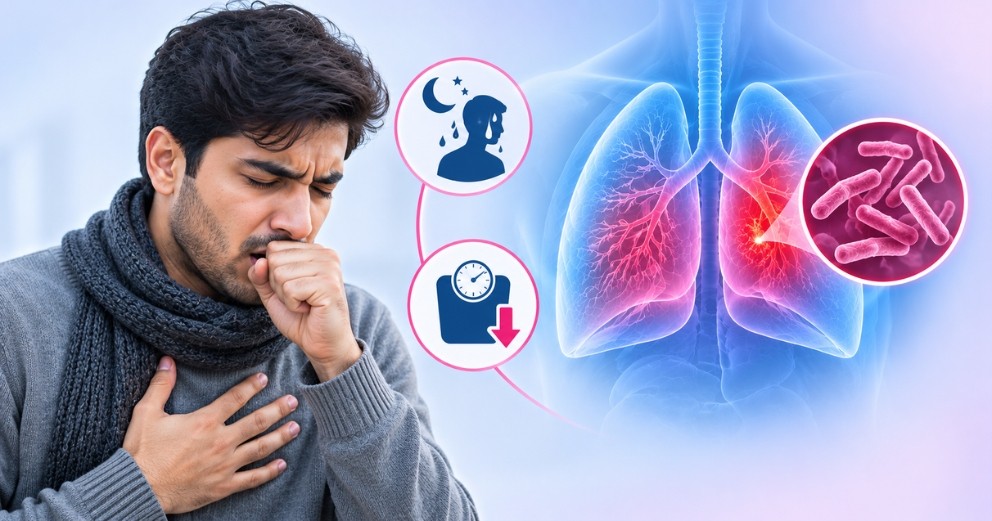
The classic triad of symptoms that should raise TB as a serious consideration is well known to clinicians but underappreciated by the public: a persistent cough, night sweats, and unexplained weight loss. Understanding what these symptoms mean together, when to investigate, and why early diagnosis changes outcomes so dramatically is relevant to every adult in India, not just those in high-risk groups.
Why TB Is Still Being Missed
Part of the reason tuberculosis symptoms are missed or delayed is that each individual symptom is common and easily explained away. A cough is attributed to pollution or a lingering respiratory infection. Weight loss is assumed to reflect stress or dietary changes. Night sweats are attributed to the weather or anxiety. It is only when these symptoms are present together, and when they persist without an adequate alternative explanation, that the clinical picture becomes compelling.
The Symptoms in Detail
Persistent cough
The cough of pulmonary tuberculosis tends to persist beyond three weeks, which is the standard threshold that separates a cough warranting investigation from one likely to resolve spontaneously. It may be dry initially, becoming productive of mucus as the disease progresses. Blood-stained sputum, called haemoptysis, is a more advanced sign but an important one that requires immediate investigation. In the Indian context, any cough lasting more than two to three weeks in a person with risk factors for TB should be investigated, not reassured and observed.
Night sweats
Rather than just feeling warm as you sleep, the night sweats of tuberculosis are generally drenching, soaking the clothes and bedding to a degree that is clearly abnormal. They happen as a result of the immune system's reaction to the tuberculosis bacteria, which causes a fever cycle that frequently peaks in the late evening and early morning, resulting in the sweating that follows the resolution of the fever. When combined with a cough and weight loss, night sweats are a serious clinical warning sign. However, night sweats alone can have a variety of explanations.
Unexplained weight loss
TB produces weight loss through a combination of reduced appetite, increased metabolic demands from the chronic infection, and in some cases the malabsorption that accompanies gastrointestinal or disseminated disease. The weight loss can be dramatic, five to ten kilograms over weeks to months, and is often the symptom that finally prompts a patient to seek medical attention after dismissing the cough and sweats for some time.
Who Is at Risk
While TB can affect anyone, certain groups carry a significantly higher risk and should have a lower threshold for investigation when the classic symptoms are present:
- People living in close contact with a known TB case
- Those who are immunocompromised, including people living with HIV, patients on long-term corticosteroids or other immunosuppressive medications, and those receiving treatment for autoimmune conditions or malignancy
- Patients with diabetes, which increases TB susceptibility approximately three-fold
- People who have lived in or frequently visited high-burden areas
- Healthcare workers and others with occupational exposure
- People with a history of previous TB, particularly those who did not complete treatment
- Those with malnutrition, chronic alcoholism, or chronic kidney disease
Beyond the Lungs — Extrapulmonary TB
While pulmonary tuberculosis symptoms are the most recognisable, TB can affect almost any organ in the body, and extrapulmonary presentations are common enough that TB should be in the differential diagnosis for a range of conditions:
- TB lymphadenitis - swollen lymph nodes, most commonly in the neck, that are painless, firm, and matted together
- TB meningitis - headache, fever, and neck stiffness in a patient with risk factors; one of the most serious forms of the disease
- Pleural TB - fluid accumulation around the lung producing breathlessness and chest pain
- Abdominal TB - chronic abdominal pain, distension, and change in bowel habit
- TB of the spine (Pott's disease) - back pain, sometimes with neurological symptoms if the spinal cord is compressed
- TB pericarditis - fluid around the heart causing breathlessness and reduced exercise tolerance
- Renal TB - often presenting with sterile pyuria, where white blood cells are found in the urine without a positive standard bacterial culture
How TB Is Diagnosed
The investigation of suspected tuberculosis in India begins with a sputum examination.
- The most generally available test is sputum smear microscopy for acid-fast bacilli, which gives a rapid result. The sputum culture is more sensitive and also allows drug sensitivity testing which is important in the face of increasing prevalence of treatment resistant TB.
- With the CBNAAT or GeneXpert test available in most parts of India, quick molecular diagnosis of TB and identification of rifampicin resistance simultaneously within hours has become possible. This test has supplanted smear microscopy to a considerable extent as the firstline investigation wherever available.
- Chest X-ray typically shows upper lobe infiltrates, cavitation, and in some cases miliary shadowing, though imaging findings can be variable and do not replace microbiological confirmation.
- In extrapulmonary TB, the relevant specimen for examination depends on the site of disease — lymph node biopsy, pleural fluid analysis, CSF examination, or tissue biopsy from the affected organ.
Treatment and What Patients Need to Know
Drug-sensitive TB treatment in India involves a six-month course of combination antibiotic therapy under the Revised National Tuberculosis Control Programme, now called the National TB Elimination Programme. The standard regimen uses four drugs for the first two months followed by two drugs for the subsequent four months.
The most important thing patients need to understand about TB treatment is that completing the full course is not optional. Stopping treatment early because symptoms have improved is the primary driver of drug resistance, and drug-resistant TB is substantially more difficult, more toxic, and more expensive to treat than drug-sensitive disease. Treatment completion, with the support of directly observed therapy where needed, is what cures the patient and protects their household contacts.
The Bottom Line
Persistent cough, night sweats, and weight loss together are not a combination to manage with cough syrup and a wait-and-see approach. In India, where TB remains endemic and where the disease can affect people across all socioeconomic groups, this symptom combination warrants investigation rather than reassurance. A sputum test and a chest X-ray are the starting point, and the earlier the diagnosis is made, the more complete the recovery and the lower the risk to the people around the patient.