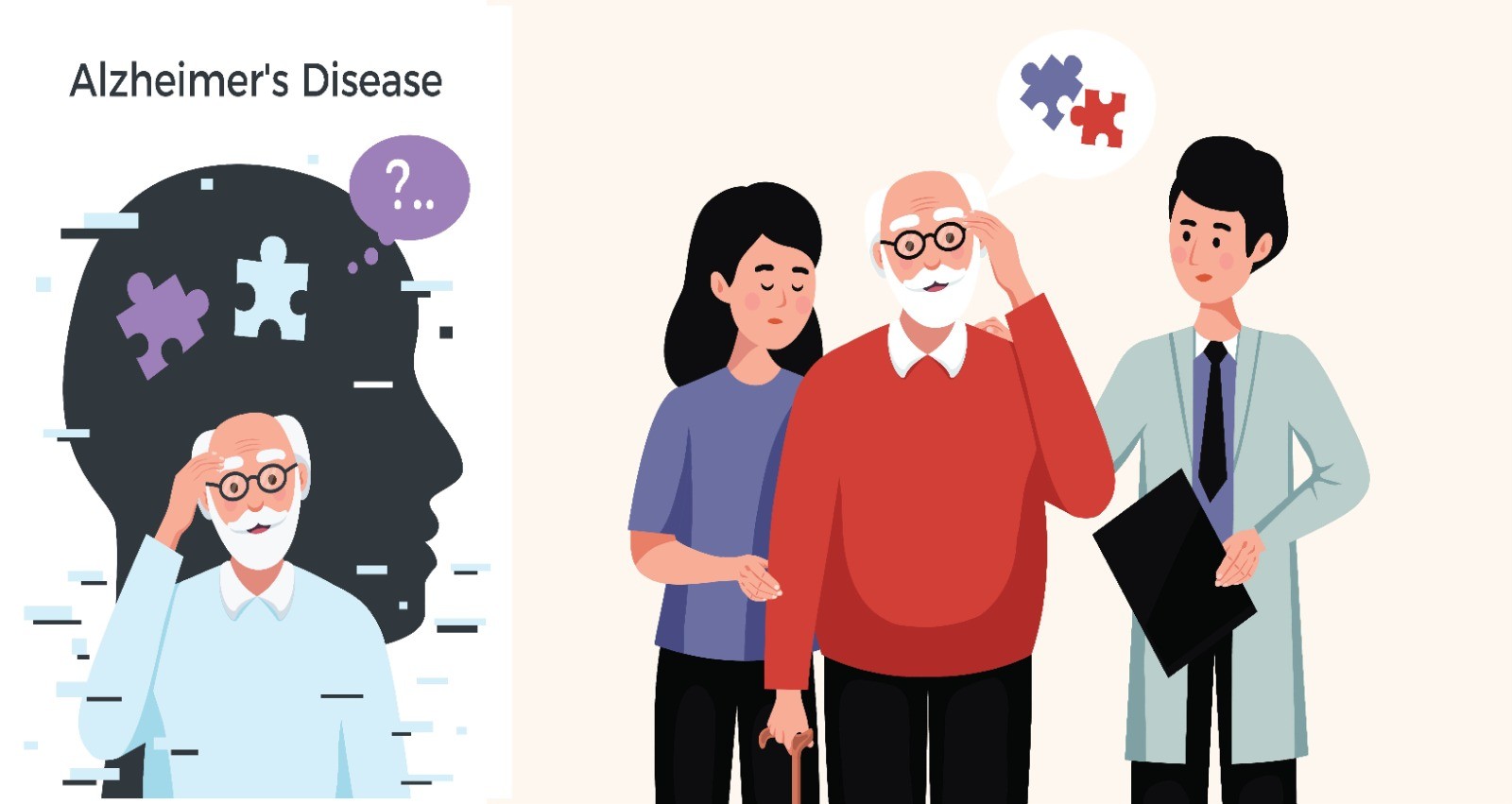
There is a pattern I increasingly notice in clinical practice.
A person may have managed a business, handled family finances, paid bills, travelled independently, solved problems and made dozens of decisions every day for 30 or 40 years. Then he retires.
Gradually the children take over the bank accounts. Someone else pays the electricity bill. Someone else books the tickets. Someone else handles the mobile phone. Someone else decides what has to be purchased and where the family will go.
The retired person is loved and well cared for—but increasingly becomes a spectator.
This can have an unintended consequence: subtle cognitive decline becomes difficult to recognise.
If a person is no longer handling money, nobody notices that he can no longer calculate change correctly. If he no longer travels alone, nobody discovers that he has begun losing his way. If somebody else administers his medicines, nobody notices that he repeatedly forgets whether he has taken the morning tablets.
Months or years may pass before the problem becomes obvious.
Sometimes the first dramatic clue appears during admission to hospital for pneumonia, surgery, a fracture or another medical illness. Suddenly the patient becomes confused, restless, disoriented, sleepless or starts behaving unusually. The family says, “He was absolutely fine before admission.”
On closer questioning, however, there may
have been subtle memory problems for two or three years.
This sudden confusion is called delirium.
Older people with underlying cognitive impairment or dementia are particularly
vulnerable to developing delirium when they become acutely ill or are admitted
to hospital.
Hospitalisation has not necessarily “caused
dementia.” Rather, the stress of illness may expose a brain that was already
vulnerable.
We Have More Power Over Dementia Than We
Once Thought
Alzheimer’s disease is a neurodegenerative
disorder. Once the biological process is established, it tends to progress.
But this statement should not be
interpreted as: “Nothing can be done.”
That is outdated thinking.
The 2024 Lancet Commission identified 14
potentially modifiable factors associated with dementia, and estimated that
addressing them across the lifespan could potentially prevent or delay around
45% of dementia cases at the population level. The World Health Organization’s
updated 2026 guidance has similarly emphasised that there is substantial scope
for dementia risk reduction.
The important factors include high blood
pressure, diabetes, high LDL cholesterol, obesity, physical inactivity,
smoking, excessive alcohol consumption, hearing loss, untreated visual
impairment, depression, social isolation, lower educational exposure, head
injury and air pollution.
What is good for the heart is, to a remarkable extent, also good for the brain.
Controlling blood pressure at 45 may matter to your memory at 75. Treating diabetes properly is brain care. Treating hearing loss is brain care. Correcting significant visual problems is brain care. Remaining socially involved is brain care.
Brain health does not begin at the memory clinic. It begins decades earlier.
Exercise Your Brain—Challenge It
People often ask me, “What exercise should I do for my memory?”
Sudoku and crossword puzzles are fine if you enjoy them. But the principle is broader.
Keep learning.
And by learning, I mean genuinely learning something you did not know before.
Learn one new thing every day. Read about an unfamiliar subject. Learn to use a new application. Learn music. Learn an instrument. Learn photography. Learn a new route. Study history. Teach somebody. Join a discussion group.
And one of the most powerful forms of cognitive challenge is learning a new language.
Do not merely memorise ten words from an app. Try to read it, write it, understand it and speak it.
Language learning is an extraordinary workout for the brain. Reading requires visual recognition and language processing. Writing demands memory, attention, planning and motor output. Listening requires rapid auditory processing. Speaking requires retrieval of vocabulary, grammar, pronunciation and executive control, often within fractions of a second.
Instead of activating one isolated “memory centre,” such learning engages distributed networks across frontal, temporal and parietal regions, together with auditory, visual and motor systems.
So a Telugu-speaking 60-year-old deciding to learn another language should not say, “What is the use at my age?”
The difficulty is part of the benefit.
WHO’s updated recommendations support cognitive training, cognitive stimulation and continued social engagement as components of dementia risk reduction.
However, we must be scientifically accurate: learning a language, solving puzzles or practising memory exercises cannot guarantee that a person will never develop Alzheimer’s, nor can they by themselves stop established Alzheimer’s disease. What they can contribute to is maintaining cognitive activity and building what neurologists call cognitive reserve—the brain’s ability to cope better with age- and disease-related changes.
The message is therefore not “Do Sudoku and you will not get dementia.”
The message is: never allow your brain to retire.
Your Muscles Matter to Your Memory
When discussing brain health, we often talk about mental exercises and forget the body.
The brain needs exercise too—but some of its best exercise comes through the legs.
Walking briskly, cycling, swimming or other suitable aerobic activity improves cardiovascular health and addresses several dementia risk factors simultaneously. WHO recommends that adults generally aim for at least 150 minutes of moderate-intensity physical activity each week, depending of course on their health and medical limitations.
But particularly after middle age, we should also talk about strength training.
Maintaining muscle is important for mobility, insulin sensitivity, metabolic health, balance and independence. Adults should include muscle-strengthening activities involving the major muscle groups on at least two days per week when medically appropriate.
This does not necessarily mean joining an expensive gym.
Walking regularly, supervised resistance exercises, elastic bands, light weights, sit-to-stand exercises and appropriately prescribed strength training can all have a place.
For older adults, balance training is equally important. A fall causing a head injury or prolonged immobility can have consequences far beyond the fracture itself.
Eat for the Brain You Want to Have Twenty Years From Now
There is no miracle “Alzheimer’s food.”
A sensible brain-healthy diet is remarkably similar to a heart-healthy diet: vegetables, fruits, pulses, whole grains, nuts and seeds, adequate protein, fish where appropriate, and predominantly minimally processed foods, while limiting excess sugar, salt, trans fats and heavily processed foods.
Healthy eating does not require abandoning our traditional cuisine. Our local diet can be excellent when vegetables, greens, dals, pulses and fish predominate and deep-fried foods, refined carbohydrates, excess salt and sweets remain occasional rather than everyday foods.
And no vitamin, tonic or supplement should be sold as a substitute for controlling hypertension, diabetes, cholesterol, physical inactivity and smoking.
Do Not Take Away Every Responsibility From an Older Parent
Families naturally want to make life easier for ageing parents.
But there is a difference between supporting independence and removing independence.
Unless safety has become an issue, continue involving older family members in decisions.
Ask their opinion. Discuss family plans with them. Let them maintain a household budget. Let them calculate expenses. Encourage reading and writing. Let them plan a journey. Ask them to teach grandchildren something. Encourage participation in social, cultural, religious or community activities.
If finances have become unsafe, supervision is obviously necessary. But even then, try to maintain meaningful participation.
Social isolation and cognitive inactivity are not benign.
A retired person needs a reason to wake up in the morning that involves more than television, meals and medication.
When Should Forgetfulness Be Taken Seriously?
A memory evaluation should be considered when a person begins repeatedly asking the same questions, forgetting recent conversations or appointments, getting lost in familiar areas, making unusual mistakes with money, struggling with previously familiar tasks, mixing up medications, having increasing difficulty finding words, showing unexplained changes in personality or judgement, or progressively becoming dependent on others for activities they previously managed independently.
The key word is change.
We are not comparing a 75-year-old with a 25-year-old. We are asking whether that particular person's abilities have declined from his or her previous level.
And a memory assessment is not an examination that a patient can “pass” or “fail.”
There should be no stigma attached to it.
Not every person complaining of forgetfulness has Alzheimer’s disease. Sleep disorders, depression, anxiety, thyroid disease, vitamin deficiencies, medication effects, hearing impairment and several neurological and medical disorders can affect memory. Identifying these conditions is itself an important reason to seek assessment.
Why Early Diagnosis Matters More Than Ever
Until recently, people often asked: “If there is no cure, why should I know early?”
That question is becoming increasingly outdated.
Early diagnosis gives the patient and family time to control vascular and lifestyle risk factors, treat associated illnesses, organise medications, plan finances and future care, maintain independence safely and use established symptomatic treatments where appropriate.
More importantly, Alzheimer’s treatment itself is changing.
A new generation of medicines called anti-amyloid monoclonal antibodies can target one of the abnormal proteins involved in Alzheimer’s disease. They do not restore a brain already severely damaged by dementia, and they are not suitable for every patient. But in carefully selected people with early Alzheimer’s disease, these treatments can slow the rate of clinical decline.
One such drug, lecanemab (Leqembi), was launched in India in August 2026 following regulatory approval. India is therefore entering the era of disease-modifying therapy for Alzheimer’s disease.
This treatment is not as simple as prescribing a tablet for memory. Patients require careful selection, confirmation of Alzheimer-type amyloid pathology and appropriate MRI monitoring. Anti-amyloid antibodies can cause a complication known as ARIA, involving brain swelling or small areas of bleeding, which means treatment must be supervised by appropriately equipped specialists.
Other antibodies, including donanemab, have also been approved in some countries, and several new treatments are being studied.
Their availability, affordability and the infrastructure required for safe treatment remain challenges. But it is reasonable to expect that centres in major cities—including Visakhapatnam—will increasingly have to develop the diagnostic and monitoring facilities necessary for these therapies.
And this makes early recognition even more important.
A patient cannot benefit from treatment intended for early Alzheimer’s disease if the disease is recognised only after it has become advanced.
World Alzheimer’s Day is observed on September 21 every year. The international campaign this year is placing particular emphasis on diagnosis and on the rapidly changing landscape of Alzheimer’s research and clinical trials.
Perhaps the most useful thing every family can do is look around the dining table and ask:
“Is someone in our family forgetting more than they used to—and have we been explaining it away?”
Do not panic over every forgotten name.
But do not normalise progressive decline.
And do not tell an older person that there is nothing they can do because “age has come.”
Walk.
Strengthen your muscles.
Control your blood pressure, sugar and cholesterol.
Protect your hearing and eyesight.
Meet people.
Continue managing your life.
Read.
Write.
Teach.
Learn something that feels difficult.
Learn another language if you have always wanted to.
Keep making decisions.
And if memory is changing, have it assessed rather than hiding from the answer.
Alzheimer’s disease may be progressive. But our response to it does not have to be passive.
We may not yet be able to prevent every case or cure every patient, but there is already a great deal we can do to protect the brain, recognise disease earlier, preserve independence and, increasingly, slow the disease itself.