Are Cosmetic Procedures Safe?
Interest in cosmetic procedures has grown considerably in recent years. Treatments that were once available only to a narrow section of the population are now widely accessible, heavily marketed on social media, and offered in an increasing number of clinics. With that accessibility has come a more complicated situation for patients trying to figure out what is safe, what is not, and what questions to ask before agreeing to anything.
The short answer is that cosmetic procedures can be safe, but safety is not automatic. It depends largely on who is performing the procedure, where it is being performed, whether the patient is an appropriate candidate, and how well the risks have been communicated and understood beforehand.
Surgical vs non-surgical procedures
Cosmetic procedures broadly divide into surgical and non-surgical categories, and the risk profiles of the two are quite different.
- Surgical cosmetic procedures carry risks including pain or discomfort, nerve damage, anaesthesia complications, blood clots, and scarring. Complications from non-surgical cosmetic treatments are considerably rarer but still possible.
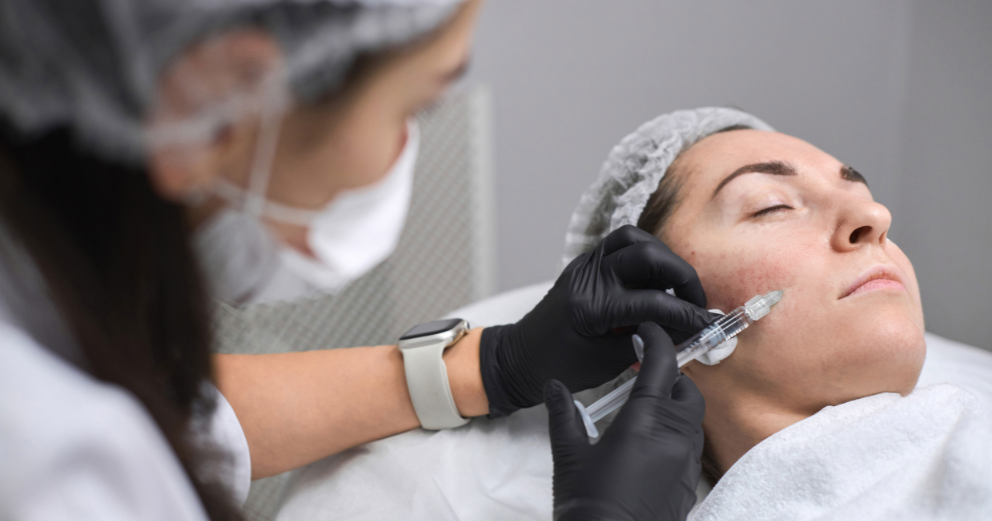
- Non- surgical cosmetic treatments such as botulinum toxin injections, dermal fillers, chemical peels and laser procedures are generally lower risk than surgery if performed by a competent practitioner. Nonetheless, they are not without complications. Filler injections involve a modest but genuine risk of vascular occlusion if the product is accidentally injected into a blood vessel, leading to tissue injury.
The skill and anatomical knowledge of the person performing the procedure determines how well these risks are managed.
What makes a procedure risky
Risk in cosmetic procedures is about the combination of patient factors, practitioner skill, facility standards, and aftercare.
Cosmetic surgery poses a considerably high risk of adverse outcomes when patient selection criteria are inappropriate and when there is a lack of thorough communication between the patient and the treating doctor before the procedure.
A person who is not medically fit for a procedure, or who has unrealistic expectations about outcomes, is at higher risk of a poor result than a well-selected candidate with clear expectations.
Combining multiple procedures in a single session significantly increases risk. A high proportion of patients who experience serious complications have risk factors including obesity and having multiple procedures performed during the same operation.
Reputable surgeons are conservative about combining procedures precisely because the cumulative physiological stress raises the likelihood of complications.
Minor complications such as bruising and swelling occur in most patients but resolve without intervention. More serious complications including infection, bleeding, and adverse reactions to anaesthesia occur in approximately 1 to 5% of cases across all cosmetic procedures.
The practitioner question
This is the most important factor in determining safety. Cosmetic procedures performed by appropriately trained, board-certified specialists in accredited facilities produce considerably better outcomes than the same procedures performed in unregulated settings by inadequately trained practitioners.
Although cosmetic surgery is elective, it is actual surgery that involves real risks and possible side effects. Safety should be the priority, and patients are encouraged to choose a board-certified specialist who is trained and experienced in the specific procedure being considered.
The growth of cosmetic treatments available in beauty salons, spas, and pop-up clinics has created a situation where procedures that carry genuine medical risk are being performed by people without adequate training to manage complications when they arise. This is where a significant proportion of adverse outcomes occur. The question to ask before any procedure is not just what the treatment involves, but what qualifications the person performing it holds and what happens if something goes wrong.
Non-surgical treatments: what to know
Non surgical cosmetic treatments have become the most frequently performed category of cosmetic interventions. Botulinum toxin and dermal fillers, laser treatments, skin boosters, and thread lifts are all widely available. Most, when performed correctly, are safe for appropriate candidates.
The risks associated with non-surgical treatments include bruising, swelling, asymmetry, infection, allergic reactions and in less common but more serious cases, vascular complications from filler injection.
Results from many non-surgical treatments are temporary, which is actually a safety advantage. A result that does not meet expectations will fade over time rather than requiring corrective surgery.
A consultation with a dermatologist or plastic surgeon before pursuing non-surgical treatments helps confirm that the chosen procedure is appropriate for the concern being treated and that the patient's anatomy and medical history do not raise any specific risks.
Questions every patient should ask
Before proceeding with any cosmetic procedure, surgical or non-surgical, a patient should have clear answers to the following:
- What are the specific risks of cosmetic surgery for someone with my health history?
- What qualifications does the practitioner hold and how many times have they performed this procedure?
- What facility will it be performed in and what are the accreditation standards?
- What does recovery involve and what complications should prompt me to seek urgent care?
- What happens if I am unhappy with the result?
Obtaining valid, information-based consent is crucial. Patients should be adequately informed of side effects and risks before making a decision, and this explanation should come from a qualified medical professional rather than a sales-oriented consultation.
Takeaways
Cosmetic procedures safety depends far more on who performs the procedure and in what setting than on the procedure itself. Surgical cosmetic treatments carry inherent risks including anaesthesia complications, infection, and nerve damage, while non surgical cosmetic treatments carry lower but real risks when performed incorrectly.
Choosing a qualified, board-certified specialist and having a thorough pre-procedure consultation are the most important steps any patient can take. Anyone considering a cosmetic procedure should ask direct questions about their practitioner's qualifications, the facility's standards, and the specific risks involved before making a decision.