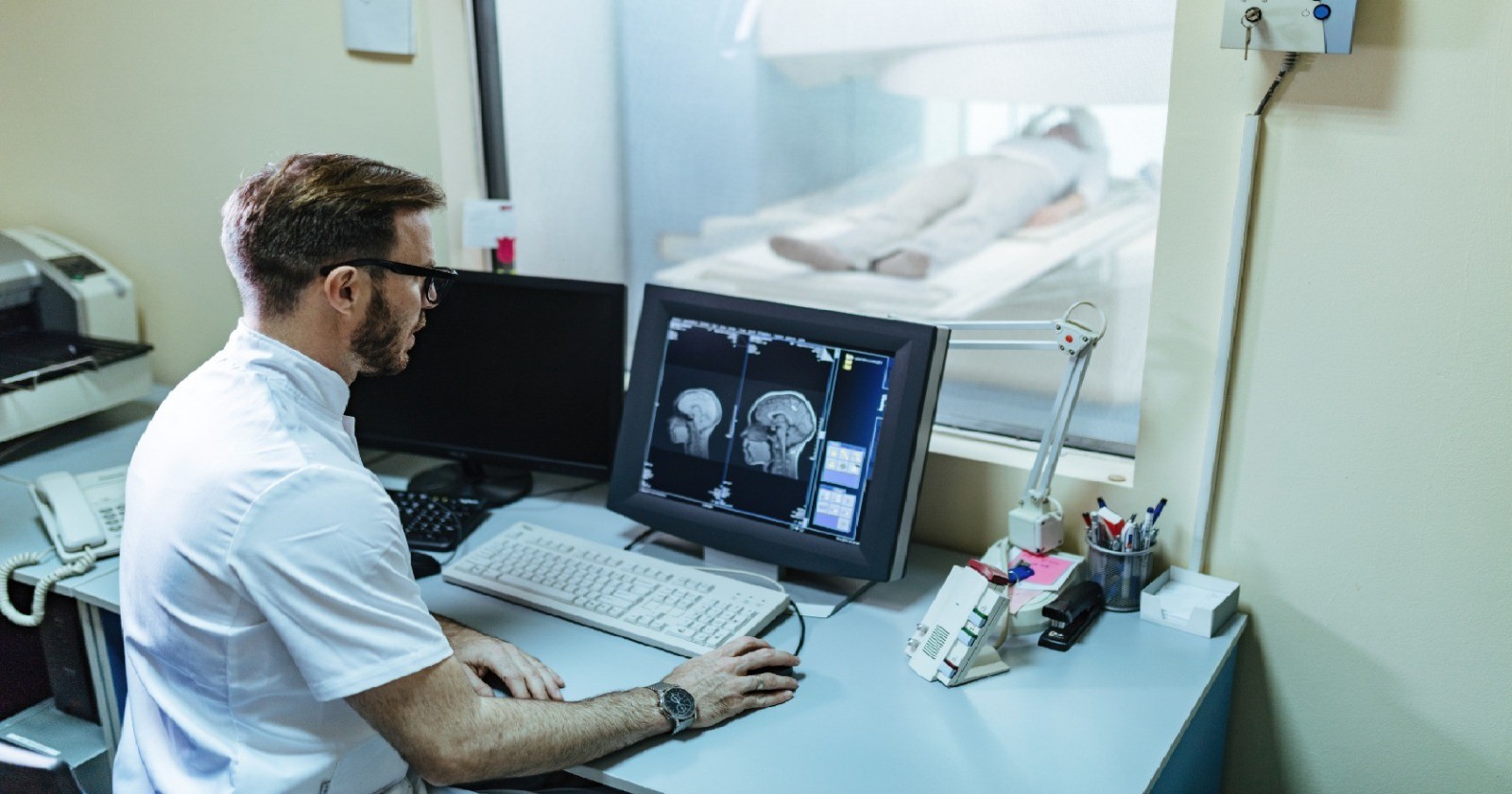
Are We Treating the Patient—or the MRI?
When headaches, dizziness, neck pain, tingling and body pains are symptoms of something deeper
- A patient comes to the clinic with headache.
- Another comes with dizziness.
- Someone else has neck pain, back pain, vague body aches, tingling in the fingers, heaviness in a leg, a strange sensation around the face, poor sleep, fatigue—or a collection of all of these.
- The symptoms may have been moving around for weeks or months.
- “Sometimes it is here, sometimes there.”
- “The pain changes.”
- “I feel something is wrong, but I cannot explain exactly what.”
- And almost invariably, there is an MRI.
- A small disc bulge.
- A mild disc protrusion.
- Some cervical spondylosis.
- A little foraminal narrowing.
- Perhaps an incidental sinus abnormality.
- And suddenly, the scan becomes the diagnosis.
- But is it?
- Are we treating the patient—or are we treating the scan?
The MRI is often the beginning of the story—not the end
- Modern imaging has transformed medicine.
- MRI has an extraordinary ability to show anatomical abnormalities that previously could not be seen.
- But there is a paradox.
- The better our imaging becomes, the more abnormalities we discover in people who are perfectly well.
- Disc degeneration, disc bulges and protrusions are common findings even in people without pain.
- Their prevalence increases with age.
- Therefore, finding an abnormality on an MRI does not automatically establish that the abnormality is responsible for the patient’s symptoms.
- A 45-year-old with neck pain may have a C5–C6 disc protrusion.
- But millions of 45-year-olds without neck pain may have exactly the same finding.
The crucial question therefore isn’t:
“What abnormality does the MRI show?”
It is:
- “Does this abnormality explain the patient’s symptoms, examination and clinical pattern?”
- That distinction is fundamental.
- A scan should support a diagnosis.
- It should not manufacture one.
The wandering symptom
- There is another pattern that neurologists encounter repeatedly.
- The headache changes character.
- The dizziness comes and goes.
- The tingling moves from one limb to another.
- One day it is the hand.
- The next day it is the face.
- Then perhaps the foot.
- There may be neck discomfort, chest tightness, fatigue, poor sleep, palpitations, a sense of internal restlessness and multiple bodily sensations.
- The patient is genuinely experiencing these symptoms.
- That point deserves emphasis.
Functional symptoms are real symptoms
- They are not imaginary.
- They are not deliberate.
- And telling a patient that “nothing is wrong” is both inaccurate and therapeutically unhelpful.
- The brain is an extraordinarily complex organ.
- Symptoms can arise from disturbances in how the nervous system processes, integrates and interprets information, even when conventional structural investigations are normal.
- Sometimes this falls within the spectrum of functional neurological disorder (FND).
- Sometimes the predominant problem is anxiety.
- Sometimes depression.
- Sometimes illness anxiety.
- Sometimes chronic pain amplification.
- Sometimes persistent migraine or vestibular disorders coexist with these factors.
- And sometimes there is a combination.
- The challenge is not to put everyone into the “functional” box.
- The challenge is to recognise the pattern correctly.
“Doctor, something is wrong with my body.”
- Often, what the patient is really saying is:
- “I am frightened.”
- “I don’t understand what is happening.”
- “I am worried that I have a brain tumour.”
- “I am scared this tingling means multiple sclerosis.”
- “I keep thinking I am going to have a stroke.”
- “I cannot sleep because I keep thinking about my symptoms.”
- “I have had several scans, but I still don’t feel reassured.”
- These statements may never appear in the presenting complaint.
- The patient may simply say:
- “I have headache.”
- But the headache may not be the thing that is truly bothering them.
- The fear surrounding the headache may be the real illness.
- That is why history-taking is not merely about collecting symptoms.
- It is about understanding what those symptoms mean to the patient.
The most important investigation may sometimes be the history
- A detailed history can reveal things that no MRI can show.
- How did the symptoms begin?
- What was happening in the patient’s life around that time?
- What happens when the symptoms appear?
- Are they continuous or episodic?
- Do they move?
- Do they disappear when the patient is distracted?
- Do they become worse when attention is focused on them?
- Is there fear of a particular disease?
- How much time is spent searching symptoms on the internet?
- How frequently are investigations repeated?
- How much reassurance is required?
- Has sleep deteriorated?
- Is the patient constantly checking their pulse, blood pressure, pupils, strength or sensation?
- Are they avoiding activities because they fear something catastrophic will happen?
- Is there loss of pleasure?
- Persistent worry?
- Irritability?
- Low mood?
- And perhaps the most important question:
- “What worries you most about these symptoms?”
- That question can sometimes open a door that ten minutes of investigation cannot.
Illness anxiety can make every sensation important
- The human body generates thousands of sensations every day.
- Most are ignored.
- A fleeting twitch is forgotten.
- A transient tingling is dismissed.
- A palpitation passes unnoticed.
- But when a person becomes convinced that something serious is wrong, attention changes.
- The sensation is noticed.
- It is monitored.
- It is interpreted.
- It generates anxiety.
- Anxiety increases vigilance.
- Increased vigilance detects more sensations.
- Those sensations create more anxiety.
- And the cycle continues.
The cycle:
Sensation → attention → interpretation → anxiety → increased sensation → more attention.
- The symptoms are real.
- But the meaning assigned to them can perpetuate the symptoms.
- This is one reason why reassurance alone often fails.
- The patient may initially feel reassured after an MRI.
- But reassurance has a short half-life.
- A few days later, another symptom appears.
- Then another search on Google.
- Then another consultation.
- Then another scan.
- The cycle begins again.
And then comes the MRI report
This is where incidental findings become particularly dangerous.
A patient with nonspecific neck pain undergoes an MRI.
The report says:
- “C5–C6 posterior disc protrusion with mild indentation of the thecal sac.”
The patient hears:
- “My disc is pressing on my spinal cord.”
- Or:
- “My spine is damaged.”
- Or:
- “This explains everything.”
And treatment begins.
- Physiotherapy.
- Traction.
- Painkillers.
- Injections.
- Sometimes unnecessary procedures.
- Meanwhile, the real problem—poor sleep, anxiety, depression, migraine, central sensitisation or fear of serious disease—remains untreated.
- The imaging finding may be real.
- But real does not necessarily mean relevant.
The same principle applies to migraine
- Another common scenario:
- A patient has migraine.
- Propranolol is prescribed as preventive treatment.
- But instead of improving, the patient reports:
- “My headaches are getting worse.”
- The response should not automatically be:
- “Increase the dose.”
- Nor should it be:
- “You must wait longer.”
- The clinician has to step back.
Questions to consider:
- Is this really migraine?
- Is the diagnosis correct?
- Is there medication overuse?
- Has sleep deteriorated?
- Is there depression or anxiety?
- Is there excessive caffeine?
- Are attacks being triggered by another untreated problem?
- Is propranolol actually helping this particular patient?
- Is there a contraindication or adverse effect?
- Is the patient taking the medication consistently?
- And perhaps most importantly:
- Are we treating the diagnosis—or simply following a prescription algorithm?
- Medicine is not a vending machine where a diagnosis goes in and a drug automatically comes out.
- Treatment must be individualised.
Functional does not mean “nothing is wrong”
- This distinction is enormously important.
- There is an unfortunate tendency to use the word functional as if it means:
- “It’s all in your head.”
- It doesn’t.
- The brain is an organ.
- Its function depends on extraordinarily complex networks involving perception, attention, prediction, sensory processing, motor control, emotion and behaviour.
- A disturbance in function can produce very real symptoms without producing a visible structural lesion on an MRI.
- The appropriate response is therefore not dismissal.
- It is explanation.
A patient should be told:
“I believe that you are experiencing these symptoms. I don’t think you are imagining them. The important thing is that your examination and investigations do not suggest the structural disease you are afraid of. There are recognised neurological mechanisms by which the nervous system can produce these symptoms, and these can be treated.”
- That conversation can be therapeutic in itself.
The danger of premature labelling
- But there is another trap.
- Not every patient with multiple symptoms has a functional disorder.
- Not every tingling sensation is anxiety.
- Not every dizziness is psychogenic.
- Not every pain is central sensitisation.
- And not every normal MRI means “nothing neurological is happening.”
- Neurology requires careful clinical reasoning.
Important factors include:
- Red flags must be identified.
- The neurological examination matters.
- The temporal pattern matters.
- Objective deficits matter.
- Associated systemic features matter.
- The evolution of symptoms matters.
- The diagnosis of a functional disorder should be based on positive clinical features, not simply on the absence of an abnormal MRI.
The answer is therefore neither:
- “Everything is structural.”
Nor:
- “Everything is psychological.”
The answer lies somewhere much more sophisticated:
Listen. Examine. Correlate. Interpret. Then investigate selectively.
Sometimes the patient doesn’t need another scan
- They need another conversation.
- Perhaps the most valuable intervention is explaining why the MRI finding is unlikely to account for the symptoms.
- Perhaps they need treatment for migraine.
- Perhaps they need better sleep.
- Perhaps they need treatment for anxiety or depression.
- Perhaps they need physiotherapy and graded physical activity.
- Perhaps they need education about chronic pain.
- Perhaps they need a structured approach to health anxiety.
- Perhaps they need referral to a psychologist or psychiatrist.
- And sometimes they simply need a doctor who will sit down long enough to understand what they are actually afraid of.
- That is not “doing nothing.”
- That is treatment.
The consultation itself is a diagnostic tool
In an era of artificial intelligence, advanced imaging, genetic testing and increasingly sophisticated investigations, there is a danger that we forget one of the oldest diagnostic instruments in medicine:
conversation.
- A good consultation can reveal:
- the patient’s symptom pattern,
- their fears,
- their expectations,
- their sleep,
- their mood,
- their coping mechanisms,
- their interpretation of previous medical opinions,
- their understanding of investigations,
- and what they believe is happening inside their body.
- None of these appear on an MRI.
- Yet they may be more clinically important than a 2-mm disc protrusion.
We must learn to treat the person, not the picture
The modern patient often arrives with a folder full of reports:
- MRI.
- CT.
- Blood tests.
- Vitamin levels.
- Thyroid tests.
- Nerve conduction studies.
- Previous prescriptions.
- Online consultations.
- Second opinions.
- Third opinions.
- And sometimes the patient has become buried underneath the investigations.
- The physician’s job is to bring the patient back into focus.
Not:
“What does the scan show?”
But:
- “Who is sitting in front of me?”
- What is this person experiencing?
- What is troubling them?
- What are they afraid of?
- What is keeping them awake?
- What has changed in their life?
- What diagnosis best explains the entire clinical picture?
- And what treatment will actually improve their life?
Medicine is not the treatment of abnormalities
- A radiological abnormality is not a patient.
- A laboratory value is not a diagnosis.
- A symptom is not a disease.
- And a prescription is not necessarily a treatment.
- The ultimate objective of medicine is not to normalise every scan.
- It is to make the patient better.
- Sometimes that means treating a disc prolapse.
- Sometimes it means treating migraine.
- Sometimes it means treating depression or anxiety.
- Sometimes it means addressing illness anxiety or functional neurological symptoms.
- Sometimes it means stopping an unnecessary medication.
- Sometimes it means saying:
- “This MRI finding is common and is not the cause of your symptoms.”
- And sometimes the most important thing a neurologist can prescribe is not another investigation—but understanding, explanation and reassurance grounded in clinical reasoning.
Because at the end of the consultation
The question should never simply be:
“What did the scan show?”
It should be:
“What is really troubling this patient—and what can I do to help?”
That is where good medicine begins.