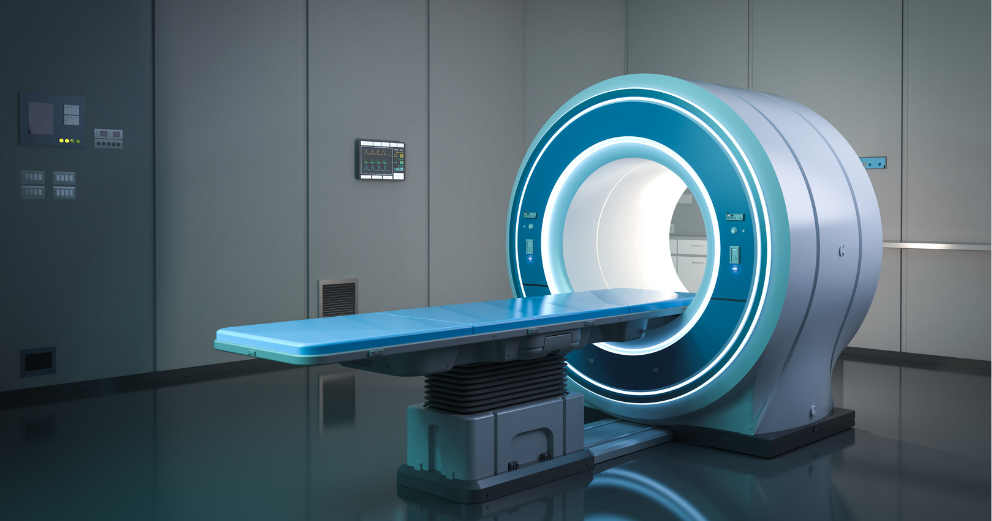
CT Scan vs MRI: Which Is Better?
When a doctor recommends an imaging test, patients often wonder why one type has been chosen over the other, whether the recommendation is the best option, and what the difference between the two actually means for them. CT scan vs MRI is one of the most common questions in radiology, and the honest answer is that neither is universally better.
Each has clear strengths, clear limitations, and specific clinical situations where it outperforms the other. The choice depends entirely on what the doctor needs to see and why.
How a CT scan works
Computed tomography, or CT, uses X-rays taken from multiple angles around the body. A computer then combines these images into detailed cross-sectional images. CT is fast, widely available, and particularly useful when doctors need urgent information about bleeding, fractures, lungs, blood vessels, or abdominal emergencies.
CT uses ionising radiation, but the dose is carefully controlled and kept as low as reasonably possible while still producing diagnostic images. Both CT and MRI are usually painless. When contrast is used, the radiology team checks kidney function, allergy history, pregnancy status, and other safety factors.
How an MRI works
Magnetic resonance imaging, or MRI, uses a strong magnetic field and radiofrequency pulses instead of X-rays. It creates images mainly from signals related to hydrogen atoms in water and fat, which are processed by a computer to produce detailed images of organs and soft tissues.
A significant advantage of MRI is that the scans do not subject the patients to ionising radiation, and it is thus a safer procedure for individuals who require multiple scans or those who are especially sensitive to radiation, such as children or pregnant women. The trade-off is that MRI scans are much more time-consuming, and the patient must lie absolutely still in an enclosed machine, which is not always easy for individuals with claustrophobia.
Where CT scans have the advantage
CT is the preferred choice in several clinical situations:
- Emergencies and trauma- CT is rapid, and can be completed in a minute or less, and typically is available at all times. A CT scan may be the first choice for imaging in urgent situations due to its speed and accessibility. It is fast, and thus it is best used in cases of diagnosing trauma injuries, strokes or internal bleeding and every second counts.
- Bone and fracture assessment- CT is ideally used to image bones, the chest, or trauma injuries. The spatial resolution of CT is outstanding in the ability to reveal the location of bone edges accurately and detect fractures, and even complicated ones in the spine or pelvis.
- Lungs and chest- CT provides superior detail of lung tissue and is the standard for detecting lung nodules, pulmonary embolism, and chest infections
- Abdominal and pelvic organs- CT is well-suited to rapidly evaluate abdominal pain, detecting internal bleeding, and assessing organ injuries
- Patients with certain implants or devices - CT can be used when MRI is unsafe or not feasible. Some implants and devices may not be safe in MRI, but many modern pacemakers and orthopaedic implants are MRI-conditional or MRI-safe after screening. Patients must inform the MRI team about pacemakers, cochlear implants, aneurysm clips, neurostimulators, metal fragments, and recent implants.
Where MRI has the advantage
MRI produces superior detail in specific areas and for specific conditions:
- Brain and neurological conditions - MRI provides superior soft-tissue contrast for brain tumours, multiple sclerosis, infection, inflammation, epilepsy evaluation, and many brain structure abnormalities. In acute stroke, CT is commonly used first to exclude bleeding and guide emergency treatment; MRI, especially diffusion-weighted imaging, is more sensitive for early ischemic change when available and appropriate.
- Spinal cord and spine- MRI is the definitive investigation for suspected spinal cord compression, disc herniation, and inflammatory spinal conditions
- Soft tissue and joints- MRI is unmatched for soft tissues. It can reveal subtle tears in ligaments, cartilage damage, or spinal cord compression that CT might not show. For knee, shoulder, and hip injuries, MRI is the investigation of choice
- Distinguishing tissue types- generally, CT scans are better at spatial resolution, while MRIs are better at contrast resolution. MRIs are good at showing differences between various parts of the body and can help cancer tissue stand out from normal tissue.
- Pelvic organs - MRI provides excellent soft-tissue detail for the uterus, ovaries, prostate, rectum, and selected bladder cancer staging. It should not be presented as the first test for every bladder problem.
The radiation question
Radiation exposure from CT scans is a frequent concern for patients. A CT scan uses a carefully controlled radiation dose, and in most clinically justified situations, the benefit of an accurate diagnosis outweighs the small radiation risk. For conditions requiring repeated imaging, and in children or pregnancy, MRI or ultrasound may be preferred when they can answer the clinical question.
Practical factors that influence the choice
Beyond clinical considerations, several practical factors shape which scan is ordered:
- Time- CT is significantly faster. An MRI may take 30 to 90 minutes, depending on the area being scanned, while a CT is typically complete in minutes
- Availability- CT scanners are more widely available, particularly in emergency settings
- Patient factors- claustrophobia, the presence of metal implants, body weight, and pregnancy all affect which scan is feasible or preferable
- Contrast agents- both scans can use contrast to improve image clarity, but the agents differ, and each carries its own considerations in patients with kidney problems or allergies
Essential Patient Safety Note
Before either scan, patients should inform the radiology team about pregnancy, kidney disease, previous contrast reaction, asthma or severe allergy history, implanted devices, pacemakers, cochlear implants, neurostimulators, aneurysm clips, metal fragments, recent surgery, and claustrophobia. This helps the radiology team choose the safest and most useful test.
Takeaways
CT scan vs MRI is not a question of which is better in general, but which is better in a particular clinical question. Indications to apply a CT scan include trauma, emergency, bone injuries, lung evaluation, and speedy evaluation of the abdomen. The benefits of MRI include better soft-tissue resolution, neurological and spinal imaging, joint imaging, and no radiation exposure. The medical imaging in both is fundamentally different, each has advantages that cannot be fully replicated by the other.