Thursday, October 1, 2026
Epilepsy in Adults: Symptoms, Diagnosis, Treatment, and When Surgery Is Considered.
Epilepsy is a disorder of the brain where a person experiences continuous, recurrent seizures. Seizures vary from person to person. Some seizures are partial and only affect a part of the body. Other seizures can affect the entire body and/or a person’s awareness and consciousness. A person is considered to have epilepsy only if they have more than one unprovoked seizure.
There are different types of seizures requiring different seizure treatment in Thane. Some seizures can be mistaken for fainting or can even go unnoticed. In fact, some people may not be aware of having a seizure. However, people close to them may notice unusual movements or changes in consciousness. If you are looking for epilepsy treatment in Thane or seizure treatment in Thane, understanding the early signs of epilepsy in adults and available treatment approaches is crucial to prepare for a consultation.
What Are the Epilepsy Symptoms in Adults?
The epilepsy symptoms in adults can look very different depending on the type of seizure and the area of the brain involved.
Some seizures involve obvious movements, while others are less noticeable and involve brief periods of staring. Different areas of the body may experience different types of sensations or convulsions. Even behavior and emotions can be affected.
In most cases, seizures are not dramatic. Thus, some adults can think it is faintness or can even confuse it with a psychological disorder. However, there are various other epilepsy symptoms & early signs of epilepsy in adults that happen prior to, during, or after a seizure.
A medical professional can better understand the signs and epilepsy symptoms in adults by explaining the details in an epilepsy medical history report.
What Are the Early Signs of Epilepsy in Adults?
There are a variety of symptoms and signs that can occur in people with epilepsy. The exact early signs of epilepsy in adults will vary from person to person. Often, people will have no awareness during a seizure, and epilepsy will only be diagnosed after a seizure has occurred and was witnessed.
Sometimes, people may have an evident warning that a seizure is about to occur. Often times, people report “funny” smells or tastes. Other times, people may feel a “tingling” sensation or report a sensation that something is not “right.” Some people will temporarily lose awareness or may appear to be confused or disoriented. People may also have movements that appear to be bizarre or that they are unable to control. Often, people will experience a combination of many of these signs before having a seizure.
Epilepsy is most commonly diagnosed by an epilepsy specialist after review of a person’s history, any witness accounts, and results of other tests.
What Is an EEG for Epilepsy?
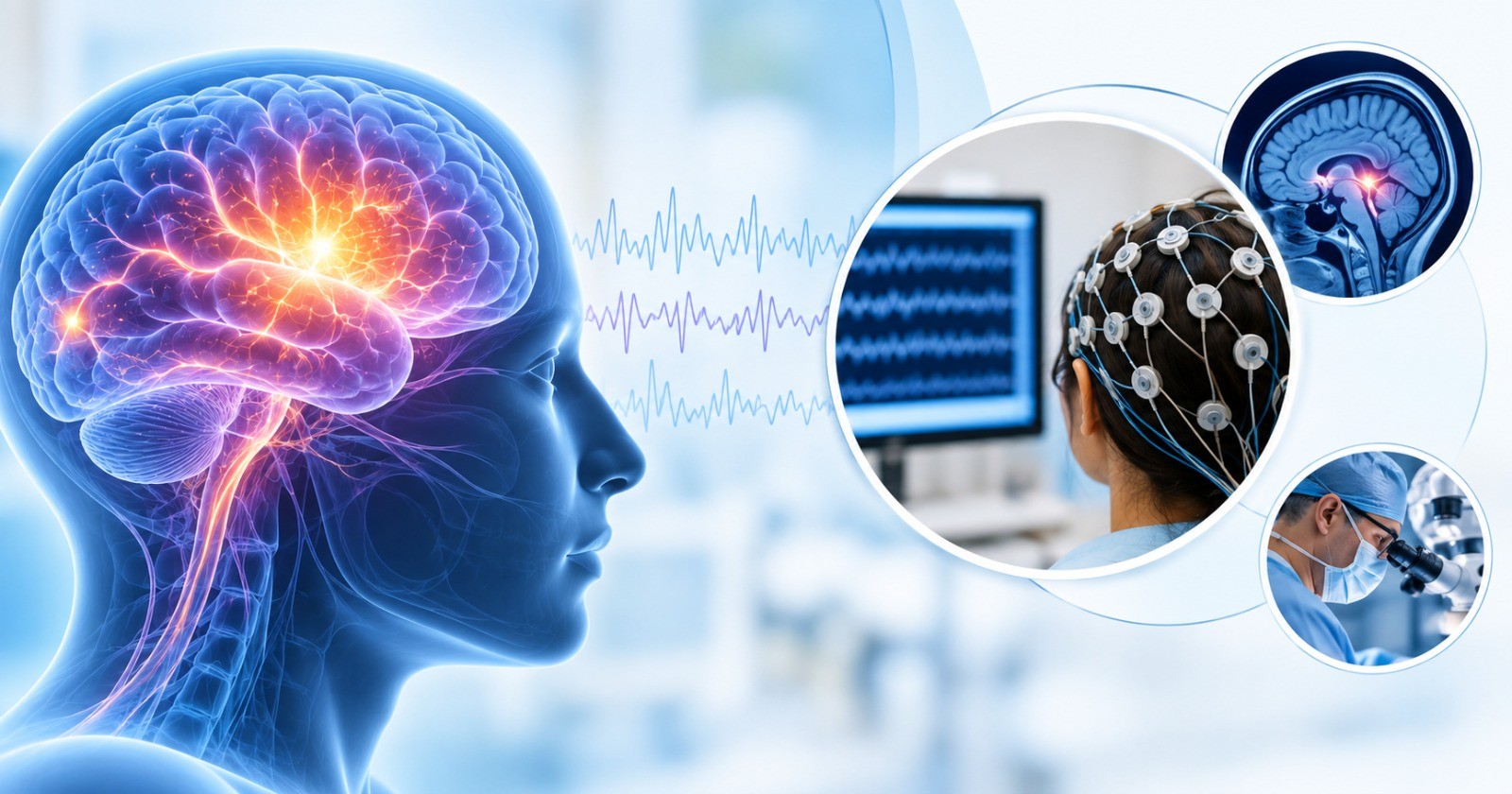
An Electroencephalogram (EEG) is a test to measure the electrical activity of the brain. An EEG for epilepsy is most helpful for diagnosing and classifying the various types of epilepsy and seizures.
While EEGs are very helpful in the evaluation of epilepsy, they are very limited in their ability to diagnose epilepsy by themselves. It is very important that the results of an EEG for epilepsy be integrated with the clinical findings and other test results.
Often, to evaluate and classify certain seizures or epilepsy syndromes, additional studies such as longer-term or video EEG monitoring may be required. Such monitoring may also be done to find out if a person is a good candidate for epilepsy surgery.
When Is Epilepsy Considered Drug-Resistant?
Some people continue to have seizures when being treated for epilepsy. When this happens, a doctor may determine if this is due to drug-resistant epilepsy. If this is the case, the doctor may suggest different ways of treating the person’s seizures.
Defining and determining drug-resistant epilepsy involves specialist clinical evaluation. If a person is taking epilepsy medication and having seizures, it is typically suggested that the person be seen by a doctor specializing in epilepsy. The doctor may suggest other medicines or epilepsy treatments.
When Is Epilepsy Surgery Considered?
Epilepsy surgery for adults in Thane may be considered for adults if certain medications and treatments have not been able to control their seizures.
Epilepsy surgery is offered only when necessary. Often, many tests and assessments are required to determine the likely site of seizure activity and estimate the risk of epilepsy surgery. These may include long-term video-EEG monitoring, brain imaging, and neuropsychological tests. Other specialised tests may be done in special cases.
Epilepsy surgery for adults in Thane aims to decrease the number of seizures, or to completely remove the cause of seizures. Improvement is dependent on many factors, including the type of epilepsy and the location of seizure activity. Other treatment options for drug-resistant epilepsy may include neurostimulation.
Epilepsy Treatment in Thane
People seeking epilepsy treatment in Thane will require the services of a neurologist, as well as a neurosurgeon, radiologist, and other specialists, as the situation may require.
The neurology department of KIMS Hospitals has dedicated Epilepsy units with top-notch care. The department also partners with other specialties, including neurosurgery, to manage complex epileptic conditions.
The neurosurgery department of KIMS Hospitals also provides services for functional and epilepsy surgery. The specific tests and epilepsy treatment in Thane are individualized, based on the patient's condition.
Conclusion
There are many possible epilepsy symptoms and early signs of epilepsy in adults that can include traditional convulsive seizures, or more subtle changes in awareness and sensation. The early signs of epilepsy in adults may vary and, in some cases, may be difficult to discern on their own. So, diagnosis requires a clinical assessment rather than relying on one symptom or test.
An EEG for epilepsy is often used to help with the diagnosis and classification of epilepsy. The treatment of choice for most types of seizures is anti-seizure medication. If an individual does not respond to adequate treatment, then further evaluation to determine the cause of the persistent seizures and appropriate therapy (i.e., surgery or other invasive procedures) should be considered.
Whether you are looking for seizure treatment in Thane, epilepsy treatment in Thane, or information about epilepsy surgery for adults in Thane, the treatment approach depends on the patient’s diagnosis, test assessment and overall health.
FAQs
1. What are the common epilepsy symptoms in adults?
The epilepsy symptoms in adults may depend on seizure type and the part of the brain involved. Some symptoms may include changes in awareness and sensation, staring episodes, unusual movements, and convulsions.
2. Is EEG necessary to diagnose epilepsy?
An EEG for epilepsy is usually recommended to further evaluate a patient with possible epilepsy. The test may help to confirm the diagnosis and may provide information to better manage the patient. The test is usually one element of the evaluation, and the final diagnosis is based on the integration of several components of the evaluation.
3. When is epilepsy surgery considered for adults?
Epilepsy surgery for adults in Thane may be considered when seizures remain uncontrolled despite adequate evaluation and treatment by a specialist. Epilepsy surgery in an adult may be considered when a specialist has identified a probable area of the brain to remove in order to stop the seizures. The decision regarding epilepsy surgery is individualized, and not all patients with uncontrolled epilepsy will be a candidate for surgery.