How Image-Guided Procedures Can Treat Conditions Without Major Surgery
The idea that a doctor could treat a blocked artery, drain an infected abscess, shrink a uterine fibroid, or destroy a liver tumour through a puncture no wider than a pen tip would have seemed implausible a generation ago. Today it is standard practice across a growing list of conditions, and the principle underlying all of it is the same: when you can see precisely where you are going inside the body, you do not need to open a large window to get there.
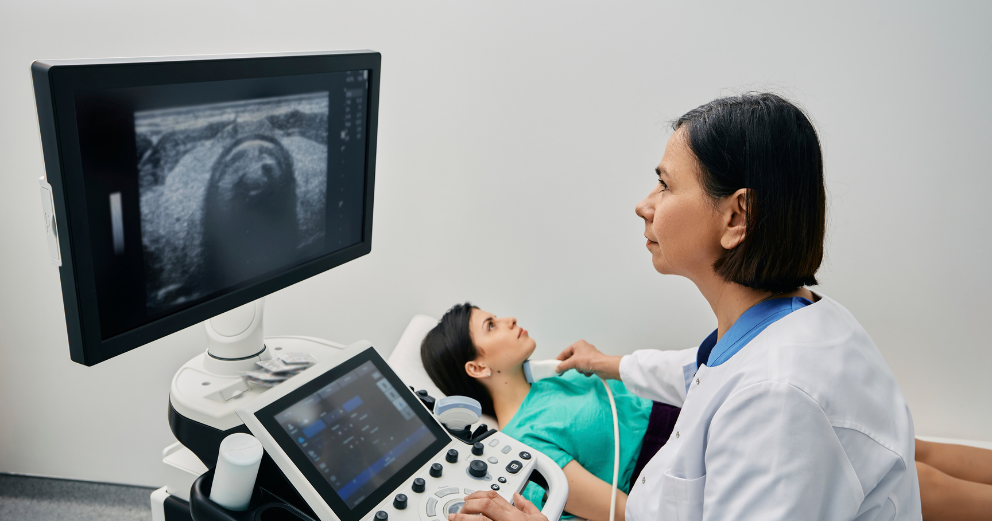
Image-guided procedures use real-time imaging, primarily ultrasound, CT, fluoroscopy, and MRI, to direct instruments through the body with precision that the naked eye and open surgical access could not improve upon. The result is treatment delivered to the exact target with minimal disruption to everything surrounding it.
Vascular Conditions
Peripheral artery disease, where arteries in the legs narrow and restrict blood flow, has historically been treated by surgical bypass, rerouting blood around the blockage through a graft taken from elsewhere in the body.
Balloon angioplasty and stenting treat the same condition through a puncture in the groin. A catheter is advanced under X-ray guidance to the site of the narrowing, a balloon is inflated to open it, and a metal stent is deployed to keep it open. The patient is walking the same day and home the next.
Aortic aneurysms, where the main abdominal artery balloons to dangerous dimensions, once required open abdominal surgery with a prolonged recovery. Endovascular aneurysm repair delivers a stent graft through the femoral arteries under imaging guidance, lining the aneurysm from within and excluding it from circulation. Most patients are discharged within two days.
Gynaecological Conditions
Uterine fibroids are a common cause of heavy periods, pelvic pressure, and pain. Surgical treatment historically involved either myomectomy, where individual fibroids are removed, or hysterectomy. Uterine artery embolisation blocks the blood vessels feeding the fibroids under X-ray guidance, causing them to shrink over the following weeks. The uterus is preserved, there is no surgical incision, and most women return to normal activity within a week.
Spinal Conditions
Vertebral compression fractures caused by osteoporosis can produce severe and disabling back pain that does not respond to analgesics. Vertebroplasty and kyphoplasty inject bone cement into the fractured vertebra under imaging guidance, stabilising it and in most patients providing immediate and significant pain relief. The procedure takes approximately an hour and requires no general anaesthesia.
Infections and Collections
Abscesses in the liver, pelvis, or abdomen that would previously have required open surgical drainage are now routinely drained by placing a catheter through the skin under ultrasound or CT guidance. The catheter remains in place for several days, draining the collection while antibiotics treat the underlying infection. Patients avoid a surgical wound, a general anaesthetic, and a prolonged hospital stay.
The Conditions That Make Image-Guided Treatment Particularly Valuable
For patients who are elderly, have significant comorbidities, or are already weakened by their primary illness, the physical demands of open surgery may carry risks that outweigh the benefits. Image-guided procedures are frequently the treatment of choice precisely because they can achieve comparable results with a fraction of the physiological cost. A patient who is not fit for open surgery is often fit for an image-guided procedure performed under local anaesthesia and sedation.
The same applies to patients who have already had surgery in an area and whose adhesions or anatomical changes would make reoperation difficult and high-risk. The catheter or needle does not care about previous surgical history. It follows the imaging to its target.
Conclusion
As imaging technology continues to improve and the range of instruments available for image-guided delivery expands, the boundary between what requires open surgery and what can be treated through a puncture continues to move in the patient's favour.