Managing Fever in Children Safely
Few things send a parent into a state of immediate concern faster than a child with a high temperature. The instinct is to bring it down as quickly as possible. But fever in children is widely misunderstood, and that misunderstanding often leads to unnecessary anxiety, overtreatment, and sometimes, missed warning signs that actually matter.
Understanding what fever is, what it is not, and how to respond to it calmly and safely is some of the most practically useful knowledge a parent can have.
What fever actually is
Fever is defined as a body temperature at or above 37.5 degrees Celsius and is a normal physiological response to illness that facilitates and accelerates recovery.
Fever is not a disease, but a reaction of the body, and usually not one that needs to be treated. When the immune system detects an infection, it deliberately raises the body's core temperature to create an environment that is less hospitable to the invading pathogen and more favourable to the immune response. In this sense, a fever is the body doing exactly what it is designed to do.
The goal of fever management in children, according to current clinical guidelines, has shifted from aggressively lowering temperature to relieving discomfort and monitoring for signs of serious illness. In the absence of illness requiring specific treatment, relief from distress is the primary indication for treatment, and antipyretics should not be administered with the sole intention of reducing body temperature.
How to measure temperature accurately
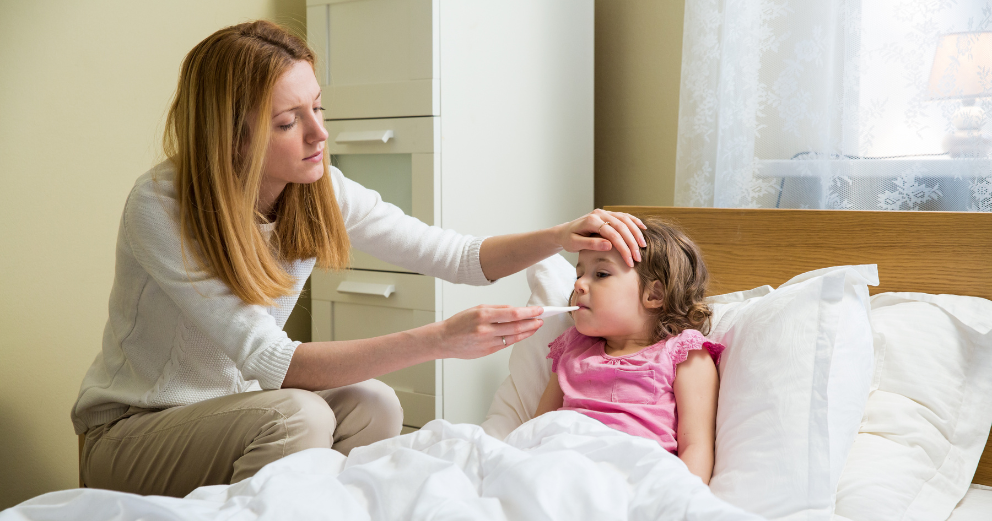
Getting an accurate reading matters. For children aged four weeks to five years, axillary electronic thermometers, axillary chemical dot thermometers, or infrared tympanic thermometers are recommended. Routine use of oral or rectal routes is not emphasised for children in this age group.
A single temperature reading in isolation tells only part of the story. How the child looks and behaves tells far more. A child with a temperature of 39 degrees Celsius who is alert, drinking fluids, responsive, and playing is a very different situation from a child with the same temperature who is unusually lethargic, difficult to rouse, or not responding normally.
Child fever care at home
For most children above three months of age with an uncomplicated fever, home management with supportive care is appropriate. The key principles are straightforward.
- Keeping the child well hydrated is the most important step. Fever causes fluid loss through sweating and it is important that the child drinks water regularly, even in tiny amounts, to avoid dehydration from worsening the illness. Adequate oral rehydration with water, diluted oral rehydration solutions or breast milk in babies.
- The body can control heat naturally, so keep the room at a suitable temperature and ensure the child wears comfortable clothes.
- Do not cover children with a fever with thick blankets to make them sweat. That may just cause more discomfort. Rest helps you heal. Most children naturally reduce their activity during a fever, and this should be supported rather than resisted.
- Tepid sponging, wiping the child with lukewarm water, can be used to reduce discomfort in a feverish child, but lukewarm rather than cold water should be used. Cold water causes shivering, which actually raises body temperature and increases distress.
Fever safety tips: what actually needs attention
The height of the fever is a less reliable guide to severity than parents often assume. Recent guidelines emphasise alleviating discomfort as the primary therapeutic goal of fever management rather than targeting a specific temperature threshold. What matters more is how the child appears overall.
Certain situations do require prompt medical attention regardless of the temperature reading:
- Any fever in a baby younger than three months old, which requires same-day medical evaluation without exception
- Fever lasting more than five days without a clear source of infection
- A child who appears unusually drowsy, difficult to wake, or is not responding as expected
- Fever accompanied by a rash, particularly one that does not fade when a glass is pressed against it
- Fever with stiff neck, sensitivity to bright light, or severe headache
- Breathing that is fast, laboured, or noisy
- Signs of dehydration including no urination for eight or more hours, a dry mouth, or no tears when crying
- A febrile convulsion, particularly one lasting more than five minutes or the first episode in a young child
About febrile convulsions
Febrile convulsions are seizures triggered by fever and affect a small proportion of children, most commonly between six months and five years. They are frightening to witness but in most cases are brief and self-limiting. Simple febrile convulsions are not in themselves harmful and are not necessarily indicative of serious infection. A child who has a febrile convulsion should be seen by a doctor to confirm the diagnosis and rule out other causes, but the event itself, while distressing, does not cause lasting harm in the majority of cases.
Common mistakes to avoid
Several common parenting responses to fever are worth reconsidering. Alternating or combining fever-reducing agents without medical guidance can lead to dosing errors.
- Waking a sleeping child to give fever treatment disrupts the rest the body needs to recover.
- Using cold baths to rapidly lower temperature causes significant discomfort and is not recommended in children.
When to worry about child fever and when to manage at home is a distinction that paediatricians are well placed to help parents make. If there is genuine uncertainty about whether a child needs to be seen, contacting the paediatrician directly is always the right choice.
Takeaways
Fever in children management focuses on comfort and monitoring rather than aggressively targeting temperature. Fever is a healthy immune response and does not need to be eliminated unless it is causing significant distress. Child fever care at home centres on hydration, light clothing, rest, and monitoring how the child looks and behaves.
Fever safety tips that prevent harm include knowing which symptoms require same-day medical attention, avoiding cold bathing, and not dosing without guidance. Any fever in a baby under three months always warrants prompt medical review.