Minimally Invasive Surgery Benefits
Not long ago, most major surgical procedures required a large incision, a significant hospital stay, and weeks of recovery before a patient could return to normal life. That picture has changed considerably. Minimally invasive surgery has become the standard approach for a wide and growing range of operations, and the shift has been driven by one consistent finding: patients do better with smaller incisions, less tissue disruption, and faster return to daily function.
Understanding what minimally invasive surgery involves, what it offers compared to open surgery, and how it has evolved with robotic technology helps patients have better conversations with their surgeons about their options.
What minimally invasive surgery actually means
Minimally invasive surgery has revolutionised modern surgical practice, reducing trauma, speeding recovery, and improving surgical accuracy.
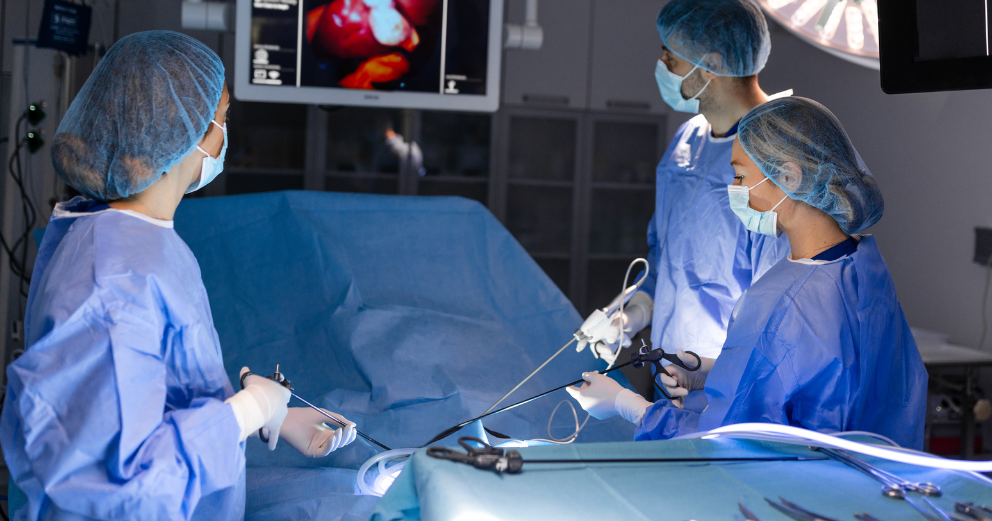
Minimally invasive procedures involve multiple small cuts, usually less than a centimetre, in place of a single large cut, through which a camera and specialised tools are inserted. The camera sends an enlarged photograph to a screen, enabling the surgeon to work with precision and see the anatomy in fine detail.
Gas is used to inflate the abdominal cavity to provide working space, and the procedure is done in totality using these tiny ports.
Laparoscopic surgery is the most prevalent and is employed in general surgery, gynaecology, urology, and colorectal surgery. Robotic-assisted surgery is based on this platform, except that a robotic system is introduced that interprets the movements of the surgeon's hand and converts them into the body as a precise and tremor-filtered motion.
The clinical benefits for patients
The benefits of minimally invasive surgery over traditional open surgery are well established across various surgical fields and procedures.
Smaller incisions allow patients to spend less time in the hospital, experience less postoperative pain, recover faster, and achieve better cosmetic results. The chance of developing postoperative complications like infection and blood loss is greatly reduced compared to conventional open surgeries.
In practical terms, this translates to:
- Less pain after surgery: Smaller incisions result in fewer disturbances of the abdominal wall muscles and surrounding tissues, where most of the post-operative pain in open surgery occurs.
- Shorter hospital stay: Most laparoscopic surgeries, which would have required several day hospitalisation, can now be undertaken as a day surgery or overnight stay.
- Faster return to normal activity: Laparoscopic cholecystectomy patients, such as those with laparoscopic surgery, usually resume normal activities in one to two weeks, whereas patients after open surgery take four to six weeks.
- Lower risk of wound infection: Smaller incisions have a much lower risk of wound breakdown and infection compared to large open wounds.
- Reduced blood loss: The enlarged vision and sharpening tools enable the surgeons to be more cautious around blood vessels, minimising blood loss during the operation and transfusion is minimised.
- Less scarring: The small port locations cause little scarring as opposed to a long midline or flank cut.
Where laparoscopic surgery is now standard
Laparoscopic surgery rapidly grew and became the gold standard of several high-volume procedures like appendectomy and cholecystectomy. It is now the default approach for gallbladder removal, appendix removal, hernia repair, fundoplication for reflux disease, adrenal surgery, and many colorectal operations. In gynaecology, laparoscopic approaches are standard for hysterectomy, ovarian cyst removal, endometriosis surgery, and many other procedures.
The evolution toward robotic surgery
Robotic-assisted surgery represents the next evolution of minimally invasive techniques. The robotic platform provides the surgeon with a three-dimensional, high-magnification view, instruments with a greater range of motion than the human wrist, and software that filters out natural hand tremor.
These minimally invasive approaches offer advantages over traditional open surgery, including smaller incisions, high control through magnified three-dimensional vision, and exceptional precision due to tremor filtration and a greater range of motion than the human hand.
Robot-assisted surgery showed positive results by improving surgical precision, reducing the need for conversion to open surgery, and resulting in fewer complications and faster functional recovery in some procedures.
Robotic surgery is particularly valuable in anatomically confined spaces where laparoscopic instruments have limited movement, such as deep pelvic surgery, prostate surgery, and complex rectal operations. Research suggests robotic surgery will overtake, or already has overtaken, laparoscopic surgery in a variety of procedures, including prostatectomy, pancreatectomy, and hepatectomy.
When open surgery is still the better choice
Minimally invasive surgery is not suitable for every patient or every procedure. Emergency situations involving severe haemorrhage or contamination of the abdominal cavity may require open surgery for speed and control. Complex cases in which anatomy is severely distorted by prior surgery, inflammation, or advanced disease might not be safely accomplished using small ports. In such cases, it is the right decision and safe to convert to an open operation during the procedure, rather than a failure.
Patient characteristics such as body habitus, previous abdominal surgery, and fitness to have a longer anaesthetic are also determinants of which approach should be most suitable. The surgeon makes this decision with the patient, depending on the type of surgery and the patient's clinical condition.
Takeaways
The advantages of minimally invasive surgery are that they cause much less post-operative pain, reduce hospital stay, accelerate the MIS recovery period, reduce the chances of wound infection, and decrease blood loss as opposed to open surgery. The benefits of laparoscopic surgery are well-proven with a broad spectrum of operations in general surgery, gynaecology, and urology. The advantages of robotic surgery include improved precision and dexterity in narrow areas, and robot-assisted surgeries are starting to dominate traditional laparoscopy in complex cases.