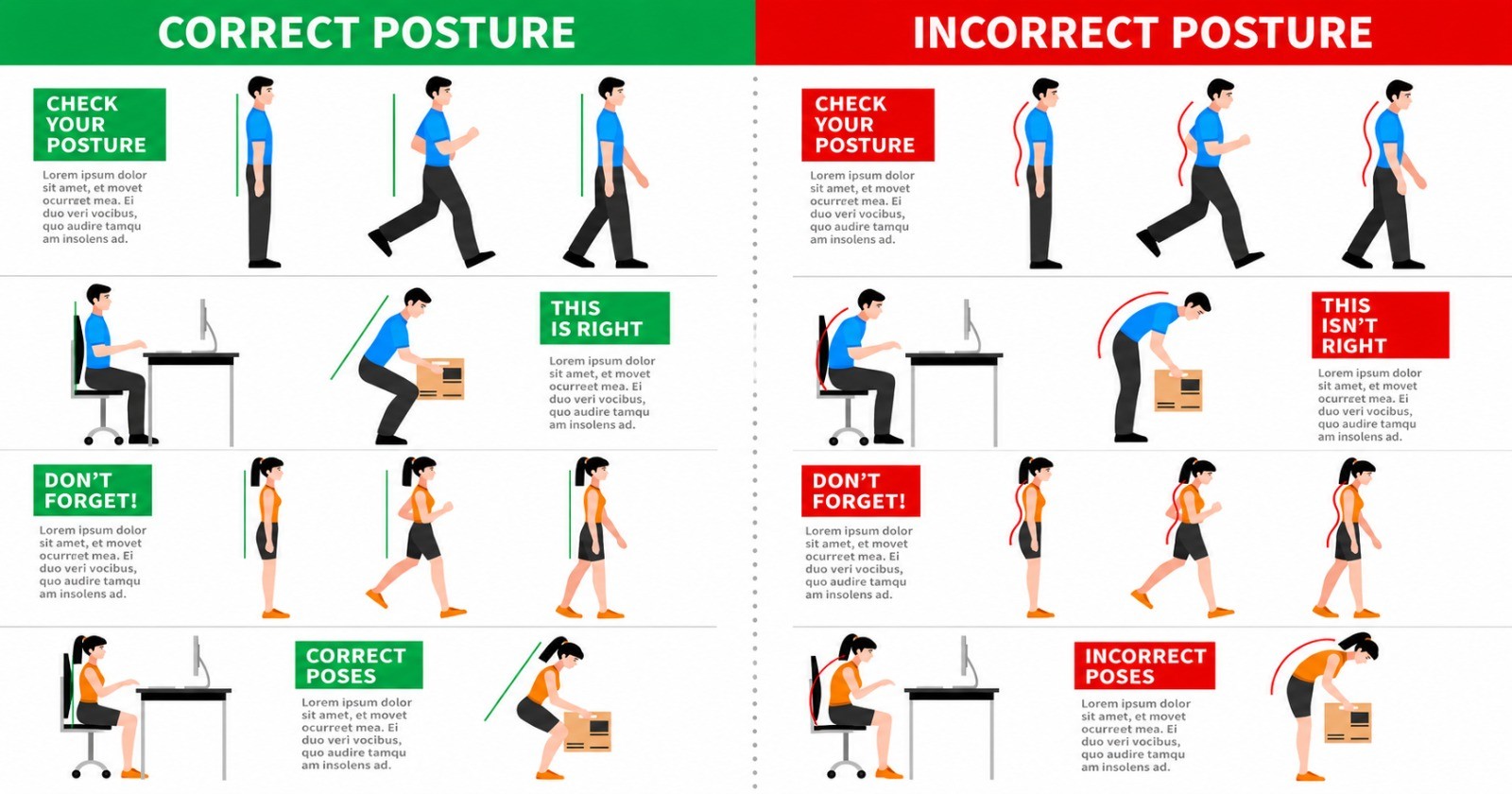
Proper Posture Guide To Prevent Cervical & Lumbar Spondylosis
A Simple Guide to Maintaining Proper Posture
In today’s world of long work hours, screen addiction, and sedentary lifestyles, neck and back pain have become extremely common, even among the young. Two conditions often seen in clinics are:
- Cervical Spondylosis – wear and tear of the neck spine
- Lumbar Spondylosis – degeneration of the lower back spine
Both can lead to chronic pain, stiffness, nerve compression, or even disability if not managed early. The good news? Proper posture and a few simple habits can go a long way in prevention.
1. Sitting Posture: Your Chair Matters
- Sit with your back straight, shoulders relaxed.
- Feet flat on the floor, knees at a 90° angle.
- Use a lumbar support cushion or rolled towel for lower back.
- Keep screens at eye level – never look down at a phone or laptop.
- Avoid sitting continuously for more than 30–45 minutes. Take breaks to stretch.
2. Desk Ergonomics: Set It Right
- Use a chair with adjustable height and backrest.
- Elbows should rest comfortably at 90–100° on the armrests.
- Monitor should be at eye level and one arm’s length away.
- Keyboard and mouse should not make you hunch forward.
- Avoid “neck cradling” the phone between ear and shoulder.
3. Avoid “Text Neck”
- Holding your phone low forces your neck to bend forward, increasing pressure on cervical discs.
- Bring the device to eye level.
- Limit screen time and take frequent neck breaks.
- Use voice commands or headphones when possible.
4. Sleeping Posture: Align the Spine
- Use a firm mattress that supports the natural curve of your spine.
- Avoid very high pillows. Use a thin pillow or cervical pillow.
- Back sleepers: Place a small pillow under knees.
- Side sleepers: Place a pillow between knees to maintain spinal alignment.
- Avoid sleeping on your stomach.
5. Daily Habits that Help
- Exercise regularly – walking, yoga, swimming, and core strengthening are excellent.
- Avoid heavy lifting. If you must lift, bend your knees, not your back.
- Maintain a healthy body weight to reduce spinal stress.
- Don’t ignore pain — early medical advice can prevent worsening.
What to Avoid
- Slouching while driving or on the sofa
- Soft, sinking sofas or beds
- Sudden neck jerks or twisting
- Carrying heavy bags on one shoulder
Final Message
Spinal degeneration is not just an old age problem anymore — it’s a lifestyle disease now. By maintaining good posture and spinal care, you can avoid cervical and lumbar spondylosis and stay pain-free and active for years to come.
Posture is not just how you sit — it’s how you live
Footer Loading...