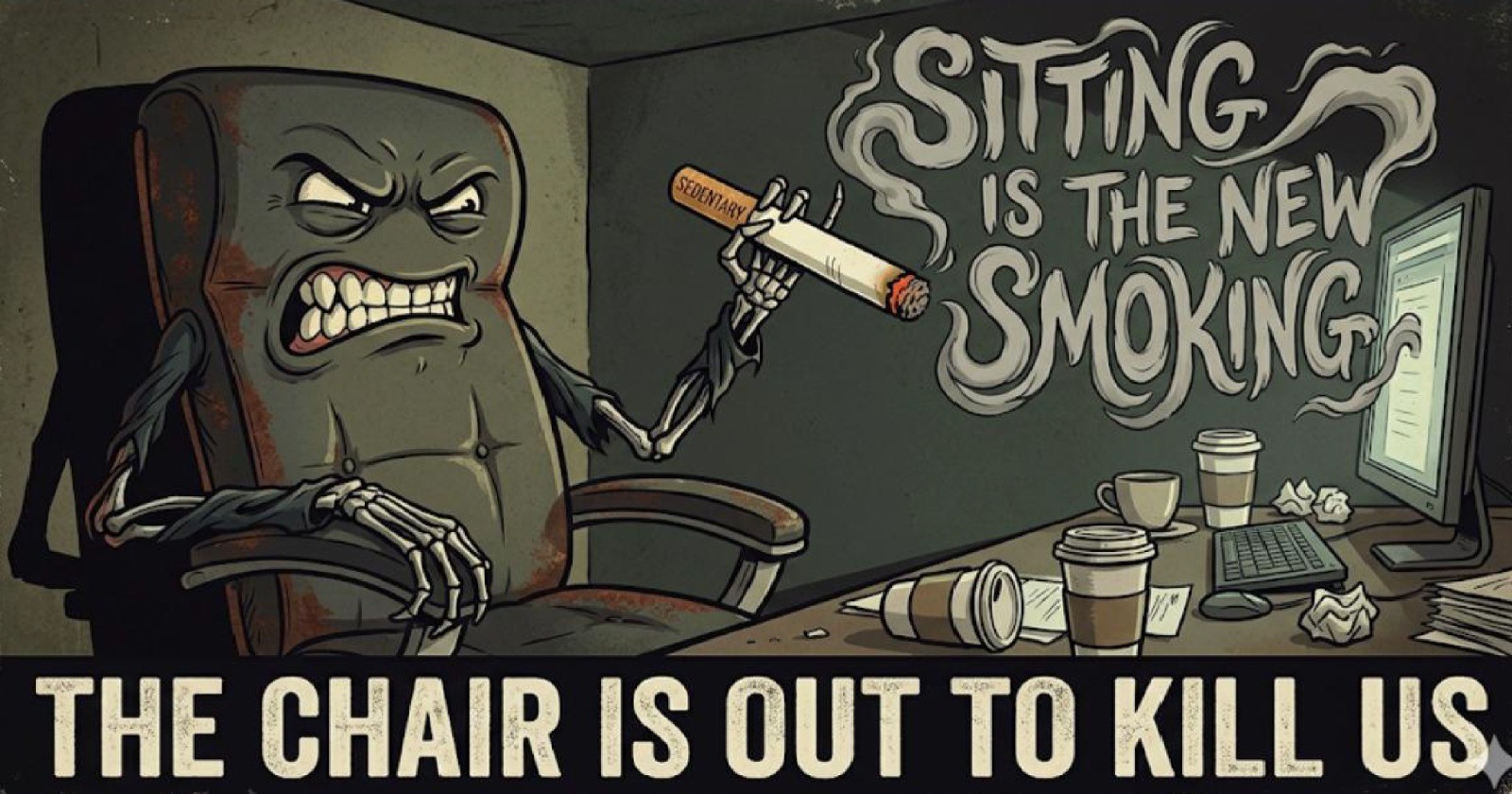
Sitting is the New Smoking: A Silent Epidemic We Ignore Every Day
Sitting is more dangerous than smoking, kills more people than HIV, and is more treacherous than parachuting
We are sitting ourselves to death
Wake up in the morning.
Sit on the bed.
Sit for breakfast.
Sit in the car.
Sit at work for hours.
Sit again in the evening on the couch.
By the end of the day, we may have spent 8–12 hours sitting—without even realizing it.
This is the modern lifestyle. And increasingly, science is warning us: World Health Organization estimates that about 5 million deaths per year could be totally prevented by being more active on a regular basis
“Sitting is the new smoking.”
Why this phrase? Is it really that serious?
- Sitting more than 8 hours a day increases mortality risk by ~34%
- People with prolonged sitting habits show higher risks of heart disease, diabetes, cancer, and early death
- A sedentary lifestyle is linked to obesity, hypertension, metabolic syndrome, and poor mental health
In India, the situation is particularly concerning:
- >25% of adults sit for more than 8 hours daily
What actually happens inside your body when you sit too long?
The danger is not just inactivity—it’s physiological shutdown.
1. Metabolism slows dramatically
- The reason why is that marathon sitting sessions change our body's metabolism.
- “Metabolism slows down 90 percent after 30 minutes of sitting. The enzymes that move the bad fat from your arteries to your muscles, where it can get burned off, slow down.
- The muscles in our lower body are turned off.
- And after two hours, good cholesterol drops 20 percent.
- Just getting up for five minutes is going to get things going again.
2. Blood sugar and diabetes risk increase
- Prolonged sitting leads to poor glucose regulation, increasing risk of type 2 diabetes
3. Heart takes a hit
Sedentary behavior is strongly linked with:
- Heart disease
- High blood pressure
- Increased cardiovascular mortality
4. Muscles literally “switch off”
- Lower body muscles become inactive
- Hip flexors tighten
- Core weakens
This leads to:
- Back pain
- Poor posture
- Reduced mobility
5. Brain health is affected
Research shows prolonged sitting is associated with:
- Increased risk of cognitive decline and strokes
6. Mental health suffers
More sitting =
- More anxiety
- More depression
- Less energy
Movement, on the other hand, releases endorphins and improves mood
The biggest myth: “I go to the gym, so I’m safe”
- Unfortunately, exercise alone is not enough. Exercise Doesn’t Negate Extended Periods of Sitting
- We may be thinking, “But I work out several times per week.” The research shows that though exercise is good for us, it doesn’t negate the damage done by extended periods of sitting.
- “We see it in people who smoke and people who don’t. We see it in people who are regular exercisers and those who aren’t. Sitting is an independent risk factor.”
- “The cure for too much sitting isn’t more exercise. Exercise is good, of course, but the average person could never do enough to counteract the effect of hours and hours of chair time.”
👉 The problem is not just a lack of exercise.
👉 The problem is continuous sitting without interruption.
So what should we do? (Practical, realistic solutions)
You don’t need drastic changes.
You need frequent small movements throughout the day.
1. Follow the “30–5 rule”
- Every 30 minutes → stand or move for 2–5 minutes
- Even short breaks improve circulation and metabolism
2. Redesign your daily routine
Instead of:
- Sitting while taking calls → Walk while talking
- Sitting all meetings → Standing or walking meetings
- Driving short distances → Walk when possible
3. Add “movement snacks”
Think of activity like snacks:
- 10 squats
- 1-minute stretching
- Climbing stairs
Repeated multiple times a day = powerful effect
4. Aim for daily movement, not just workouts
- 60–75 minutes of moderate activity daily can offset risks
- Even 2,000+ steps/day reduces risk, more is better
5. Fix your work environment
- Use a standing desk (occasionally, not continuously)
- Keep screen at eye level
- Sit upright, avoid slouching
6. Make evenings active
Instead of:
- Couch + TV
Try:
- Walking after dinner
- Light stretching
- Household activity
7. Build “non-exercise activity” into life
This is the most underrated concept:
- Taking stairs
- Walking while waiting
- Doing chores manually
These small movements cumulatively protect your health.