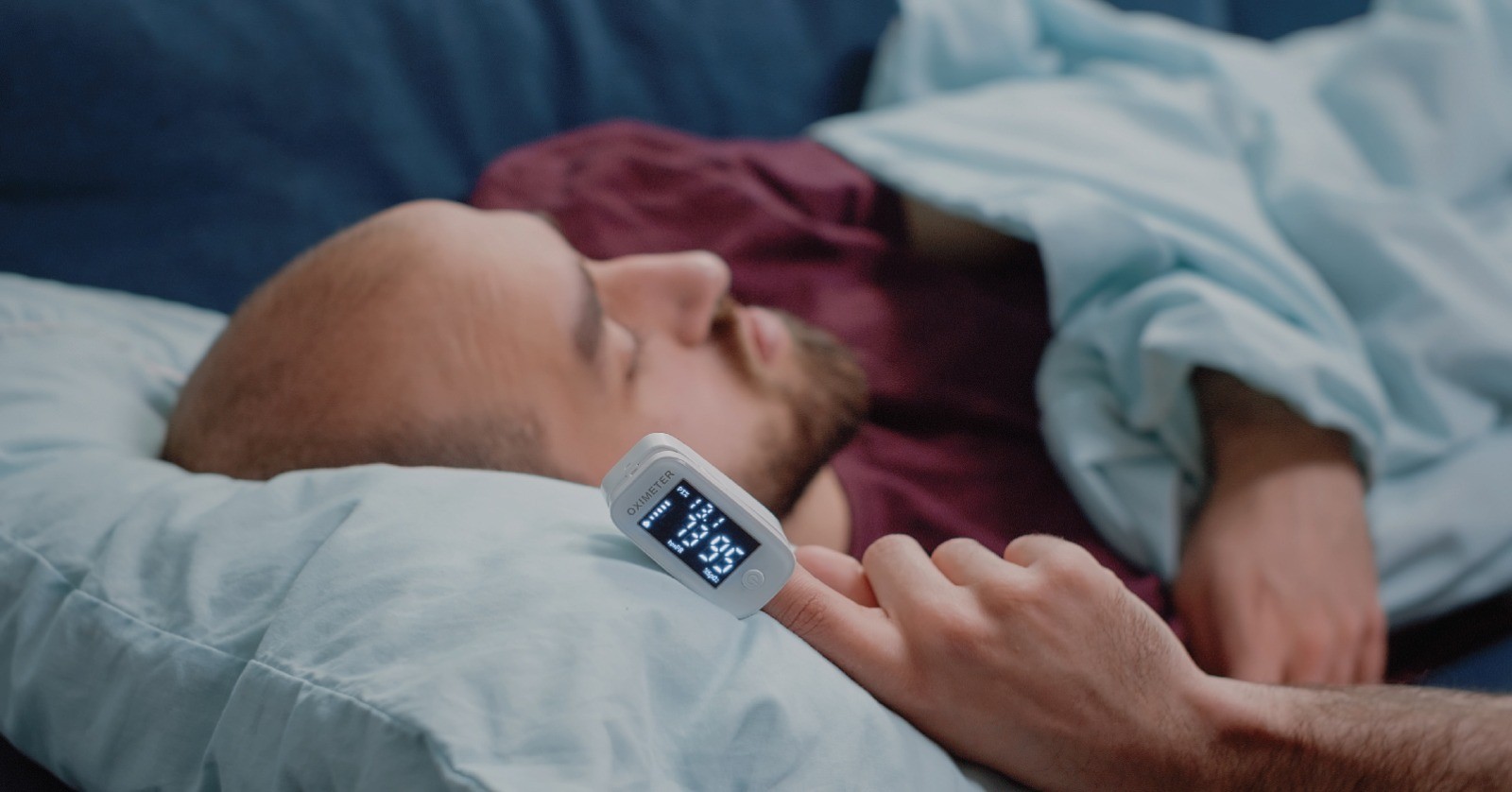
SLEEP APNOEA AND THE BRAIN
More than just snoring
“Doctor, I sleep for eight hours. Why am I still tired?”
It is a deceptively simple question.
For many people, the answer has nothing to do with how long they sleep.
It has to do with what happens to their breathing while they sleep.
A person may spend eight hours in bed, yet repeatedly stop breathing, partially obstruct their airway, wake briefly, drop their oxygen levels and activate their stress response—sometimes dozens or even hundreds of times every night.
They may have no memory of any of it the next morning.
This is obstructive sleep apnoea (OSA).
And it is far more than a problem of snoring.
OSA is a disorder in which the upper airway repeatedly narrows or collapses during sleep, producing recurrent episodes of reduced or completely interrupted airflow.
The consequences extend beyond sleep.
They involve the brain, heart, blood vessels, metabolism and cognition.
WHAT ACTUALLY HAPPENS DURING SLEEP APNOEA?
During normal sleep, breathing continues automatically.
In OSA, the muscles supporting the upper airway relax during sleep, and the airway becomes critically narrow or collapses.
Airflow falls or stops.
But the brain does not simply “sleep through” the event.
It senses the physiological disturbance.
Oxygen may fall.
Carbon dioxide may rise.
The sympathetic nervous system becomes activated.
The brain briefly arouses the person from sleep, airway tone increases, breathing resumes—and the person falls asleep again.
This cycle may repeat throughout the night.
Sometimes hundreds of times.
Most of these arousals are so brief that the person has no conscious recollection of them.
That is why someone can say:
“I sleep very deeply. I never wake up at night.”
—and still have severe sleep apnoea.
THE PROBLEM IS NOT JUST LOW OXYGEN
This is an important misconception.
People often think OSA is simply:
“I stop breathing → oxygen falls → that’s the problem.”
The physiology is more complex.
Repeated obstructive events produce a combination of:
- intermittent hypoxaemia
- recurrent arousals
- sympathetic activation
- swings in intrathoracic pressure
- sleep fragmentation
- oxidative stress
- endothelial dysfunction
- metabolic and inflammatory disturbances
The result is a body that repeatedly shifts from sleep into a state of physiological stress.
Night after night.
Year after year.
AND THE BRAIN IS PARTICULARLY VULNERABLE
The brain consumes a remarkable amount of the body’s energy and depends on a continuous supply of oxygen and glucose.
Sleep itself is also biologically active.
It is not simply a period when the brain “switches off.”
During healthy sleep, the brain undergoes important processes involving:
- memory consolidation
- synaptic regulation
- emotional processing
- metabolic homeostasis
- regulation of autonomic function
When sleep is repeatedly fragmented, these processes can be disrupted.
This helps explain why untreated OSA can be associated with:
Poor concentration
You may read something and realise you have absorbed none of it.
Reduced attention
You become easily distracted.
Slower reaction time
This can become particularly dangerous while driving.
Memory problems
People may complain:
“My memory is getting worse.”
Sometimes the underlying problem is not primary dementia.
It is chronically disrupted sleep.
Excessive daytime sleepiness
The person may fall asleep while watching television, reading, attending meetings—or even while driving.
I AM FORGETFUL. AM I DEVELOPING DEMENTIA?
Not necessarily.
Sleep disorders can produce cognitive symptoms that resemble early neurodegenerative disease.
This does not mean that treating OSA will reverse every case of cognitive impairment.
But it does mean that sleep should be considered when someone develops:
- poor concentration
- daytime sleepiness
- executive dysfunction
- memory complaints
- reduced mental efficiency
before automatically attributing everything to ageing or dementia.
OSA is particularly important because it is a potentially treatable contributor to cognitive dysfunction.
OSA IS ALSO A VASCULAR DISEASE RISK
This is where sleep medicine and neurology meet.
Untreated OSA is associated with hypertension and increased cardiovascular and cerebrovascular risk.
The repeated sympathetic surges and intermittent hypoxaemia can contribute to vascular dysfunction.
OSA is associated with conditions including:
- hypertension
- atrial fibrillation
- coronary artery disease
- heart failure
- stroke
The relationship with stroke is particularly important.
A patient with multiple vascular risk factors who also has untreated OSA may be carrying an additional, often unrecognised, risk factor.
- choking or gasping during sleep
- morning headaches
- dry mouth on waking
- nocturia
- unrefreshing sleep
- excessive daytime sleepiness
- difficulty concentrating
- resistant hypertension
SOME PATIENTS DON’T LOOK LIKE THE “CLASSIC” OSA PATIENT
Obesity is an important risk factor, but OSA is not exclusively a disease of obesity.
It can occur in:
- people with craniofacial anatomical risk
- older adults
- individuals with certain neuromuscular disorders
- people with upper-airway abnormalities
- women, particularly after menopause
- people who are not obese
Therefore:
“I’m not overweight, so I can’t have sleep apnoea.”
is not a reliable assumption.
WHY DOES OSA MATTER SO MUCH IN NEUROLOGY?
Because sleep and the nervous system are inseparable.
OSA can intersect with neurology through:
- stroke
- cognitive dysfunction
- headache
- movement disorders
- neuromuscular disease
- seizures
- excessive daytime sleepiness.
There is also increasing interest in the relationship between sleep-disordered breathing and neurodegenerative disease, although the causal relationships are complex and still being studied.
We should therefore avoid simplistic statements such as:
“Sleep apnoea causes Alzheimer’s disease.”
The evidence does not justify such a definitive claim.
But it is equally inappropriate to dismiss sleep as irrelevant to long-term brain health.
WHAT ABOUT SEIZURES?
This is a particularly interesting relationship.
Sleep deprivation is a well-established seizure precipitant in susceptible individuals.
OSA can produce severe sleep fragmentation and poor-quality sleep.
Therefore, in a person with epilepsy—especially when seizures are predominantly nocturnal or unexpectedly difficult to control—sleep disorders deserve consideration.
There is emerging clinical evidence that treating coexisting OSA may improve seizure control in some patients, although OSA should not be presented as the cause of epilepsy in general.
The important clinical principle is:
When the brain is repeatedly deprived of restorative sleep, neurological disease may become harder to control.
HOW DO WE KNOW IF SOMEONE HAS OSA?
You cannot diagnose OSA simply by asking:
“Do you snore?”
The diagnosis requires an appropriate sleep evaluation.
A clinician may begin with a detailed history and a validated screening questionnaire.
Depending on the patient’s risk profile, polysomnography or a validated home sleep apnoea test may be appropriate.
A sleep study can determine whether breathing abnormalities occur during sleep and quantify their frequency and severity.
One commonly used measure is the apnoea-hypopnoea index (AHI)—the number of apnoeas and hypopnoeas per hour of sleep or recording time, depending on the testing method.
But the AHI should not be viewed in isolation.
Two patients with the same AHI may have very different symptoms and cardiovascular risk profiles.
The patient matters—not just the number.
CAN SLEEP APNOEA BE TREATED?
Yes.
And treatment should be individualised.
For appropriate patients, continuous positive airway pressure (CPAP) remains a highly effective treatment.
CPAP works by splinting the upper airway open during sleep, preventing recurrent collapse.
Other approaches may include:
- weight reduction when appropriate
- positional therapy
- mandibular advancement devices
- selected upper-airway procedures
- management of contributing anatomical factors
- treatment of associated medical conditions
The correct treatment depends on the severity and phenotype of OSA, symptoms, anatomy, comorbidities and patient preference.
I HAVE CPAP, BUT I DON’T USE IT.
This is one of the most common problems in real-world treatment.
And it is understandable.
The mask may feel uncomfortable.
There may be dryness, air leakage, claustrophobia or difficulty adapting to the pressure.
But abandoning treatment because the first mask was uncomfortable is like abandoning spectacles because the first frame did not fit.
There are different masks, interfaces, humidification options and pressure strategies.
The solution is often to troubleshoot—not to give up.