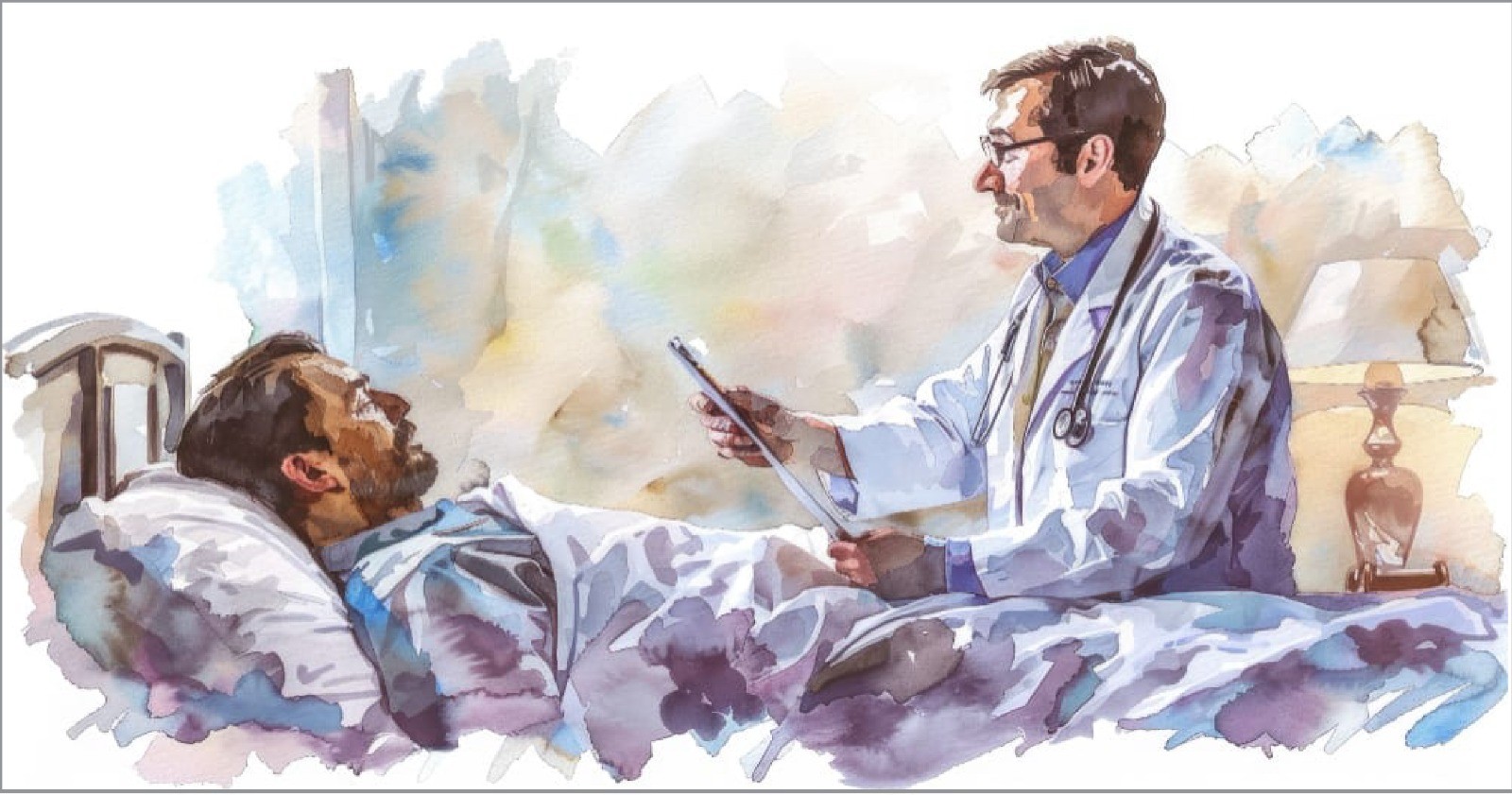
The Art of Diagnosis: Why Every Illness Has a Story
Modern medicine is often imagined as a world of scans, reports, and rapid answers. Yet, at its core, diagnosis remains a deeply human process—one that begins not with machines, but with a story.
Every day, clinicians navigate uncertainty. A patient walks in with symptoms—pain, dizziness, weakness—and the mind of the physician begins to work. This is not guesswork; it is a structured, evolving reasoning process rooted in clinical science. We generate possibilities, weigh probabilities, and refine them step by step. This process, often called clinical reasoning, is the backbone of diagnosis.
But here is a truth that both doctors and patients must understand: not every diagnosis is immediately clear.
When Answers Don’t Come Easily
Despite the best efforts, the first consultation may not yield a definitive diagnosis. Symptoms can be non-specific. Early disease may not show up on tests. Conditions may overlap. Medicine is full of such gray zones.
In these moments, what we often do is watch, reassess, and think again. Time itself becomes a diagnostic tool. As new symptoms emerge or patterns evolve, clarity improves. This is not failure—it is careful, responsible medicine.
The Patient’s Story: The Most Powerful Tool
Among all diagnostic tools—blood tests, MRI scans, genetic panels—the most valuable remains the history of illness.
A well-told story can narrow down possibilities faster than any investigation. The sequence of symptoms, their timing, triggers, progression, and associated features—these are clues that no machine can fully replicate.
When patients describe:
- When the problem started
- How it evolved
- What makes it better or worse
- What exactly they felt
—they are, in fact, guiding the diagnosis.
In neurology especially, it is often said:
“If you listen carefully, the patient will tell you the diagnosis.”
Why Accuracy Matters
Even small inaccuracies can mislead. Missing a detail, changing the timeline, or using vague descriptions can take the clinician down a different path.
This is not about blame—it is about partnership. Diagnosis is a collaborative effort. The doctor interprets, but the patient narrates.
Every Illness Has a Story—How True Is It?
The statement “every illness has a story” is profoundly true.
Diseases do not occur randomly; they unfold. They follow patterns—sometimes typical, sometimes subtle. The story may be short and obvious, or long and complex. But it is always there, waiting to be understood.
The challenge lies in:
- Hearing it fully
- Interpreting it correctly
- Connecting it with medical knowledge
Beyond Tests: The Thinking Mind
Investigations are powerful, but they are not substitutes for thinking. A CT scan or blood test must be ordered with purpose and interpreted in context. Without a guiding clinical question, even the best test can mislead.
Good diagnosis is not about ordering more tests—it is about asking better questions.
The Take-Home Message
- Diagnosis is a process, not a moment
- Uncertainty is a natural part of medicine
- The patient’s history is often the most critical clue
- Clear, accurate storytelling by patients can change outcomes
In the end, medicine is not just about diseases—it is about narratives. And every patient brings a unique one.
If we listen closely enough, the story almost always leads us to the truth.