The Plastic Plaque: What Microplastics in Your Arteries Really Mean for Your Heart
The Exposome: From Oceans to Arteries
Plastic Doesn't Disappear. It accumulates.
Think about how much plastic has passed through your life in just the last week. The bottle of water. The container your lunch came in. The cling film over last night's leftovers. The fleece jacket you pulled on this morning.
Thirty or forty years ago, plastic was simply a convenience—cheap, light, and everywhere it needed to be. Today, it's something more complicated. It's in the air we breathe, the dust that settles on our furniture, the fibers that shed from our clothes, and the tires that wear down on the road beneath us. Scientists now estimate that billions of microscopic plastic particles pass through our environment—and our bodies—every single day. That's a scale of exposure no previous generation has ever had to deal with.
So the question isn't really if we're exposed to plastic anymore. It's what that exposure is doing to us—and increasingly, that question is landing squarely in the world of heart health.
Microplastics in Arteries: A New Frontier in Cardiovascular Risk
For a long time, plastic pollution was treated as an environmental problem—something for oceans, wildlife, and landfills to worry about. That's changing fast.
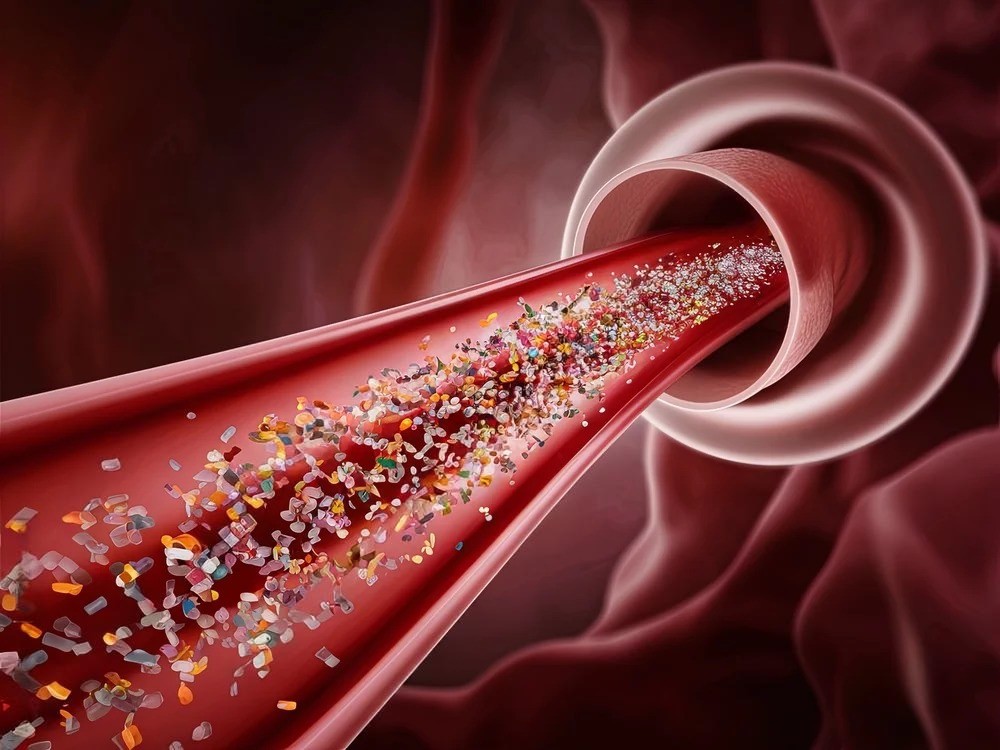
Researchers have now detected microplastics and nanoplastics—fragments so small they're invisible to the naked eye—inside human blood, human organs, and, more strikingly, inside atherosclerotic plaques in the carotid arteries (the vessels supplying blood to the brain). That last finding is the one that's caught cardiology's attention, because it raises a pointed question: could these particles be quietly contributing to heart attacks and strokes?
How Could Plastic Particles Affect the Heart and Blood Vessels?
The working theory among researchers goes something like this: these microscopic plastic fragments may trigger low-grade inflammation, irritate and damage the delicate inner lining of blood vessels (the endothelium), and potentially make existing arterial plaques more unstable and prone to rupture.
Instability is really the key word here. A stable plaque can sit in an artery for years without causing problems. An unstable one is far more likely to rupture and trigger the blood clot that causes a heart attack or stroke.
Some recent studies have gone a step further, reporting that people with detectable microplastics in their arterial plaques had a meaningfully higher risk of major cardiovascular events—including stroke and acute coronary syndromes—compared to those without.
Correlation, Not Yet Confirmed Causation
Here's the important caveat, and one worth sitting with: these studies show an association, not definitive proof that microplastics cause heart attacks or strokes. Medicine moves carefully for good reason, and this is genuinely an emerging field, not a settled one. But an early, consistent signal like this is exactly the kind of thing that deserves close attention and further research—not dismissal, and not panic either.
What You Can Actually Do About Plastic Exposure
The reassuring part of this story is that reducing unnecessary plastic exposure doesn't require a radical life overhaul. A few practical, sustainable habits can make a real difference:
Avoid heating food in plastic containers, especially in the microwave
Choose glass or stainless steel for food storage and drinking water where you can
Cut back on single-use plastics in daily life
Support cleaner air quality and a healthier environment more broadly
None of this needs to become an anxiety-driven crusade against every piece of plastic in your home. Small, consistent swaps are what add up over time.
Don't Lose Sight of the Fundamentals
Here's the message that matters most, and it's easy to lose in a headline about plastic in your arteries: emerging risks like microplastics should never distract from the traditional risk factors we already know how to manage.
Cardiovascular disease prevention still rests on the same pillars it always has:
Managing cholesterol
Controlling blood pressure
Keeping diabetes in check
Quitting smoking
Staying physically active
Eating a heart-healthy diet
These remain, by a wide margin, the most effective and evidence-backed ways to protect your heart—regardless of how the microplastics research eventually unfolds.
The Exposome: The Next Frontier in Preventive Cardiology
For decades, preventive cardiology has centered on a well-established set of targets: cholesterol, blood pressure, blood sugar, and smoking. Those targets aren't going anywhere—they're still the foundation.
But the next frontier may lie somewhere less familiar: the exposome—the total sum of environmental exposures we carry within us over a lifetime. Microplastics are just one thread in that much larger fabric, and understanding it may well become the next major chapter in how we think about protecting the heart.