The Pressure Paradox: What Protects Your Arteries Today May Protect Your Memories Tomorrow
A giraffe can live with high blood pressure. We can’t.
A giraffe’s brain sits nearly two metres above its heart, so it runs a mean arterial pressure of around 200 mmHg at heart level. Its heart, vessels and kidneys have adapted to cope. For a giraffe, high pressure is a necessity. For humans, persistent hypertension is a burden. Few stories show this better than Franklin D. Roosevelt’s.
By February 1945, Roosevelt was only 63 but looked gaunt and exhausted. A reading of 260/150 mmHg had been recorded the previous November, and he had hypertensive heart disease with heart failure. On April 12, 1945, he developed a sudden severe headache and collapsed. His blood pressure was about 300/190 mmHg, and he died of a cerebral haemorrhage that afternoon.
Whether he was also developing cognitive decline at Yalta is still debated, and it would be wrong to diagnose dementia from old accounts. What the story does show is that hypertension is a disease of organs, and of time.
From Gandhi’s sarpagandha to modern therapy
Doctors in Roosevelt’s era could measure terrifying pressures but had few tolerable ways to lower them. Gandhi’s health records show readings as high as 220/110 mmHg, and in 1941 he wrote of taking sarpagandha (Rauwolfia serpentina) drops. In 1949, Dr Rustom Vakil published a trial of Rauwolfia in 50 patients, and its alkaloid reserpine became one of the first effective antihypertensives.
Today we have ACE inhibitors, ARBs, calcium-channel blockers, diuretics, mineralocorticoid receptor antagonists and single-pill combinations. For carefully selected patients with resistant hypertension, catheter-based renal denervation may be an option. The 2024 ESC guidelines are clear, though, that it gives a modest reduction and supplements medical therapy rather than replacing it.
The brain remembers
We usually talk to patients about heart attacks, kidney failure and stroke. The brain’s story is quieter. Years of high pressure can injure the tiny vessels of the brain, leading to white-matter changes, lacunar infarcts and microbleeds. Memory, attention and processing speed may slip without any dramatic event.
A stroke is hypertension announcing itself. Cognitive decline may be hypertension whispering for years.
Hypertension doesn’t cause every dementia, but it is an important, modifiable contributor, and pressure in midlife seems to matter most.
Does treatment help?
- SPRINT MIND: intensive control cut mild cognitive impairment by about 19%. Probable dementia alone also fell, but not significantly. An MRI substudy showed slower white-matter lesion growth.
- China Rural Hypertension Control Program (ESC Congress 2026): across 33,995 adults in 326 villages, a structured programme targeting below 130/80 mmHg lowered systolic pressure by 17.6 mmHg, versus 2.4 mmHg with usual care. At seven years, dementia occurred in 8.85% versus 10.55%, a significant 15% relative reduction.
These trials tested a managed programme, not just a number. They don’t prove that lowering pressure prevents Alzheimer’s disease, and they don’t justify aggressive lowering in everyone.
Listen to the kidney
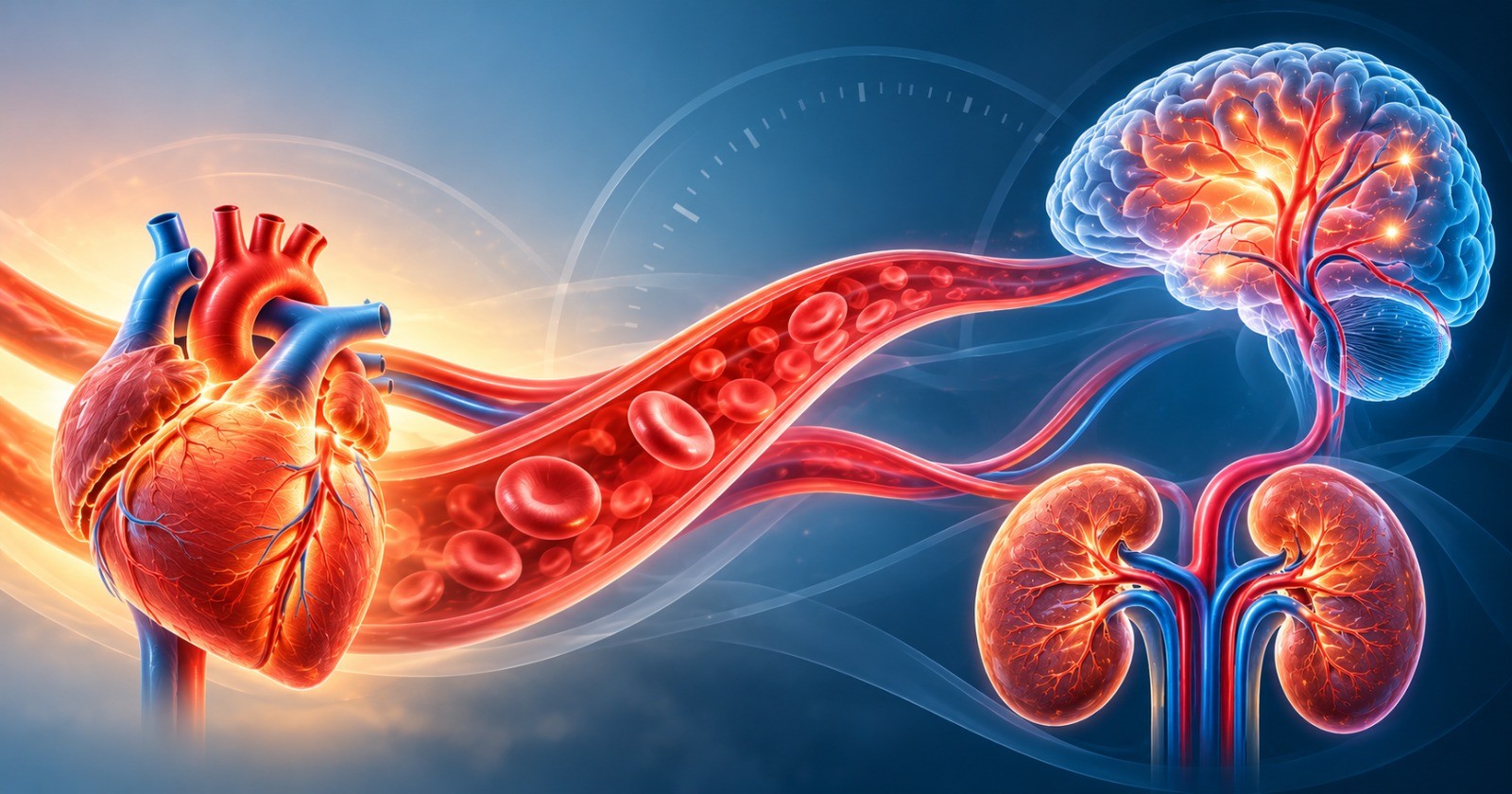
The heart, kidneys and brain share the same vulnerability to long-term vascular stress. The ESC recommends checking eGFR and the urinary albumin-to-creatinine ratio (UACR). A persistent UACR of 30 mg/g or more signals kidney injury and higher cardiovascular risk, sometimes before the brain shows any symptoms. A simple UACR deserves a place in routine hypertension care.
How low should we go?
The 2024 ESC guidelines still define hypertension as 140/90 mmHg or higher. For most adults on treatment, they suggest a systolic target of 120–129 mmHg, provided it is well tolerated. Frailty, orthostatic hypotension and advanced age call for individual judgement, and home or ambulatory monitoring helps confirm the real picture. The goal is the right pressure for the right patient, not the lowest possible number.
If Roosevelt walked into our clinic today
We would measure his pressure carefully, confirm it outside the clinic and look for damage in his heart, kidneys and brain. We would have several effective medicines, often in one tablet, and we would follow him until his pressure was actually controlled. None of this guarantees we could have prevented his haemorrhage, but it shows how far we’ve come.
The real paradox
In 1945, the problem was that we couldn’t treat hypertension well. In 2026, the paradox is that we can, yet too often we still don’t achieve control.
So when we treat blood pressure, we are protecting the coronary arteries, the kidneys’ filters and the tiny vessels of the brain. Hypertension is not just a number to lower. It is an exposure to shorten.
About The Author
Dr. Anup Taksande is Clinical Director of Cardiology & Interventional Cardiology at KIMS Hospitals, Thane. To consult him for angioplasty, complex coronary interventions, TAVR and advanced heart care in Thane