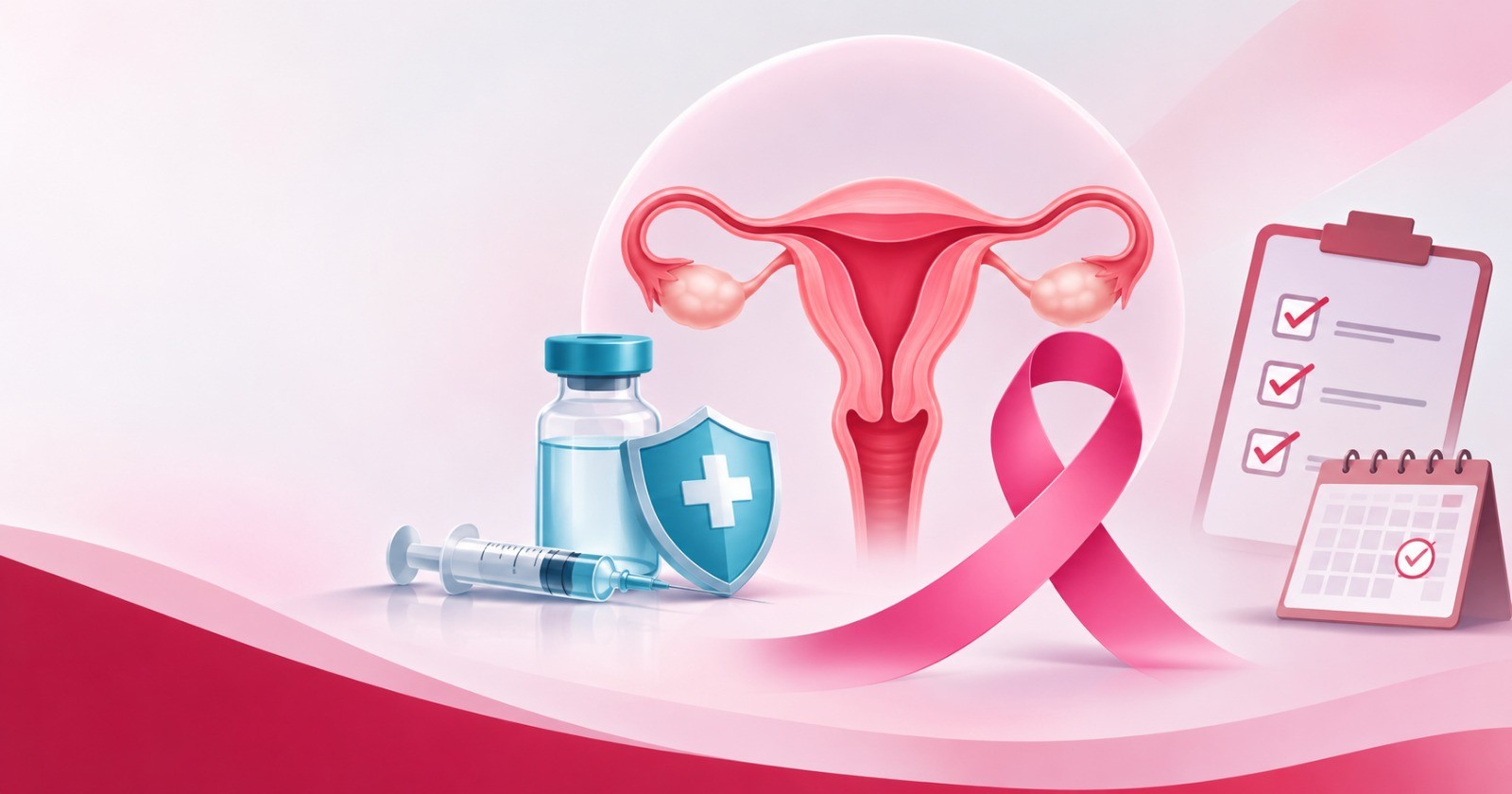
Three Simple Steps to Prevent Cervical Cancer: Why HPV Vaccination Matters
Cervical cancer is one of the few cancers we can largely prevent. Almost all cases are caused by persistent infection with the Human Papillomavirus (HPV), and a vaccine exists against the strains responsible for most of them.
As a gynecological oncologist in Mumbai, I see women every week who are shocked by a late diagnosis. What surprises most of them is how simple prevention can be. You don't need an expensive test or a complicated routine. Three small steps go a long way.
1) Vaccinate girls early, ideally between 9 and 14 years.
The vaccine works best before any exposure to HPV. In this age group, two doses are usually enough. Starting later is still useful, but a third dose is generally needed. Many families wait or assume it's only for adults. Early vaccination gives the strongest protection.
2) Don't forget the rest of the family.
HPV also causes cancers of the vulva, vagina, anus and throat, as well as genital warts, and it affects boys too. Young women and adults who missed the vaccine should ask their doctor whether it is still right for them. Many benefit even later in life.
3) Get screened regularly, even if you are vaccinated.
The vaccine does not cover every HPV type, so screening remains essential. From the age of 30, women should have a Pap smear or an HPV DNA test at the intervals their doctor advises. Screening picks up changes years before they become cancer, when treatment is simple and highly effective.
Practised together, these steps can prevent most cervical cancers.
Vaccinate early. Screen regularly. Act on symptoms. And talk to your daughters, sisters and friends about it.