Understanding Hernias: What They Are, Why They Happen, and How We Safely Fix Them
What Is a Hernia?
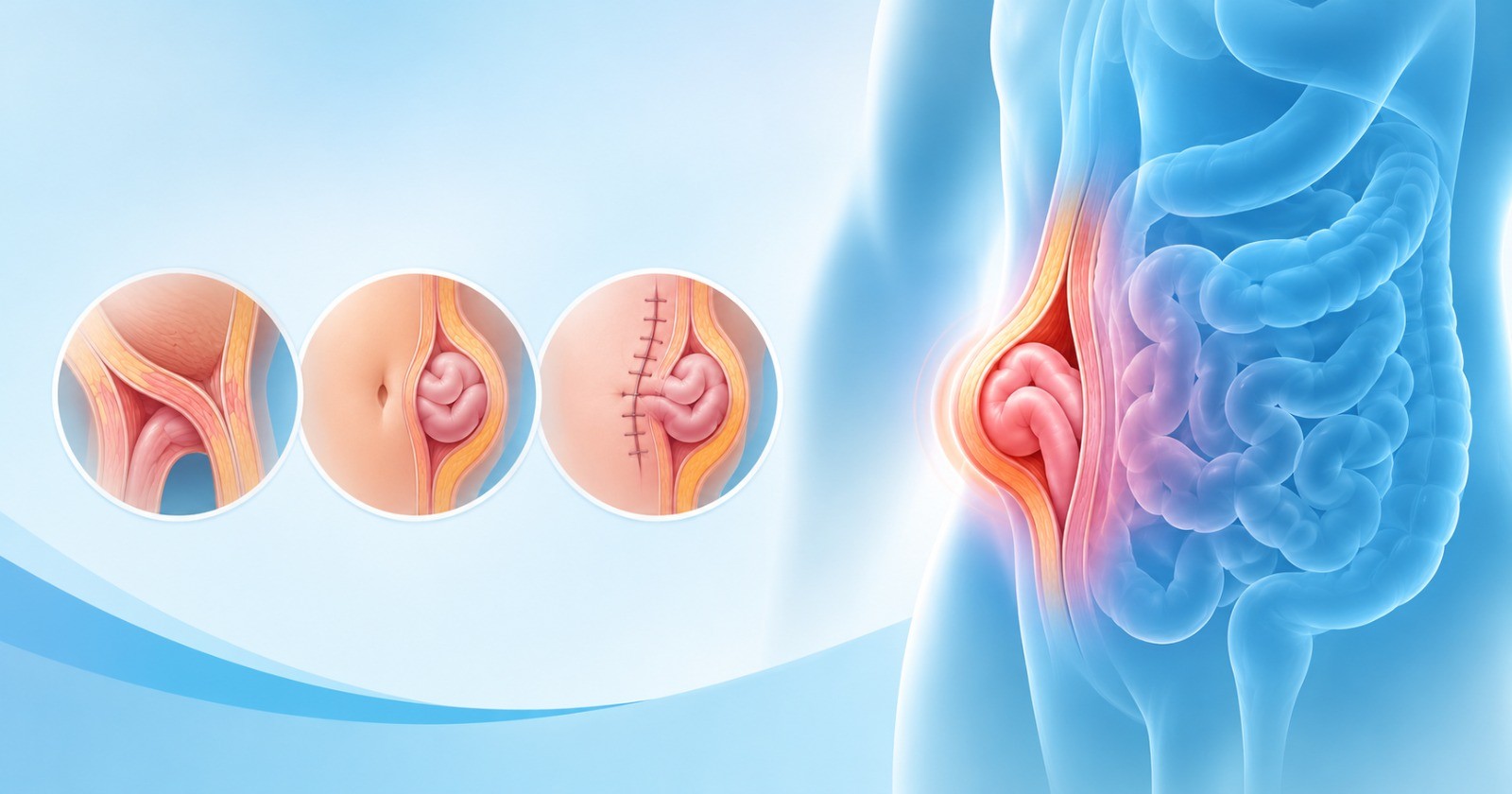
Your abdominal wall is like a strong, layered muscle corset that holds your internal organs in place. Sometimes, a weak spot or small opening develops in that muscle layer. When internal tissue, like fat or a loop of intestine, pushes through that weak spot, it creates a visible bulge under the skin. That is a hernia.
Why Does a Hernia Happen?
Common causes and risk factors include:
- Obesity
- Smoking
- Lifting heavy weights
- Constipation
- Prostate issues in males
- Connective tissue disorders
- A previous surgical scar
Common Types of Hernia
- Inguinal hernia: in the groin
- Umbilical hernia: near the belly button
- Incisional hernia: at a previous surgical scar
Symptoms to Watch For
Many hernias cause a dull ache, a feeling of heaviness, or a bulge that becomes more noticeable when you cough, lift something heavy, or stand up.
A hernia won't heal on its own, but most aren't immediate emergencies. However, if the bulge ever becomes hard, tender, red, or causes severe pain and nausea, you need urgent medical attention, as the tissue may be trapped.
How Is a Hernia Treated?
The only permanent way to fix a hernia is surgery. We gently place the tissue back where it belongs and reinforce the weak muscle wall, usually with a safe, flexible surgical mesh to prevent it from coming back.
Depending on your specific case, we do this in two main ways:
- Open surgery: uses a single small incision directly over the hernia.
- Minimally invasive keyhole surgery: laparoscopic or robotic, using tiny incisions and a small camera, often allowing for a faster, more comfortable recovery.
Recovery
Modern hernia repair is very safe. Most patients go home in 1 or 2 days and get back to light activities within a few days.
Don't Wait
If you have a bulge that's bothering you, don't wait for it to get bigger. Schedule a consultation with our team so we can examine it and find the best, safest plan for managing your hernia.
Footer Loading...