What Is Interventional Radiology and How Does It Help Patients?
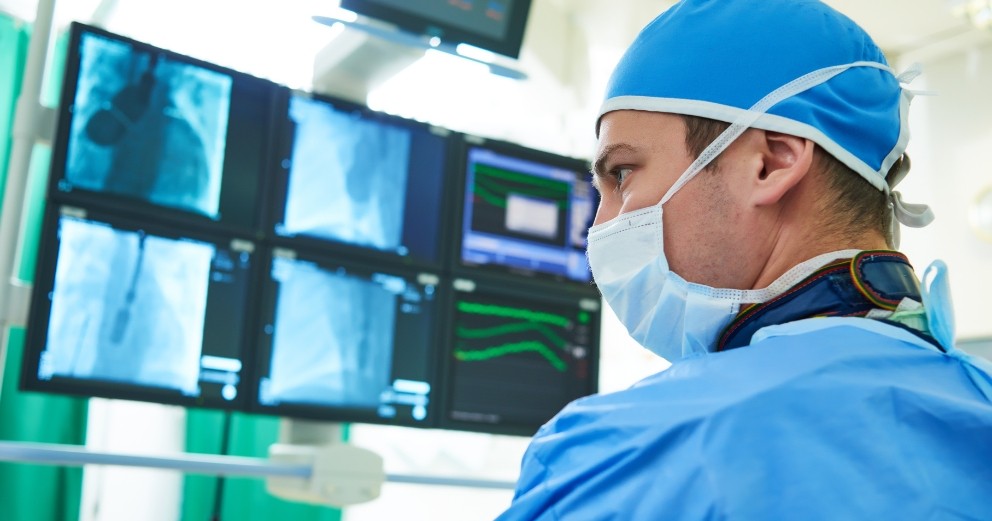
Most people understand what a radiologist does in broad terms: they read scans and produce reports that other doctors act on. Interventional radiology is a different discipline entirely. Interventional radiologists use the same imaging technology- X-ray, ultrasound, CT, and MRI- not to produce a report but to guide instruments through the body in real time, performing treatments that in an earlier era would have required open surgery.
The result is a speciality that has quietly transformed the management of conditions ranging from cancer to arterial blockages to life-threatening haemorrhage, often without a single surgical incision.
What Interventional Radiology Actually Involves?
The core principle is straightforward. Imaging technology allows a doctor to see inside the body without opening it. Interventional radiologists use this to guide needles, catheters, wires and other instruments through natural body openings or punctures no larger than a few millimetres, to targets deep inside the body that would otherwise require major surgery to access.
The procedure begins with imaging to identify the target, whether it is a blocked blood vessel, a tumour, an abscess, a narrowed bile duct, or a haemorrhaging artery. A small puncture is made, usually under local anaesthesia.
The instrument is advanced to the precise location with continuous imaging guidance. The treatment is delivered, the instrument is withdrawn, and the puncture site is compressed or sealed. Most patients go home the same day or after a single overnight stay.
The Range of Conditions It Addresses
Interventional radiology has expanded to cover conditions across almost every organ system.
Vascular System
In the vascular system, blocked arteries causing pain and threatening limb loss are opened with balloons and kept open with stents. Aneurysms threatening to rupture are sealed from within using coils or covered stents, avoiding the major surgery that was previously the only option. Varicose veins are treated with thermal ablation through a catheter, producing outcomes equivalent to surgical stripping with a fraction of the recovery time.
Liver
In the liver, portal hypertension producing dangerous bleeding from varices is managed with a transjugular intrahepatic portosystemic shunt, a procedure performed entirely from within the blood vessels. Liver tumours are destroyed with heat or cold energy delivered through a needle placed under CT guidance.
Kidneys
Kidneys blocked by stones or strictures are drained with nephrostomy tubes placed under ultrasound guidance. Uterine fibroids are treated by blocking their blood supply through uterine artery embolisation, shrinking them without surgery. Vertebral fractures causing severe pain are stabilised with bone cement injected under imaging guidance.
Why It Matters for Patients
The practical advantages of interventional radiology over open surgery are consistent across conditions and procedures. More limited access means less tissue damage, less blood loss, less post-operative pain, lower infection risk, and a recovery measured in days rather than weeks or months. Patients who are too unwell to tolerate general anaesthesia or open surgery can often be treated interventionally when the surgical option would carry prohibitive risk.
For patients with complex, chronic conditions requiring repeated procedures, the ability to treat without creating surgical wounds that accumulate over time is itself clinically significant.
Who Performs These Procedures?
Interventional radiologists complete medical training followed by radiology specialisation and then a dedicated fellowship in interventional techniques. They are both imaging specialists and proceduralists, which gives them a precise understanding of the anatomy displayed on the imaging that guides their instruments in real time. This combination of diagnostic and technical expertise is what makes the speciality possible.
Conclusion
Interventional radiology is not a substitute for surgery in every situation. But for a growing range of conditions, it offers an outcome equivalent to surgical treatment with a fraction of the physical cost to the patient.