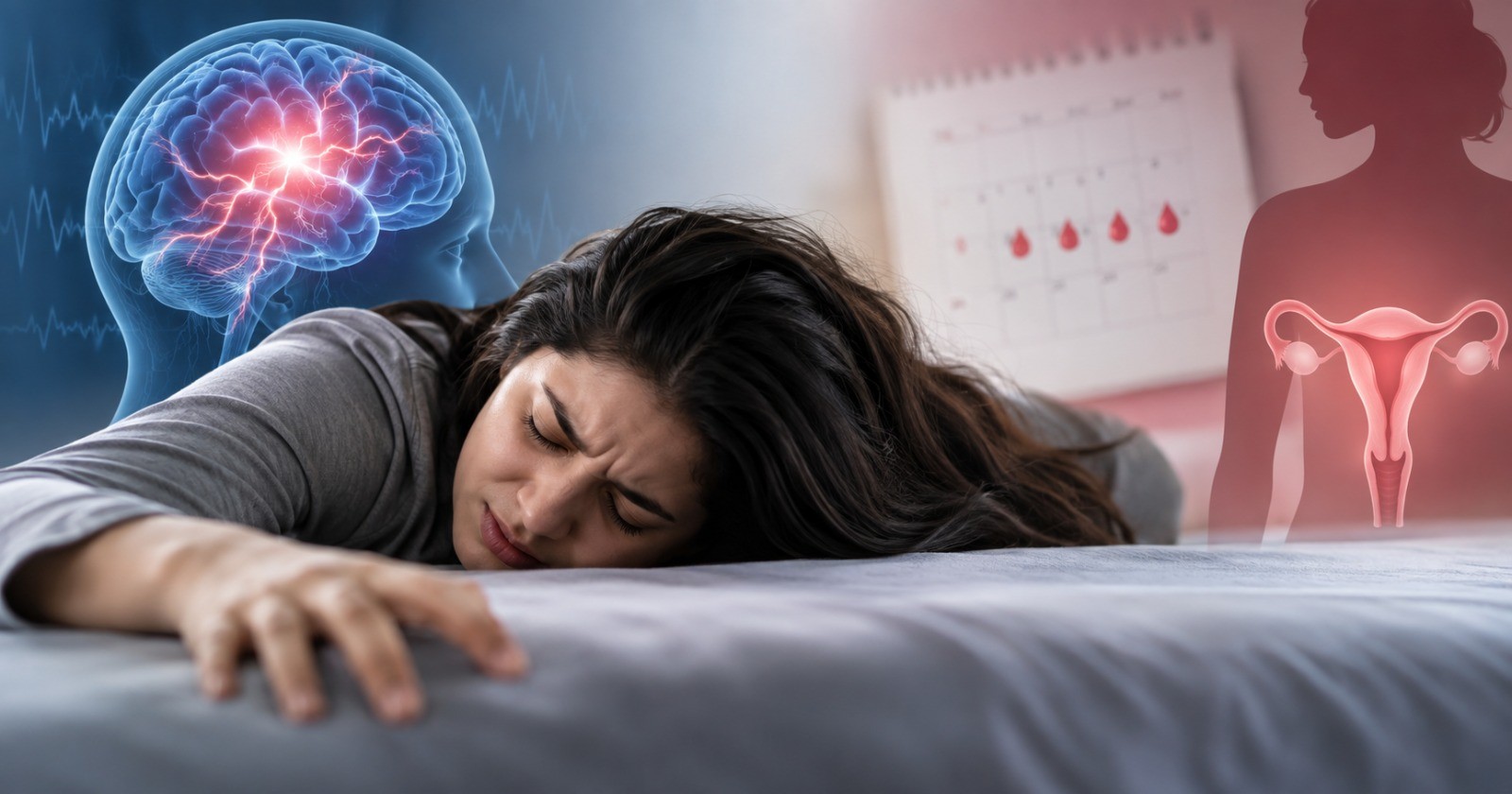
For most women, periods mean a few days
of discomfort, cramps, or heavy bleeding—an inconvenience to work around and
move past. But for one 48-year-old patient who came to see me, menstruation had
turned into something far more frightening. Every single cycle, without fail,
brought on a seizure.
She had been living with extremely heavy
menstrual bleeding and severe abdominal cramps for years. Slowly, this had
taken a toll—her haemoglobin levels had dropped significantly, leaving her
anemic and exhausted. But the part that troubled her most, and honestly the
part that troubled us too when we first heard her history, was that almost
every month, right around her period, she would develop a seizure. This was
happening despite the fact that she was already on anti-epileptic medication.
When she came to us at KIMS Hospitals, we
sat down and went through her history carefully. A detailed evaluation revealed
a very large fibroid uterus, which explained the prolonged heavy bleeding, the
severe pain, and the anaemia that had built up over time. But her history also
pointed to something less commonly recognized—a pattern known as catamenial
epilepsy, where seizures tend to occur or worsen around specific phases of the
menstrual cycle.
This wasn't a case one specialist could
solve alone. It needed a genuinely multidisciplinary approach. Our neurology
team reviewed her anti-epileptic medication and found that her regimen needed
to be corrected, so her treatment was adjusted accordingly. At the same time,
we knew we had to address the gynaecological problem that was making every
single cycle so difficult for her to get through.
Given the size of the uterus and the
severity of her symptoms, we decided a robotic-assisted hysterectomy was the
right way forward. Even with a significantly enlarged uterus, the surgery was
completed successfully and entirely robotically at KIMS Hospitals.
We monitored her closely after surgery,
including a stay in the ICU as a precaution. What was genuinely reassuring—and
honestly, quite moving to see—was that she had no seizures during the surgery
or at any point during her hospital stay. Her recovery went smoothly, and she
was discharged feeling relieved, lighter, and well again.
This case stayed with me because it's
such a clear reminder that what looks like "just a period problem"
can quietly ripple out and affect a woman's entire quality of life—her
neurological health, her energy, and her sense of control over her own body.
So here's what I'd really like every
woman reading this to take away: your periods are not something you simply have
to suffer through.
If you're dealing with excessively heavy
bleeding, debilitating period pain, severe anaemia, or symptoms that keep
worsening around your menstrual cycle, please don't brush them aside. The right
diagnosis, backed by the right team, can genuinely change the course of your
health.
Listen to your body. Seek help early. And
please, don't normalise symptoms that are disrupting your life.
If you're looking for the best
gynecologist in Thane for expert, compassionate care — from routine women's
health concerns to complex surgical cases like this one — you can consult our Gynaecology & Maternity team at KIMS
Hospitals, Thane for personalised guidance and treatment.