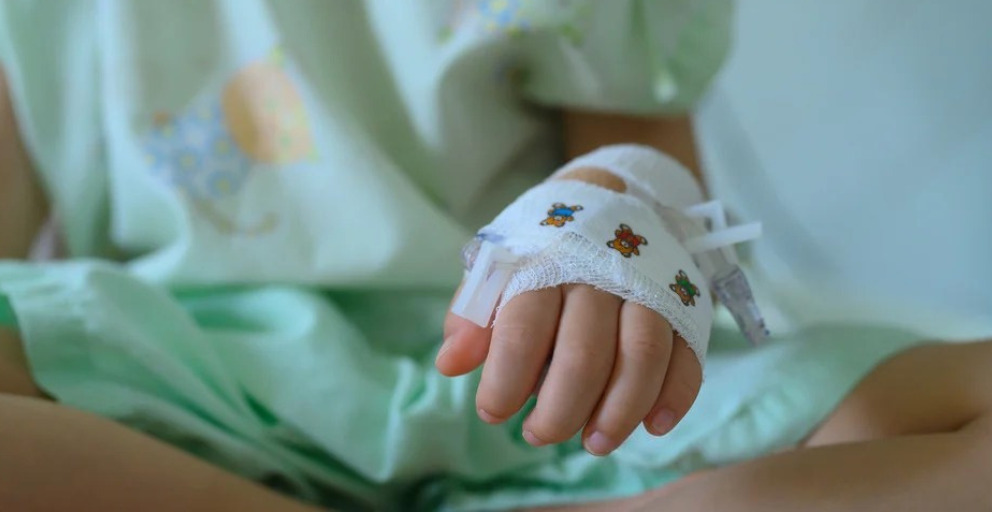
Children Are Not Small Adults: Why Pediatric Emergencies Need Specialized Care
-By Dr. Mandar Jamdar, Clinical Lead Pediatric Critical Care and Emergency
A child struggling to breathe. A toddler having a seizure. An infant who has suddenly become unusually quiet. A school-going child brought in after a serious injury.
In an emergency, every minute matters. But when the patient is a child, there is another important fact to remember:
Children are not simply smaller versions of adults.
From the way they breathe and maintain their blood pressure to the way they respond to illness, medicines and even fear, children are remarkably different. These differences become especially important during an emergency, when a child's condition can change rapidly and decisions often need to be made within minutes.
This is why pediatric emergencies require more than just smaller equipment and lower doses of medicines. They require an approach specifically designed for children.
A Child's Body Responds Differently
One of the fascinating things about children is their ability to compensate.
When an adult becomes seriously unwell, a fall in blood pressure may be an early warning sign. Children, however, can maintain their blood pressure even when their body is under considerable stress. Their heart beats faster, their blood vessels constrict and their body works hard to maintain blood flow to vital organs.
This ability can sometimes be deceptive.
A seriously ill child may initially appear relatively stable, only to deteriorate rapidly once these compensatory mechanisms begin to fail. This is why pediatric emergency teams look beyond a single blood pressure reading. The child's appearance, breathing, heart rate, circulation, interaction and level of alertness often tell a much bigger story.
In children, recognizing deterioration early is often more important than waiting for an abnormal number on a monitor.
Breathing Problems Can Become Serious Quickly
Children have smaller and narrower airways than adults. Even a small amount of swelling, mucus or inflammation can therefore cause significant breathing difficulty.
Infants and young children also have less respiratory reserve. When breathing becomes difficult, they may initially compensate by breathing faster and working harder. But this effort consumes considerable energy, and a tired child can deteriorate quickly.
Recognising this transition — from a child who is simply breathing fast to one who is beginning to tire — is an important part of pediatric emergency care.
The oxygen devices, masks, airway equipment and ventilators used for children must also be appropriately selected and sized, from a tiny infant to a teenager.
In Pediatrics, Size Really Matters
Perhaps nowhere is the difference between adults and children more obvious than with medicines and medical equipment.
Many emergency medicines in children are calculated according to body weight. Intravenous fluids, emergency drugs and infusions may all require precise calculations.
The same applies to equipment.
A newborn, a two-year-old and a 14-year-old may all enter the same Pediatric Emergency Department, but they require very different sizes of masks, breathing tubes, intravenous cannulas and other resuscitation equipment.
This is why a pediatric-ready emergency system needs not only trained doctors and nurses, but also age- and size-appropriate equipment, medication protocols and processes designed specifically for children.
Children May Not Tell Us What Is Wrong
An adult can often say, "I have chest pain," "I cannot breathe properly," or "I feel faint."
A six-month-old infant cannot.
A frightened toddler may simply cry. A young child may become unusually quiet, irritable or refuse to drink. Sometimes the earliest clue that something is wrong comes not from a laboratory report or monitor, but from observing how the child looks, behaves and interacts with the parents.
Pediatric emergency assessment therefore involves something beyond numbers and investigations — understanding the child.
Age, developmental stage and behaviour all become part of the clinical examination.
And this is where parents play an invaluable role. A parent knows what is normal for their child. A statement as simple as "Doctor, this is not how my child usually behaves" can sometimes be an important piece of clinical information.
Treating Fear Is Also Part of Treating the Child
For a child, an Emergency Department can be frightening.
There are unfamiliar faces, bright lights, alarms, needles and procedures. Add pain or difficulty breathing, and the experience can become overwhelming.
Good pediatric emergency care therefore goes beyond treating the disease.
Communication appropriate to the child's age, reducing unnecessary pain and anxiety, allowing parental presence whenever possible and explaining procedures can make a significant difference.
The goal is not only to stabilize the child's body, but also to make a frightening experience safer and less traumatic for both the child and the family.
Emergency Care Is a Team Effort
When a critically ill child arrives, effective care rarely depends on one individual.
Doctors assess and make rapid decisions. Nurses administer medications, establish monitoring and continuously reassess the child. Respiratory and critical care teams may support breathing. Pediatric specialists, surgeons, radiologists and laboratory teams may need to become involved depending on the illness.
If the child's condition requires intensive care, this coordination continues seamlessly into the Pediatric Intensive Care Unit (PICU) — a space built entirely around the needs of a critically ill child rather than an adapted version of an adult ICU.
This is where a well-organised pediatric ICU in Thane makes a real difference. When a child moves from the emergency department to the PICU, the same continuity of care needs to follow them — continuous monitoring, ventilatory support if required, precise weight-based dosing, and a team trained specifically in recognising how quickly a child's condition can change. There should be no pause, no handover gap, and no loss of the information already gathered while stabilising the child.
We at KIMS Hospital, Thane, have built our Pediatric Critical Care Unit keeping in mind that emergency care and intensive care for children should function as one continuous system, not two separate departments. For families in and around Thane, knowing that this level of critical child care exists close to home can make an already frightening situation a little less overwhelming.
In pediatric emergencies, therefore, preparedness is not just about having an Emergency Department.
It is about having the right people, the right equipment, the right processes and the right teamwork — ready at the right time.
The Bigger Message
Children have an extraordinary ability to recover.
Even a critically ill child can surprise us with the speed and completeness of recovery when illness is recognized early and appropriate treatment is provided in time.
But that opportunity begins with understanding one fundamental principle:
Children are not small adults.
Their bodies respond differently. Their illnesses may present differently. Their medicines and equipment are different. They communicate differently. And when they become seriously ill, their condition can sometimes change with remarkable speed.
Pediatric emergency care is therefore not simply adult emergency medicine scaled down to a smaller size. It is a specialized approach built around the unique physiology, development and emotional needs of a growing child — and, when needed, backed by a dedicated pediatric ICU ready to take over the moment intensive care becomes necessary.
Because when a child faces an emergency, subtle differences in recognition, preparation and response can make a very big difference in the outcome.