Wednesday, March 4, 2026

Date: 2026-03-04
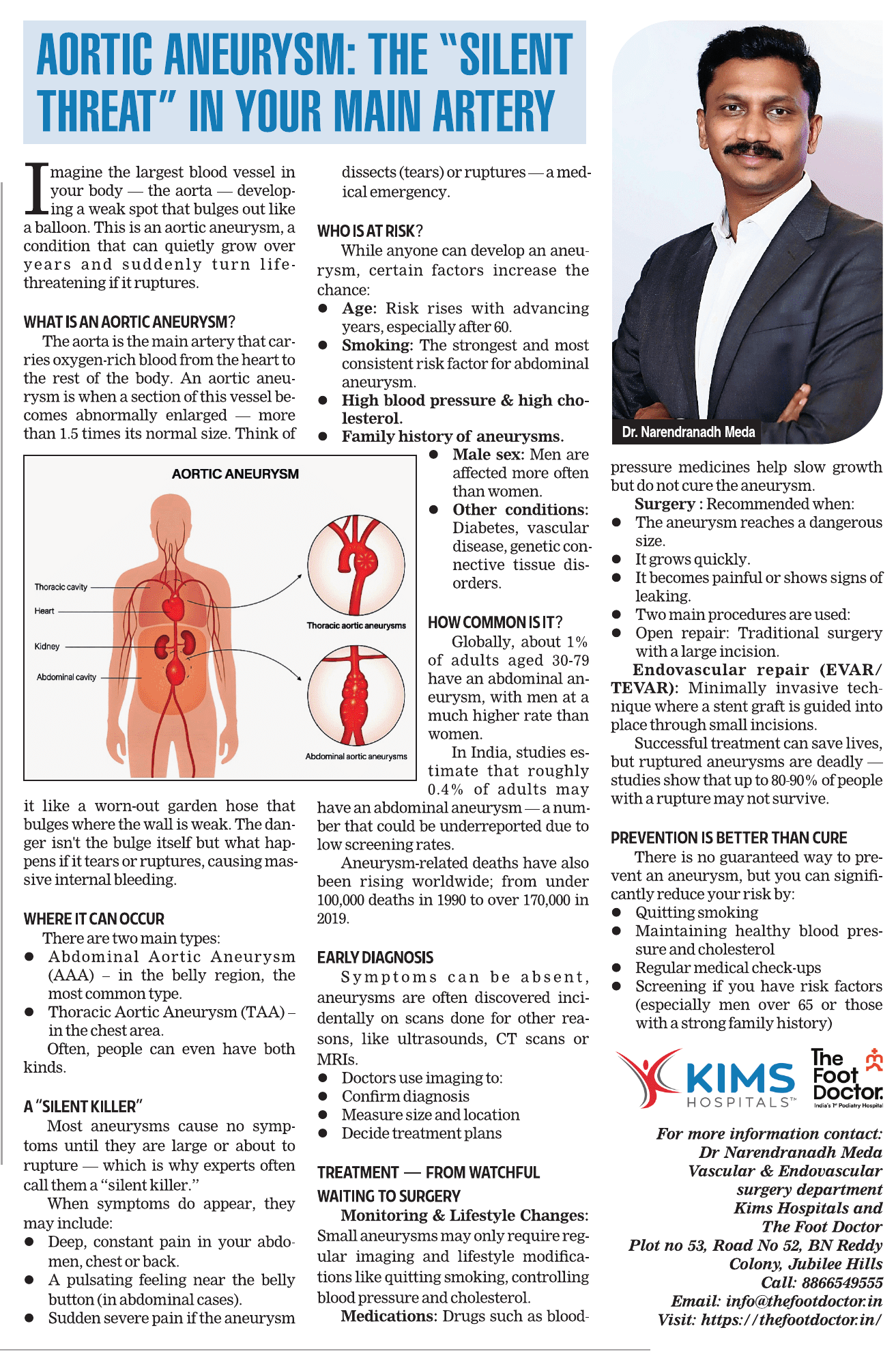
An aortic aneurysm occurs when a weak part of the aorta (the body’s main artery) bulges and enlarges. It often develops without symptoms and can become life-threatening if it ruptures.
🩺 Dr. Narendranadh Meda, HOD & Senior Consultant Vascular & Endovascular Surgeon at KIMS Hospitals, warns that risk increases with age, smoking, high blood pressure, high cholesterol, and family history.
⚠️ Possible symptoms include persistent chest, back, or abdominal pain and a pulsating sensation in the abdomen.
🔍 Early detection through scans and timely treatment — including monitoring or minimally invasive repair (EVAR/TEVAR) — can prevent life-threatening rupture.
💡 Quit smoking, control BP, and get regular health check-ups to reduce the risk.